

‘It Felt Like Kidnapping,’ Khalil Says in First Interview Since Release

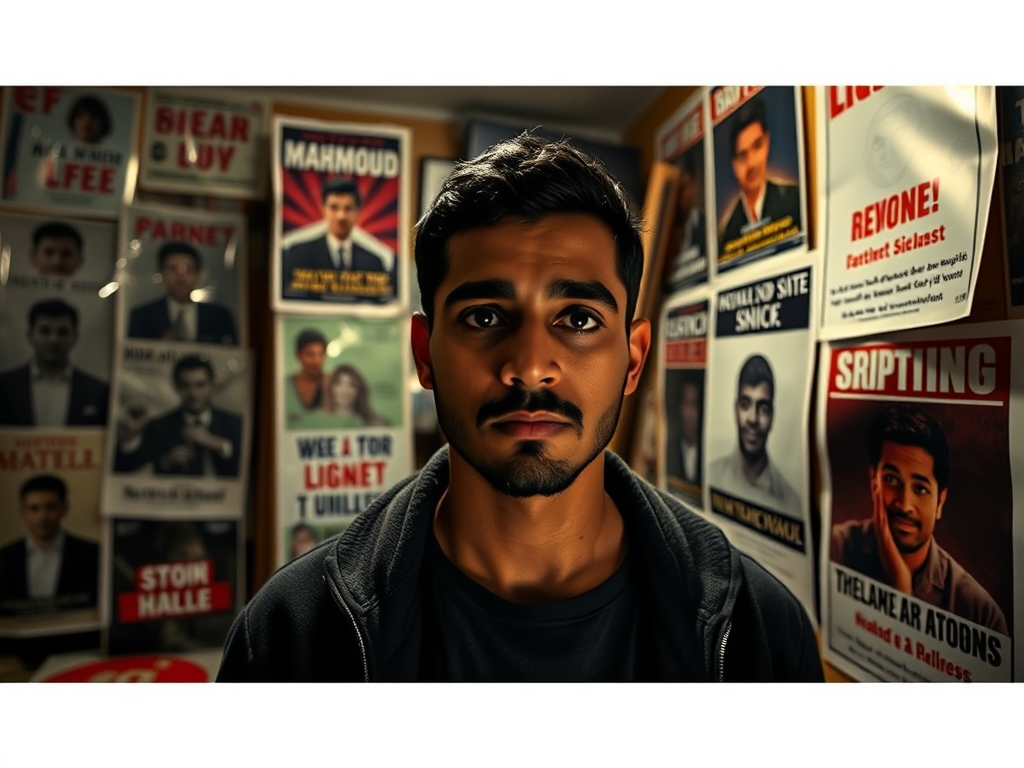
In a modest Manhattan apartment decorated with posters and placards demanding his release, Mahmoud Khalil recounted the life-changing moment that occurred 105 days earlier. It was in the lobby of his building that plainclothes immigration officers approached and handcuffed him without warning.
“All the ‘Know Your Rights’ pamphlets I had studied meant nothing in that moment,” Khalil said. “In a situation like that, your rights vanish. They just don’t exist.”
“It felt like I was being abducted,” he continued.
Khalil, a 30-year-old graduate of Columbia University and a lawful permanent resident of the United States, became the first student protester detained under the Trump administration’s new policies. After spending more than three months in a detention facility in Jena, Louisiana, he was finally released on bail.
He journeyed through the night to return to New York and, by Saturday evening, turned off a news report covering the U.S. strike on Iran to speak publicly for the first time about his ordeal — his arrest, the time he spent in detention, and what he intends to do now that he’s free.
Khalil made clear that if former President Donald Trump had hoped to silence voices supporting Palestinian rights, the attempt had failed.
During his incarceration, Khalil received hundreds of letters of support. Many of them, he said, came from individuals who said his arrest had awakened their interest in the Palestinian cause.
He pointed to a comment reportedly made by Trump during his 2024 campaign — a vow to roll back the Palestinian movement by decades. “In reality,” Khalil said, “he pushed the movement forward by 20 years.”
In response, White House press secretary Abigail Jackson issued a statement dismissing claims that the case was about freedom of speech. “This case is not about the First Amendment,” she asserted. “This is about individuals who are in the country without a right to be here, aligning themselves with Hamas sympathizers and organizing protests that made campuses unsafe and intimidated Jewish students.” It’s worth noting that no court has verified any claim that Khalil supported Hamas.

Jackson emphasized that the Trump administration remained committed to holding Khalil and others like him accountable. Meanwhile, the government is still trying to deport him, with his case currently proceeding through immigration court.
Tricia McLaughlin, a representative of the Department of Homeland Security, went so far as to suggest that Khalil should “self-deport” by scheduling his own departure through a federal app.
Notably, Khalil was never charged with a crime. His detention stemmed from a seldom-used Cold War-era law invoked by Secretary of State Marco Rubio, who claimed Khalil’s activism had undermined U.S. foreign policy. The administration contended that his protests contributed to a rise in antisemitism on campus.
But Khalil, who is of Palestinian descent and was born in a Syrian refugee camp, rejected that characterization. “There is nothing antisemitic about standing up for my people’s rights,” he said. “I was protesting against what I consider a genocide. I was arguing that our tuition money shouldn’t fund weapons manufacturers. How is that antisemitic?”

Despite being visibly exhausted after a sleepless night, Khalil spoke eloquently and confidently, sharing the arc of his life’s journey.
He grew up in a small refugee camp near Damascus, where his Palestinian parents taught him to value free expression — even in a country with an oppressive regime. When two of his close friends disappeared at the hands of Syrian authorities shortly after he turned 18, Khalil fled to Lebanon.
In Beirut, he studied computer science part-time at the Lebanese American University. In 2016, he met Noor Abdalla, a Syrian American dentist. They fell in love, and Khalil began to consider building a life in the United States.
By 2022, he had started applying to American universities. While he didn’t idealize the U.S., he believed in its institutions, its legal system, and the constitutional protections for freedom of speech — especially political speech.
“I believed I would be protected, even when speaking out for Palestine,” he said. “I never imagined that advocating for justice could land me in a cell.”
He enrolled at Columbia in early 2023. Even before the Hamas attacks on Israel in October of that year, Khalil believed the university was biased against Palestinian voices. When he attempted to host a lecture featuring a representative from Human Rights Watch who focused on Israeli policies, the administration resisted, according to Khalil, making it difficult for the Palestinian Working Group to organize the event.

By October 7, he said, his perception of the university’s stance was clear. Yet, having built relationships with school administrators, he continued to engage. In the spring of 2024, as protests against the Gaza war erupted on campus, Khalil served as a liaison between the student protesters and university leadership.
“Columbia is deeply committed to fighting all forms of discrimination and ensuring that every student feels safe,” a university spokesperson stated.
As demonstrations and counterprotests intensified, Khalil grew increasingly concerned about his personal safety. Though there was no evidence he had supported Hamas — a group whose October 7 attacks killed more than 1,200 people — certain pro-Israel groups labeled him “pro-Hamas” for using common slogans like “from the river to the sea.”
Around this time, Khalil married Dr. Abdalla and received his U.S. green card. In the summer of 2024, the couple learned they were expecting their first child.
His sense of vulnerability deepened after Trump’s election. Following an executive order intended to combat antisemitism on campus, right-wing groups such as Canary Mission and Betar resumed their campaigns targeting him.

On March 8, while returning from dinner with his wife, who was then eight months pregnant, Khalil was approached by two plainclothes agents in the lobby of their apartment building. He was arrested without being shown a warrant. When he asked to see one, the agents refused.
The experience mirrored the authoritarian behavior he had fled in Syria. “This is exactly the kind of lawlessness I escaped,” he said.
At first, the agents claimed his student visa had been revoked, though this made no sense given his permanent resident status. He expected the confusion would be cleared up quickly. Instead, five hours later, he was shown a statement from Secretary Rubio declaring him a threat to U.S. foreign policy.
“I laughed out loud when I read it,” he said. “What exactly did I do to become a threat? Damage U.S.-Israeli relations with my words?”
Khalil was transported to New Jersey, then brought back to New York and told he was headed to Kennedy Airport — leading him to believe he was being deported. Only after boarding the plane was he informed that he was being taken to a detention center in Louisiana, over 1,000 miles away.
Once in Jena, he was placed in a dormitory with over 70 men. He had no privacy and no clear idea of what would come next. He constantly worried about his wife and unborn child.

He described the mental toll as “torture by uncertainty.” To cope, he threw himself into helping fellow detainees. He translated questions for them, clarified confusion about accounts and medications, and tried to find meaning in the chaos.
He also found solace in reading. He worked through Viktor Frankl’s Man’s Search for Meaning, Silky Shah’s Unbuild Walls, and several novels. The joy of seeing other detained students go free offered him some hope.
But his thoughts constantly returned to Dr. Abdalla, who gave birth to their son on April 21. He had requested permission to be there — and was denied.
“I know how much Noor needed me beside her,” he said emotionally. “I tried to mentally prepare for missing the birth, but nothing could really make that pain manageable.”
“No amount of freedom now will return the time I lost with my family,” he added.
In late May, federal judge Michael E. Farbiarz ruled that the law Rubio had relied on was likely unconstitutional. He subsequently barred further detention on that basis and approved Khalil’s release on bail.
Still, Khalil said the experience shattered his trust in the U.S. justice system.

“If you have wealth or conform to a narrow definition of American values, you’ll get due process,” he said. “If not, you’ll have to fight every inch just to access your basic rights.”
He does not see his release as a victory. “Yes, I’m out,” he said, “but those responsible for what happened to me are still out there, empowered.”
Khalil intends to return immediately to advocacy — both for Palestinian rights and immigrant justice.
“What happened to me won’t silence me,” he said. “In fact, it’s only strengthened my conviction that what we are doing is both necessary and just.”




Leave a Reply