

Texas Passed a Law Protecting Campus Speech. It’s on the Verge of Rolling It Back.

In 2019, the state of Texas passed a significant piece of legislation designed to bolster First Amendment rights on public college campuses. This law was introduced with the intention of combating what many perceived as a growing ideological uniformity within higher education. At the time, it was celebrated by free speech advocates and Republican lawmakers alike as a move to promote open discourse and intellectual diversity in academic settings.
However, recent events have led to a dramatic shift in attitude.
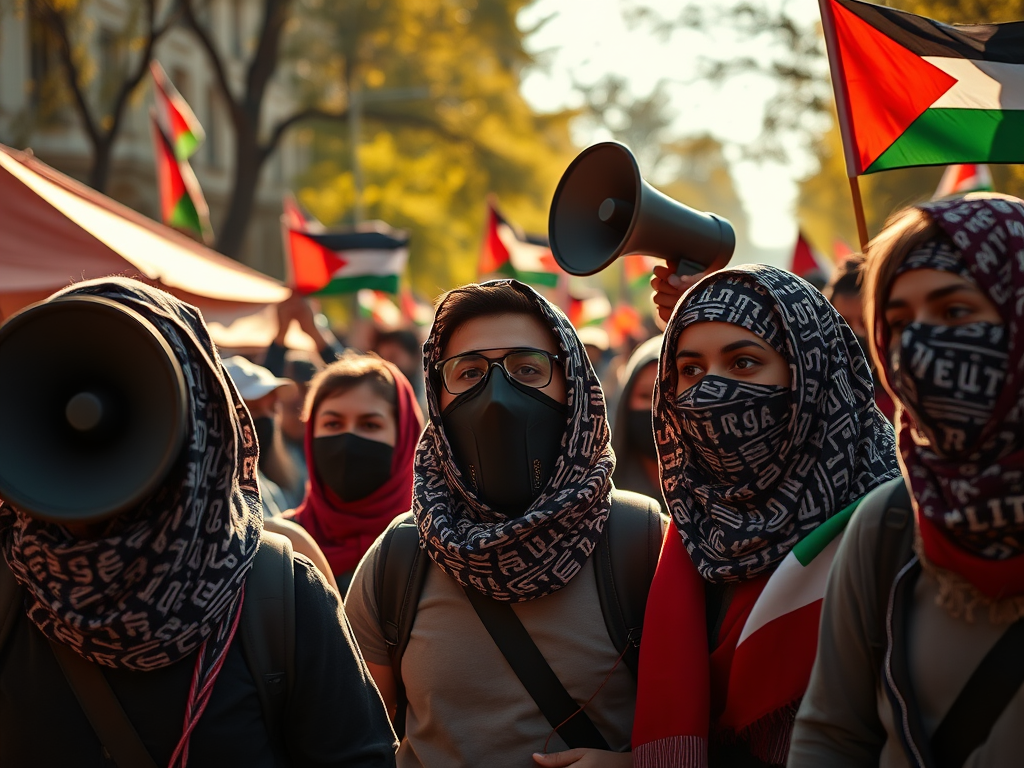
Following the October 7, 2023, Hamas-led attack on Israel, a wave of student protests erupted across U.S. campuses — including several in Texas. These demonstrations, marked by tents, loudspeakers, masked participants, and pro-Palestinian symbols such as kaffiyehs, reignited political debates around free expression and campus activism. Many of these protests sparked controversy and unease, particularly among conservative lawmakers, prompting them to reevaluate the very protections they had put in place just four years earlier.
This reconsideration culminated in the Texas Legislature, dominated by Republicans, approving a new bill that significantly tightens regulations on student protests. Notably, several legislators who had previously championed the 2019 law were also behind this new, more restrictive measure. The bill is now awaiting Governor Greg Abbott’s signature, which he is widely expected to provide.

Should it be enacted, legal experts say Texas would be entering new and uncertain constitutional territory. The bill represents a bold attempt to exert greater control over expressive activities on campus — a domain historically overseen by universities themselves, not state legislatures. While states routinely set administrative and funding policies for public universities, they have generally refrained from legislating student conduct in such direct ways.
The proposed legislation defines “expressive activity” broadly. It encompasses not only protests and demonstrations but also individual actions such as wearing certain clothing, using noise-making devices, and even the time of day one may engage in expressive behavior. These provisions appear to be a direct response to the highly visible forms of protest employed by pro-Palestinian student groups — including drumming, sound amplification, covering one’s face, and swapping out American flags for flags representing political causes or foreign nations.
Free speech experts have voiced concern that the bill’s language is vague and overly broad, making it vulnerable to constitutional challenges. One contentious provision, for example, bans expressive activity during the final two weeks of each academic semester and every night from 10 p.m. to 8 a.m. In theory, this could criminalize relatively innocuous behavior — such as wearing politically themed clothing late at night, speaking with friends about current events in a dormitory hallway, or watching protest-related videos on a personal device.
Critics argue that the bill undermines the principle of academic freedom and curtails students’ right to free expression in the very place where such freedoms should be cultivated. According to Tyler Coward, an attorney with the Foundation for Individual Rights and Expression (FIRE), this is among the most restrictive attempts at regulating campus speech he has ever seen.

Nevertheless, the bill’s sponsor, State Senator Brandon Creighton, has defended it staunchly. He claims it complements — rather than contradicts — the 2019 legislation. In a statement to the Austin American-Statesman, Creighton emphasized that both laws are intended to safeguard the rights of students, faculty, and staff. He attributed the need for new legislation to recent campus unrest, noting that while Texas universities remained comparatively peaceful, the national atmosphere — especially on campuses like Columbia and Harvard — warranted a proactive stance.
However, scholars and legal commentators from across the political spectrum are not convinced. Eugene Volokh, a conservative-leaning professor and senior fellow at Stanford University’s Hoover Institution, remarked that the new restrictions could be used to discipline students for everyday behavior. Prohibiting “expressive activity” late at night might encompass mundane acts such as reading a politically themed book, wearing a T-shirt with a slogan, or even quietly talking with friends.
Another contentious element of the bill is its restriction on who may participate in campus protests. The 2019 law explicitly affirmed that “all persons” — students, faculty, staff, and visitors — had the right to engage in demonstrations on public college grounds. The new legislation, however, narrows this scope dramatically, limiting protest rights to enrolled students and university employees. Legal experts argue that this change may run afoul of First Amendment protections by excluding the general public from what are traditionally public forums.
Organizations that advocate for civil liberties and free speech have urged Governor Abbott to veto the bill. The ACLU of Texas has issued a statement warning that the measure threatens to suppress free expression for all Texans, regardless of their political beliefs. Meanwhile, the Foundation for Individual Rights and Expression has submitted a formal letter to the governor arguing that universities already possess sufficient authority to manage protests responsibly. They contend that the proposed law will result in unnecessary censorship and likely provoke litigation. As a case in point, they referenced a recent federal ruling that blocked Indiana University from enforcing a similar curfew on expressive activities after 11 p.m.
So far, the governor’s office has remained largely silent. A spokesperson said the bill is one of approximately 1,000 currently under review and that Governor Abbott is examining each proposal carefully before deciding on approval.

Much like in 2019, Republican lawmakers have responded swiftly to the political moment. The ongoing campus protests — many of which have featured chants and actions perceived as hostile toward Jewish students or supportive of extremist groups — have fueled concerns about antisemitism and campus safety. These anxieties have motivated lawmakers to take aggressive action, believing that university administrators have failed to adequately address the issue.
Yet, according to Coward, the new bill is poorly crafted and leaves too much room for interpretation. “Whatever the legislative intent, this was a sloppy bill,” he stated plainly.
Faculty and students across Texas fear that the proposed restrictions are part of a broader effort to stifle dissent. Many compare their current predicament to the period before 2019, when conservatives complained of being silenced by liberal campus cultures. Now, those on the political left say the tables have turned — and that their ability to protest is being curtailed through legislative means.
Jason Brownlee, a professor of government at the University of Texas at Austin, expressed disappointment in the direction lawmakers have taken. “The legislature could have maintained the spirit of the 2019 law, allowing universities to deal with disruptive behavior case by case,” he said. “But it’s obvious that a particular viewpoint — namely pro-Palestinian advocacy — has become politically unacceptable in the eyes of the state.”
As many university leaders failed to respond decisively to the wave of protests, elected officials stepped into the vacuum. However, not everyone agrees that new laws are the answer. Rajiv Vinnakota, president of the Institute for Citizens & Scholars, argued that universities should establish clear guidelines on when and how protests can occur — but those policies must also preserve room for growth, dialogue, and learning.
“You need to create an environment where students can experiment with their voice, make mistakes, and reflect,” Vinnakota said. “This bill does the opposite. It doesn’t promote viewpoint diversity — it limits it.”
In sum, the new Texas legislation marks a significant departure from the state’s prior commitment to fostering free expression on college campuses. As it awaits the governor’s signature, critics and legal analysts alike are preparing for a wave of challenges — both in court and in the broader battle over the future of speech in higher education.




Leave a Reply