
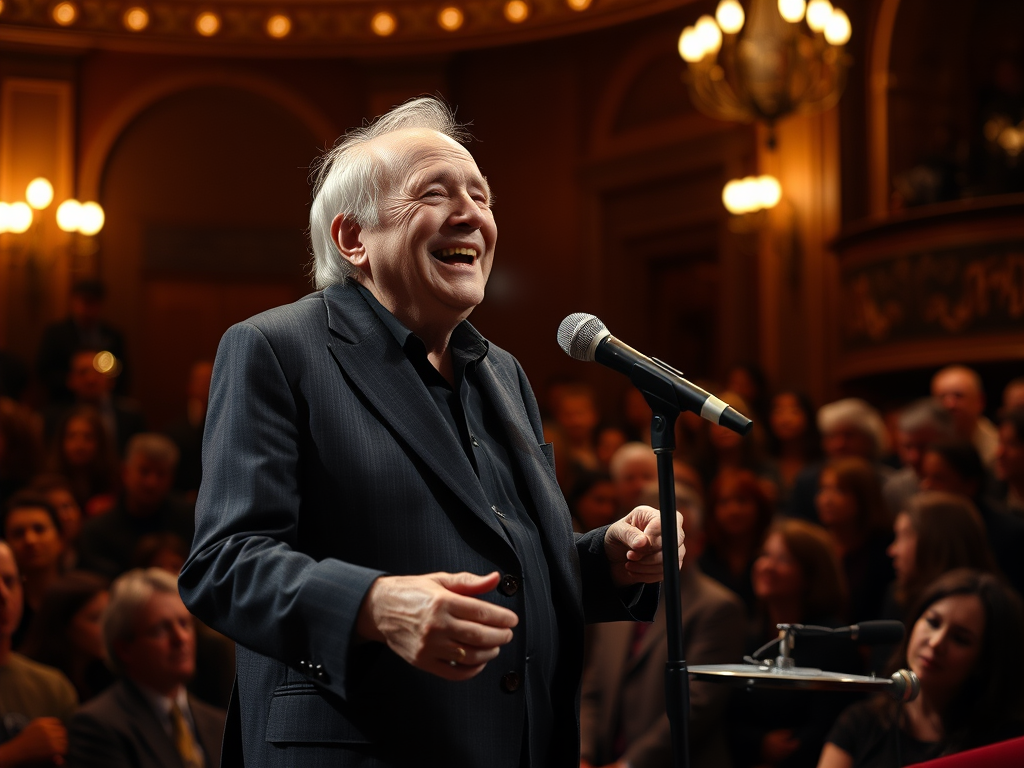

Paul Simon at the Beacon Theater: Quiet, Intricate, Masterly

At 83, Paul Simon has had a change of heart. After publicly bidding farewell to the touring life in 2018 — a decision marked by a grand finale arena tour culminating in an emotional concert in Queens — the legendary singer-songwriter has returned to live performance. This time, however, he’s doing so on a more intimate scale. Instead of stadiums and large venues, Simon is reconnecting with audiences through a more modest, refined experience: A Quiet Celebration, his current tour, designed for smaller theaters chosen specifically for their exceptional acoustics.
This tour is not just a performance — it’s a deeply personal postscript to a career spanning more than six decades. It’s also a testament to Simon’s ongoing creativity and resilience, especially as he navigates a profound hearing loss that would discourage many performers from continuing. Thanks to advanced monitoring technology, Simon has been able to adapt and keep doing what he loves — performing and sharing music with his fans.
On Monday evening, Simon played for a rapt and respectful crowd at the Beacon Theatre in New York City, a venue close to his heart. The historic theater, which underwent a significant renovation in 2009, reopened with Simon as its inaugural performer — a fact that added emotional weight to the evening. With a broad smile, Simon took the stage and warmly declared, “I love playing in this room.”
Simon’s artistry has always revolved around crafting poetic, melodic songs that blend accessible pop sensibilities with intricate lyrical ideas. Since the 1960s, he has captured mass audiences with his meticulously arranged compositions, which often carry a sense of mystery and introspection. Though he has ventured into larger formats with less commercial success — such as his 1980 semi-autobiographical film One-Trick Pony and the 1998 Broadway musical The Capeman — Simon’s work has always aspired to explore big questions through the medium of music.

In 2023, he released Seven Psalms, a continuous 33-minute song cycle that contemplates mortality, the fleeting nature of existence, and the mystery of divinity. Lines like “Two billion heartbeats and out / Or does it all begin again?” convey both a sense of wonder and unease. The lyrics range from humble spiritual reflections to grand, enigmatic declarations: “The Lord is a meal for the poorest of the poor,” he sings at one point, and elsewhere, “The Lord is the ocean rising / The Lord is a terrible swift sword.”
Simon opened the Beacon Theatre concert with a complete performance of Seven Psalms, dressed in a blazer and notably without his signature baseball cap. The suite is tied together by intricate acoustic guitar patterns, recurring melodies, and subtle refrains. At times, it meanders into more abstract territory, with sections that feel like philosophical musings set to music. In many ways, the piece resembles a musical stream of consciousness — thoughtful, reflective, and deeply personal.
His band, consisting of seasoned musicians like guitarists Mark Stewart and Gyan Riley, provided seamless transitions and rich textural layers. The ensemble included innovative percussive instruments crafted by percussionist Jamey Haddad, such as metallic tones and resonant glass bowls that rang like cathedral bells. Flute and viola melodies added emotional depth, making the performance feel both reverent and quietly radical. The suite shifted from moments of awe to flashes of irony, from spiritual pondering to bold musical experimentation.

Following a short intermission, Simon returned to the stage dressed more casually — jeans, a baseball cap, T-shirt, and a velour jacket — for a second set that highlighted his eclectic musical legacy. Throughout his career, Simon has embraced a wide range of musical styles, from folk and gospel to world music and jazz-inflected pop. Long before genre-hopping became the norm for modern indie artists, Simon was already pushing sonic boundaries with each new project.
The second half of the concert served as a reminder of just how inventive his back catalog is. He performed songs that were not only emotionally complex but also technically demanding. “The Late Great Johnny Ace,” for example, moves through various styles — from a soft ballad to a shuffle rhythm and ending with a minimalist passage reminiscent of composer Philip Glass. He also included “Spirit Voices” and “The Cool, Cool River” from his 1990 album The Rhythm of the Saints, both of which feature intricate rhythms that require precise timing. One small misstep in the rhythm could have derailed the performance, but Simon and his band executed everything with subtle mastery.
The concert never relied on sheer volume or spectacle. Drummer Matt Chamberlain often used brushes rather than sticks, maintaining a soft, nuanced dynamic throughout the show. While Simon’s voice has understandably aged, occasionally faltering in power, the musical details surrounding him — bluesy electric guitar fills by Riley, delicate flourishes from woodwinds, and surprise appearances like that of his wife Edie Brickell whistling during “Me and Julio Down by the Schoolyard” — filled in the emotional texture.

Simon also gave the audience insights into his songwriting process, discussing musical structures between songs. He playfully teased iconic guitar riffs from his Simon & Garfunkel days before performing a gently worn version of “Homeward Bound,” imbuing it with the bittersweet perspective of someone who’s spent a lifetime on the road. He introduced “Rewrite” as a reflection of a man longing to redo his life, built around a specific rhythm and a nimble guitar phrase.
Many of Simon’s songs have always dealt with grown-up themes: the joys and challenges of parenthood in “Graceland” and “St. Judy’s Comet”; the inevitability of disappointment in “Slip Slidin’ Away”; and the emotional complexity of parting, explored wistfully in “Train in the Distance” and with wry humor in “50 Ways to Leave Your Lover.” One particularly moving moment came when Simon performed “Rene and Georgette Magritte With Their Dog After the War,” a gentle meditation on love, art, and memory. The rendition echoed the layered arrangement he crafted for his 2018 reinterpretation album In the Blue Light.
While his voice may have lost some of its youthful clarity, Simon was undeterred in reaching for the high notes in “Slip Slidin’ Away” and “Me and Julio.” Initially, the mature and reflective audience remained quiet, absorbing the performance in near silence. But by the time he launched into “50 Ways to Leave Your Lover,” and later “The Boxer,” Simon invited the crowd to sing along — and they did, heartily and joyfully. Even in his most introspective moments, he never forgot how to write a memorable, singable hook.
In the end, Paul Simon’s A Quiet Celebration is more than a concert. It’s a graceful reflection on a life dedicated to music, presented with the humility and curiosity that have always defined his artistry. He may be facing new physical challenges, but his creative spirit remains unshaken. Rather than bidding a final farewell, Simon has chosen to return on his own terms — quietly, thoughtfully, and with something still worth saying.




Leave a Reply