

China Revoked My Visa, and Came to Regret It

During his first presidency, Donald Trump introduced a policy known as the “China Initiative,” a program that claimed to target Chinese espionage in the United States. In practice, however, it led to widespread racial profiling of Chinese and Asian American scientists and academics. Many of the legal cases brought under this initiative were weak and ultimately dismissed. Importantly, the initiative failed to result in any espionage convictions of scholars. Recognizing the harms and inefficacy of this program, President Joe Biden chose to end it — a decision that reflected sound judgment.
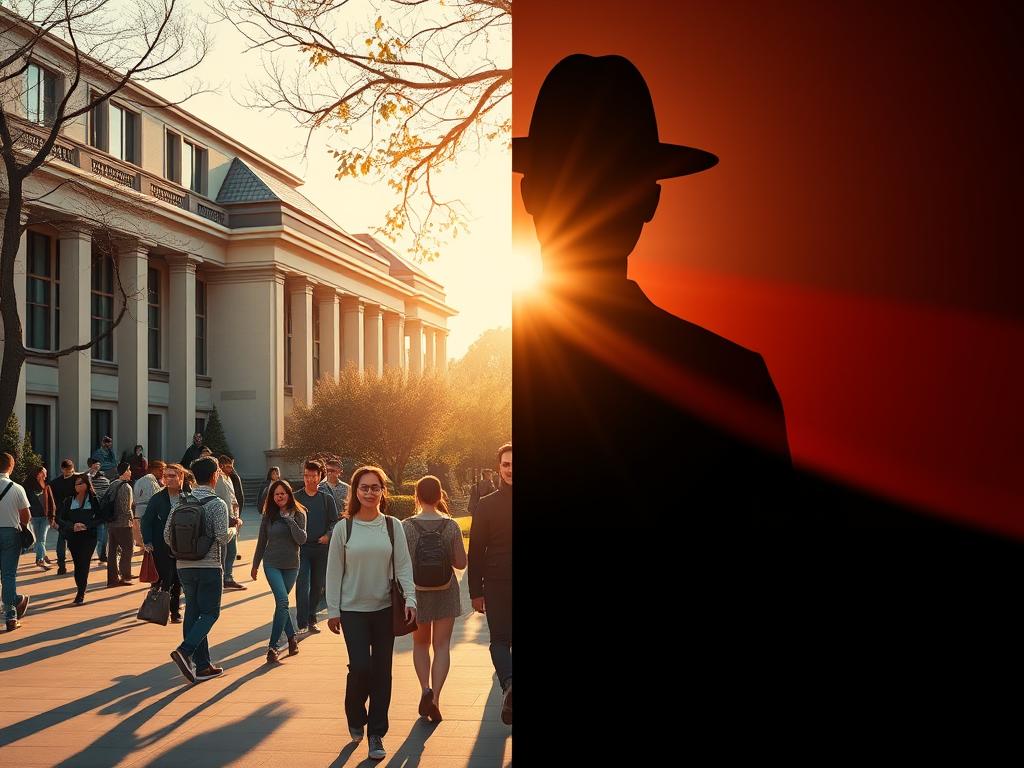
Now, in his return to office, President Trump’s administration appears to be reviving a similar approach. On May 28, Secretary of State Marco Rubio announced plans for the U.S. to take aggressive action in canceling visas held by Chinese students. While the administration seems to have momentarily stepped back from this proposal following recent trade talks, the damage may already have been done, and the threat still looms.
Cracking down on Chinese students, academics, and researchers is just as unwise now as it was the first time. Such actions are likely to weaken the United States in several key areas — academically, economically, and strategically. Instead of protecting national security, these measures risk fueling distrust, diminishing American understanding of its primary geopolitical competitor, and isolating the country intellectually.

Of course, national security concerns regarding China’s espionage activities are legitimate. The Chinese government has indeed engaged in intelligence-gathering operations targeting American institutions, primarily in the government and corporate sectors. Universities have also been points of interest. There are documented cases where students from China have been pressured by their government to collect information from their academic institutions in the U.S., often under threats directed at their families back home. In these scenarios, it is the students themselves who are victims, caught in a web of coercion. Instead of penalizing them collectively, U.S. policy should focus on safeguarding their educational rights and ensuring their safety while studying here.
Moreover, the bulk of research conducted at American universities is not classified. Many institutions explicitly avoid classified research altogether, operating under the principle that academic knowledge should be open and freely shared. While certain areas of research are more sensitive than others, current U.S. policies already include rigorous vetting procedures. A 2020 executive order issued during Trump’s first term, for example, limits visa eligibility for graduate students with ties to Chinese organizations deemed by the U.S. government to be involved in dual-use technologies with military potential.
Mr. Rubio’s recent remarks complicate matters further. His criteria for visa revocations are alarmingly vague. He pointed to students with “connections to the Chinese Communist Party” — a phrase that’s nearly impossible to meaningfully define in a country where the Communist Party plays a role in virtually every aspect of life. Just as every American interacts with their government by obtaining licenses, attending public schools, or paying taxes, Chinese citizens invariably come into contact with their ruling party. Such contact does not automatically imply ideological allegiance.
Additionally, Rubio spoke of barring students in “critical fields,” but failed to clarify what these include. Does this apply solely to advanced technological fields such as artificial intelligence or quantum computing? Or will it extend, in typically sweeping Trump fashion, to disciplines like political science, international relations, or even economics and finance?
These ill-defined and overly broad restrictions echo the goals outlined in Project 2025, a right-wing blueprint that appears to be guiding many of Trump’s second-term policies. This agenda includes sharp cuts to immigration, the dismantling of diversity initiatives, and the weakening of climate protections. Among its stated goals is a drastic reduction — or complete elimination — of visas for Chinese scholars and students.
Implementing such a policy would be detrimental in multiple ways.
From an economic perspective, Chinese students contribute significantly to the U.S. economy. In 2023 alone, over 277,000 Chinese students studying in the U.S. brought in more than $14 billion — a figure comparable to major American exports to China.
Beyond the financial benefits, the U.S. has enjoyed a steady inflow of highly skilled Chinese talent, particularly in the STEM fields. Between 2001 and 2015, over 55,000 Chinese nationals earned STEM-related Ph.D.s from American universities, with roughly 90 percent choosing to remain in the U.S. after graduation. This has strengthened the U.S. scientific and technological landscape. However, Chinese student enrollment has been declining since 2019, partly due to the COVID-19 pandemic and increasingly strained diplomatic ties. Further restrictions will only accelerate this trend and chip away at America’s competitive edge in innovation.
I have seen firsthand how walls built in the name of security can ultimately hurt the country that erects them. In 2004, I co-authored a book on the Uyghurs, an ethnic minority in China’s Xinjiang region. This topic is extremely sensitive for Beijing, which tries to block international research and discussion on Uyghur issues due to long-standing tensions. In response to our book, China accused us of inciting separatism and denied visas to me and other contributing American scholars.
But this strategy backfired. We continued our academic work, published further research, and taught about the region — but we could no longer engage directly with Chinese scholars in face-to-face dialogues in Beijing. The resulting academic chill also discouraged Chinese researchers from participating in global conferences focused on Xinjiang. In cutting off this exchange, China lost access to valuable outside perspectives and failed to monitor international reactions to its internal policies.
When it became known in 2018 that over a million Uyghurs and other Muslim minorities had been interned in so-called re-education camps, the global response caught Beijing off guard. Chinese diplomats dismissed early warnings, underestimating the scale of international backlash. Eventually, satellite imagery made denial impossible, and China was forced to alter its messaging repeatedly. In the end, it faced harsh criticism, sanctions, and a severely damaged global reputation.
By stifling academic exchange, China deprived itself of the foresight necessary to manage international diplomacy effectively. If the U.S. pursues similar policies, it risks making the same costly error.
From a realist’s national security standpoint, deepening our understanding of China should be a top priority — not cutting off our most reliable channels of insight. That requires maintaining academic and cultural ties, not severing them. And yet, Trump’s first term saw the termination of the Fulbright exchange program with China — a longstanding initiative that enabled thousands of scholars to travel between the two nations. His new administration has also weakened Radio Free Asia, an independent news outlet vital for monitoring developments in China’s most secretive regions, and slashed funding for programs aimed at tracking human rights abuses there.
Blocking Chinese students from studying in the U.S. would only further isolate America from a nation that constitutes one-sixth of the world’s population. This would not be an act of strength, but of fear. It would be a rejection of knowledge in favor of suspicion, a retreat from global engagement that mirrors the isolationist tendencies of the very regime it claims to oppose.
A truly confident America should not be afraid of welcoming individuals from even its greatest rivals. Intellectual openness — not paranoia — is the hallmark of a thriving democracy. The pursuit of knowledge transcends borders. Learning should never be mistaken for espionage.




Leave a Reply