
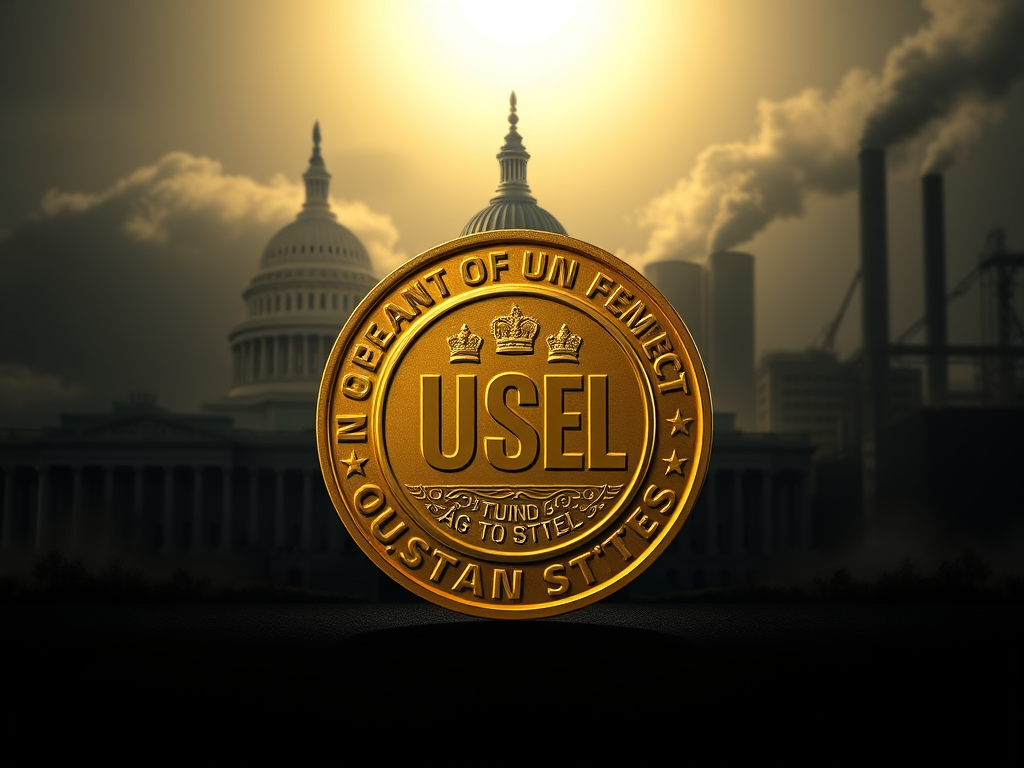

‘Golden Share’ in U.S. Steel Gives Trump Extraordinary Control

In a dramatic move to salvage its acquisition of U.S. Steel, Japan’s Nippon Steel has agreed to an unprecedented condition: granting the U.S. government a so-called “golden share” that effectively gives the White House lasting control over key decisions involving the iconic American company.
Newly disclosed elements of the deal highlight the sweeping nature of this agreement. It gives the sitting U.S. president — and those who come after — permanent influence over U.S. Steel, including a seat at the table in board decisions and veto authority over a wide range of strategic corporate actions. Experts say this could reshape the rules of foreign investment in the United States for years to come.
The framework was finalized after prolonged negotiations that extended well into Wednesday and Thursday nights, according to individuals with direct knowledge of the talks. Nippon Steel, which has sought to purchase U.S. Steel since December 2023, had long faced resistance from the Biden administration due to national security considerations. The company eventually conceded to Donald Trump’s demand for a special equity arrangement, providing the federal government with a unique form of oversight and influence.
Initially, Nippon hoped this influence would be time-bound — possibly tied to the length of a single presidential term. However, during discussions led by Commerce Secretary Howard Lutnick, administration officials made clear they wanted the golden share to be permanent. Their insistence ultimately prevailed, according to the same sources.
As outlined in the final national security agreement, signed on Friday, the U.S. government will retain one preferred share — known as Class G (symbolizing “gold”) — in U.S. Steel. This single share comes with powerful governance rights. For instance, the company is now prohibited from undertaking several activities without presidential approval. These include shifting production overseas, closing domestic plants prematurely, or making key changes in sourcing raw materials.

Despite calling this arrangement a “partnership,” U.S. Steel has yet to issue any regulatory filing that alters the basic structure of its $14.9 billion sale to Nippon — a deal approved by shareholders over a year ago.
The United Steelworkers union, which has strongly opposed the acquisition from the start, voiced disappointment with the latest development. In a message to union members on Saturday, president David McCall criticized President Trump for reversing his earlier position. “We are disheartened that the president has now allowed the deal to go forward under the guise of a ‘partnership,’ after more than a year of opposing it,” McCall said.
In contrast, Commerce Secretary Lutnick defended the outcome in a social media post, claiming it would help revive U.S. Steel and boost domestic steel manufacturing. He argued that the golden share arrangement would protect national interests, benefit the steelworkers, and expand access to American-made steel for U.S. industries.
White House spokesperson Kush Desai echoed this perspective, stating, “Steel is essential to the strength of our economy and our military. The administration remains committed to ensuring that international business decisions don’t jeopardize our national and economic security.”
Neither Nippon Steel nor U.S. Steel has issued a formal statement in response to the agreement.
Although U.S. officials routinely examine foreign acquisitions of domestic companies on national security grounds, the powers granted in this case appear to be more extensive than usual. While it’s common for companies and the government to reach compromises under review, the introduction of a golden share represents a significant departure from established norms.
Historically, the U.S. government has only taken ownership stakes in private companies during major economic crises or when a business plays a critical role in the national infrastructure. During the 2008–2009 financial crisis, for instance, the Treasury Department acquired a substantial stake in General Motors as part of a broader bailout strategy and also assumed control of mortgage institutions Fannie Mae and Freddie Mac. The final government shares in GM were sold in 2013. Although Trump has occasionally floated the idea of releasing the mortgage giants from public control, no such move has materialized.
Whether this golden share precedent will be extended to other foreign transactions under scrutiny — such as negotiations involving TikTok — remains to be seen. Nevertheless, the steel deal illustrates Trump’s willingness to interpret presidential powers broadly, particularly in matters involving national interest and corporate governance.
Under the terms of the U.S. Steel agreement, the president may directly appoint one of the three independent directors to the company’s board. The remaining two appointments also require presidential sign-off, effectively granting the government significant influence over boardroom dynamics.

Sources familiar with the negotiations clarified that the golden share cannot be sold or transferred by any future administration. Moreover, it carries no financial rights: it doesn’t entitle the government to dividends or increase its equity stake. Its purpose is purely governance-oriented.
According to experts, the very concept of a golden share marks a turning point in how foreign investors might perceive risk and control in U.S. markets. Aaron Bartnick, who previously worked in the Biden administration and oversaw foreign investment reviews at the Treasury Department, said the use of a government-held equity share as a precondition for deal approval is “virtually without precedent.”
He questioned whether ownership was even necessary. “It’s unclear why this had to involve an equity stake at all, rather than simply formalizing governance rights through a standard agreement,” he said.
Secretary Lutnick, who transitioned from a successful Wall Street career, has brought unorthodox financial strategies to Washington. Known for advocating bold economic reforms such as the creation of a sovereign wealth fund, Lutnick has also promoted the golden share concept — a strategy more commonly seen in Britain, China, or Brazil than in the U.S.
Although such investment security reviews are traditionally led by the Treasury Department, Lutnick took the reins in this case, given his advocacy for the golden share model. Two other Commerce Department officials — David E. Shapiro and Michael Grimes — also played leading roles during the last round of negotiations, which took place shortly after Lutnick returned from trade talks in London with Chinese counterparts.
After re-entering office, Trump ordered a fresh national security review of the Nippon Steel deal. Though government agencies suggested various measures to mitigate risks, Trump rejected most options. But when presented with the golden share proposal, he quickly endorsed it. About ten days ago, he instructed Lutnick to formalize the agreement.

Even though Lutnick agreed to some compromises, he insisted on broad veto powers for the president — including control over potential decisions to relocate corporate offices or production facilities abroad.
The final agreement was signed Friday afternoon, even as global events unfolded — notably, Israel’s strike on Iranian nuclear sites, which temporarily drew attention away from the Commerce Department discussions. Still, Trump finalized the deal before the weekend.
“I have the golden share, or rather the president does,” Trump said Thursday. “I’m slightly concerned about who the next president will be, but this share gives us absolute control.”
Globally, golden shares are commonly used by governments to maintain influence over companies deemed essential to national security. Brazil retains such a stake in Embraer, its major aircraft manufacturer. The Chinese government holds an indirect share in ByteDance, the parent of TikTok. And the United Kingdom maintains a golden share in defense firm BAE Systems.
Ironically, U.S. officials have often criticized these arrangements in other countries, arguing they hinder open markets. In fact, several European courts have struck down golden share provisions, saying they restrict the free flow of capital.
Legal and national security analysts now worry that the U.S. adopting such a model could discourage future foreign investment. Stephen Heifetz, a partner at law firm Wilson Sonsini Goodrich & Rosati, warned that the broader implication may be a shift in perception about the reliability of U.S. markets.

“This sends a strong message that the U.S. government is increasingly willing to intervene in deals that wouldn’t traditionally raise national security flags,” Heifetz said. “It’s going to make global investors think twice about the barriers they may face when attempting to do business in America.”e United States could permanently alter the way that foreign investors view deal making in the country.
“A bigger issue is the messaging that it sends to the market, which is the U.S. government is intervening increasingly in transactions that don’t seem to have — by traditional standards — significant national security risks,” said Stephen Heifetz, a partner at the law firm Wilson Sonsini Goodrich & Rosati.
“It is going to cause people to spend more time thinking about the obstacles to investing in the U.S. market,” he said.




Leave a Reply