

Supreme Court Upholds Kirchner’s Conviction: What’s Next for Argentina?

Argentina’s political landscape was shaken on Tuesday when the nation’s Supreme Court upheld a corruption conviction against Cristina Fernández de Kirchner, the former president and one of the country’s most influential and controversial political figures. The decision not only confirms a six-year prison sentence but also prohibits her from holding public office for life.
This legal development is expected to intensify the already volatile political climate in Argentina. Fernández de Kirchner, 72, has remained a key figure in national politics, and her recent statements signaled intentions to re-enter the political arena. The ruling comes just a few years after she narrowly escaped an assassination attempt and only days after she revealed plans to run again, this time for a legislative seat in the province of Buenos Aires.
In anticipation of the court’s verdict, supporters of Fernández de Kirchner blocked major roads leading into Buenos Aires, disrupting transportation and signaling their anger. The move underscores the enduring loyalty of her political base, particularly among working-class Argentines and Peronist activists. Additionally, several powerful labor unions had warned of nationwide strikes should the verdict go against her.
The Supreme Court’s 27-page decision rejected Fernández de Kirchner’s appeal, upholding the findings of a lower court that concluded she had defrauded the state during her presidency from 2007 to 2015. The case centered on allegations that public works contracts in the southern province of Santa Cruz were improperly awarded to a close associate of the Kirchner family.
Although the court reaffirmed her prison sentence, Argentine law permits individuals over the age of 70 to serve time under house arrest rather than in prison. The lower tribunal that originally sentenced her has requested that she appear within five business days to initiate the detention process and has asked the nation’s security minister to prepare an appropriate facility for her holding. Legal experts suggest that she may spend a short period in detention until a judge authorizes her transfer to house arrest.

Andrés Gil Domínguez, a constitutional scholar at the University of Buenos Aires, noted that while the legal outcome is clear, Fernández de Kirchner’s actual imprisonment is unlikely to be lengthy due to her age and political significance.
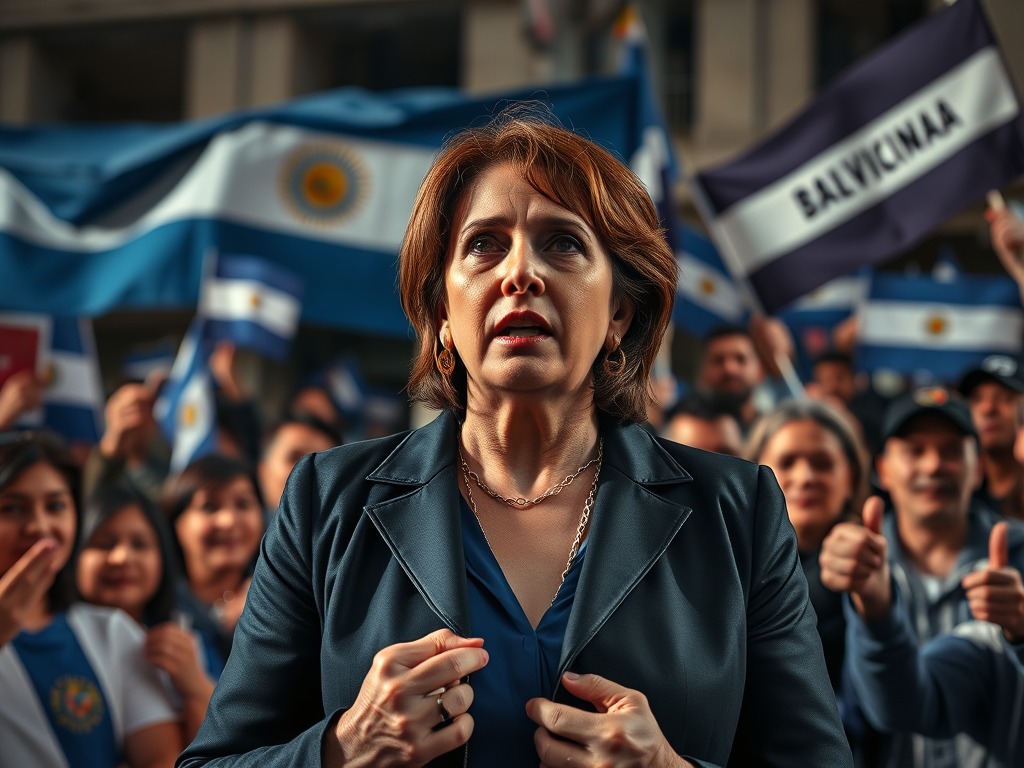
Shortly after the Supreme Court’s decision was announced, Fernández de Kirchner addressed supporters outside her party’s offices. In a defiant speech, she criticized the ruling and the justices who delivered it, referring to the trio as “puppets” and labeling them “a triumvirate of disgrace.” She accused them of acting in the interest of Argentina’s economic elites and undermining the democratic will of the people.

President Javier Milei, her ideological rival and current head of state, responded to the ruling with a one-word message on social media platform X: “Justice.” He also reposted celebratory messages applauding the court’s decision, reflecting his administration’s tough stance on what it describes as decades of fiscal irresponsibility and corruption under previous governments, including those led by Fernández de Kirchner and her late husband, Néstor Kirchner.
With more than thirty years in public life, Fernández de Kirchner has long been a polarizing force in Argentine politics. Supporters hail her for initiating broad social welfare programs and promoting national sovereignty, while critics blame her for deepening Argentina’s economic woes and fostering a culture of corruption.
Her legal troubles are extensive. In 2022, she was convicted of steering government contracts to a longtime ally in Santa Cruz, the province governed for years by her husband before he became president in 2003. The court ruled that this pattern of favoritism and mismanagement had originated during Néstor Kirchner’s presidency and was continued under Cristina’s administration. Néstor Kirchner passed away in 2010.
Beyond this case, the former president faces several other legal challenges, including allegations of money laundering and involvement in a controversial agreement with Iran, allegedly aimed at concealing Iranian involvement in the 1994 terrorist bombing of a Jewish community center in Buenos Aires, which resulted in 85 deaths.
Despite these accusations, Fernández de Kirchner has consistently argued that the charges against her are politically driven. She maintains that the judiciary is being manipulated by her opponents to eliminate her influence and prevent her from participating in Argentina’s future leadership.
Since early 2024, she has led the Justicialist Party, Argentina’s main opposition bloc and the political heart of the Peronist movement, which has shaped the country’s political identity for decades. Her candidacy for the Buenos Aires provincial legislature was widely expected to succeed. Had she won, it would have granted her parliamentary immunity and shielded her from imprisonment.
Speaking on the eve of the Supreme Court’s decision, Fernández de Kirchner told her supporters that the timing of the ruling was no accident. “Coincidence is not a political category,” she said. “It took just one week after we announced our candidacy for the demons to be unleashed.”
She further accused the government of using the legal system to suppress dissent and discredit her in the eyes of the public. Referring to President Milei’s sweeping austerity agenda and right-wing economic reforms, Fernández de Kirchner said her legal persecution was part of a broader effort to silence opposition voices.
“Throw me in prison if you must,” she declared defiantly. “But if you think that will solve Argentina’s problems, you are mistaken. My imprisonment won’t change the fact that people are suffering more every day.”
During her 2022 trial, thousands of her supporters gathered daily outside her home in Buenos Aires to show their backing. Their dedication was not dampened even when her life was nearly taken in September of that year. A man pointed a loaded gun at her head at point-blank range but failed to fire when the weapon jammed. The assailant and two accomplices remain in custody awaiting trial.
On the evening following the Supreme Court ruling, hundreds of loyalists convened once more outside her residence in the Constitución neighborhood of Buenos Aires. The crowd swelled into the night, many waving flags, carrying signs, and chanting in solidarity.
Among the crowd was 58-year-old Sandra Marcela Pontino, a mother of four, who clutched a handmade sign that read, “Cristina, the people are with you.” She explained her unwavering support by saying, “I lived my best years under her leadership. They know they can’t beat her at the polls, so this is their only way to stop her.”
As Fernández de Kirchner’s legal and political battles continue, her case serves as a stark reminder of the deep divisions and institutional struggles within Argentine democracy. Whether she eventually returns to political life or remains sidelined, her legacy will continue to shape the nation’s discourse for years to come.




Leave a Reply