
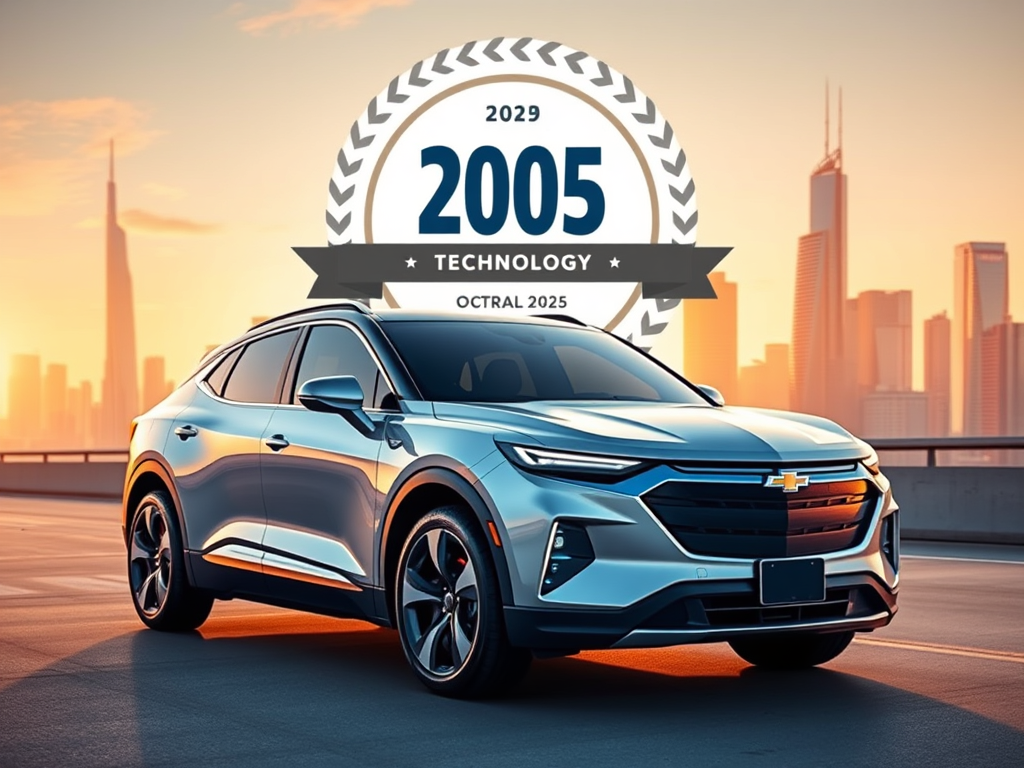

In 2025, General Motors (GM) was named among the world’s top 100 technology companies, a recognition that underscores its transformation from a traditional automaker into a cutting-edge innovator in mobility, electrification, and intelligent systems. This inclusion, announced as part of the annual Global Top 100 Technology Companies list, acknowledges GM’s continuous efforts in pushing the boundaries of automotive technology, sustainability, and digital integration. While GM has long been a household name in car manufacturing, its journey over the past decade has signaled a deep and deliberate shift toward becoming a technology-driven enterprise. This award marks a milestone in that journey, confirming GM’s position alongside the most dynamic and forward-thinking corporations globally.
General Motors: A Leader in Electric Vehicle Technology

A key factor in GM’s recognition lies in its investments in electrification. Over the past few years, the company committed over $35 billion to electric vehicle (EV) and autonomous driving technologies, establishing itself as a leader in the transition to zero-emission transportation. Central to this strategy is the Ultium battery platform, a highly flexible and scalable architecture that supports a wide variety of EVs—from compact cars to large trucks and luxury SUVs. GM’s development and deployment of Ultium technology has allowed it to launch vehicles like the Cadillac Lyriq and the Chevrolet Silverado EV, while setting the stage for over 30 EV models worldwide by the end of 2025. With a long-term vision of carbon neutrality by 2040, GM has also pledged that all new light-duty vehicles it produces will be electric by 2035. The company’s rapid strides in battery innovation, range extension, and affordability have proven instrumental in expanding the market for EVs in North America and globally.

Beyond electric propulsion, GM’s technological advances in automation and software-defined mobility have reshaped how vehicles are designed, manufactured, and experienced. Its Super Cruise driver assistance system, capable of hands-free driving on hundreds of thousands of miles of highway, represents one of the most advanced Level 2+ systems in commercial vehicles today. Unlike traditional adaptive cruise control, Super Cruise enables a more intuitive and safer driving experience through precision lidar mapping, in-cabin driver monitoring, and continuous software updates. GM has continued to enhance this system, with plans for more advanced iterations in the near future. While its autonomous division Cruise encountered operational challenges, GM’s strategic reallocation of resources has fueled deeper integration of autonomous and semi-autonomous technology into its core product lines.

Equally significant is GM’s use of artificial intelligence and smart manufacturing to streamline operations and increase productivity. Within its global factories, GM has implemented digital twins, predictive maintenance, and AI-powered quality control systems. For example, robotic vision systems now assist in real-time inspection during the production process, drastically reducing error rates and material waste. The adoption of NVIDIA’s Omniverse platform has further enhanced GM’s capacity to simulate and optimize manufacturing layouts before physical construction, reducing both cost and environmental impact. Through partnerships with leading tech firms like NVIDIA, GM is accelerating innovation not just in its vehicles, but across its entire supply chain and product development ecosystem.

The software dimension of GM’s transformation is equally compelling. Through its Ultifi platform, GM is bringing a software-defined approach to the driver experience. This end-to-end platform allows for over-the-air updates, app integration, personalization of vehicle settings, and new subscription-based features. GM envisions software and digital services contributing as much as $25 billion in annual revenue by 2030. As cars become more like computers on wheels, the ability to deliver seamless digital functionality is no longer optional—it is central to maintaining market leadership. The company’s Vehicle Intelligence Platform (VIP), with its high-speed data transmission and cyber-secure architecture, underpins this vision, creating a secure and updatable foundation for next-generation vehicles.

Sustainability remains a cornerstone of GM’s broader innovation narrative. By 2025, the company aims to power 100% of its U.S. facilities with renewable energy, a goal that was originally targeted for 2050 but significantly accelerated in recent years. In parallel, GM has invested heavily in building domestic supply chains for critical battery materials such as lithium, cobalt, and nickel, helping reduce dependency on imports and enhancing environmental oversight. These moves align with the company’s commitment to a circular economy, in which materials can be recycled and reused at scale, reducing the long-term environmental footprint of its products.
Another aspect of GM’s inclusion in the 2025 Global Top 100 Technology Companies is its enduring performance and customer trust. Despite a highly competitive market landscape, GM retained its position as the best-selling automaker in the U.S. for the third consecutive year in 2024. Its continued dominance in fleet, retail, and commercial markets is a testament to its adaptability, even as it pivots to new technologies. Moreover, GM’s leadership in customer loyalty—as recognized by S&P Global Mobility for over a decade—demonstrates that its tech-forward approach resonates with consumers. Innovations are not merely for headlines; they’re embedded in the driving experience and embraced by millions.

The company’s success also reflects the strength of its strategic alliances. From joint ventures with Honda on electric vehicle development to battery production partnerships with LG Energy Solution and Samsung SDI, GM has crafted a powerful collaborative framework that accelerates R&D while managing risk. More recently, the expansion of its relationship with NVIDIA has provided GM access to industry-leading AI computing power, helping it stay ahead in both vehicle technology and factory automation. These alliances, forged across continents and industries, illustrate GM’s understanding that the future of mobility is global and cross-disciplinary.

General Motors’ selection as one of the 2025 Global Top 100 Technology Companies validates its remarkable transition into a technology powerhouse. While the company’s century-long legacy is rooted in internal combustion vehicles, its recent trajectory paints a picture of reinvention, ambition, and purpose. Through a strategic blend of electrification, automation, artificial intelligence, software, and environmental responsibility, GM has not only remained relevant—it has emerged as a leader in one of the most transformative eras in mobility history.

As the company moves forward, its leadership team, led by CEO Mary Barra, continues to emphasize innovation that is both responsible and inclusive. With a clear focus on zero crashes, zero emissions, and zero congestion, GM’s technology roadmap offers not only better cars but a better future. Being named among the world’s most innovative tech companies is more than a title; it is recognition that General Motors is helping to define the future of global transportation—and doing so with ingenuity, integrity, and vision.




Leave a Reply