
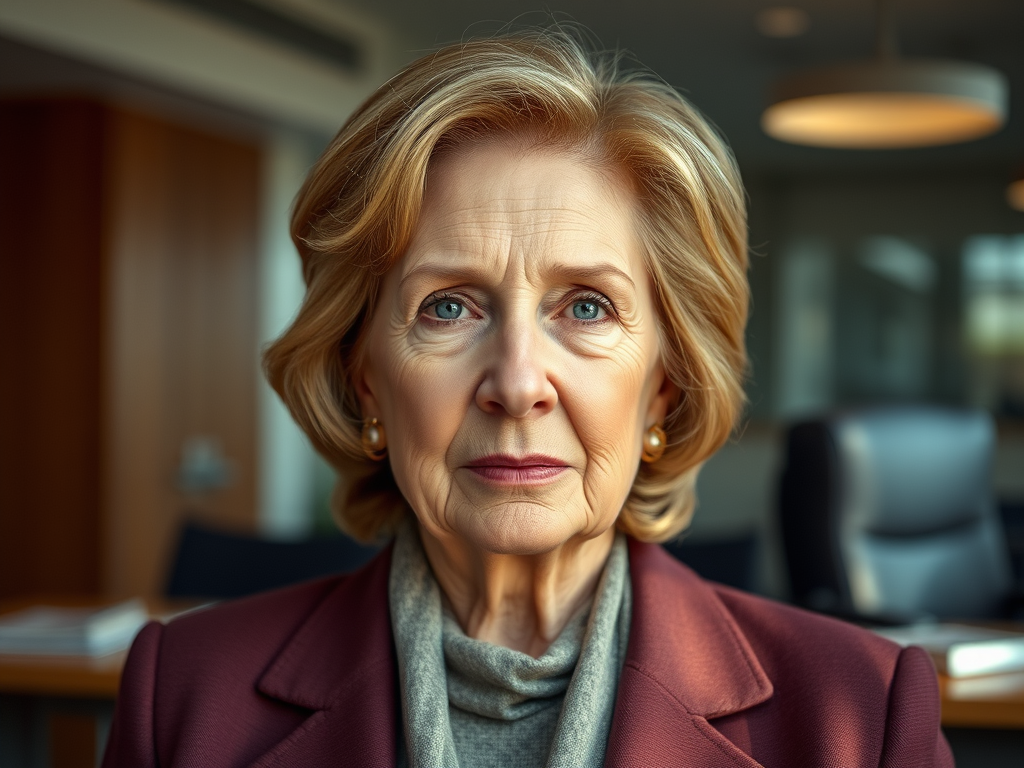

Shari Redstone Confirms Cancer Diagnosis While Facing Trump’s ‘60 Minutes’ Suit

Shari Redstone, chairwoman and majority shareholder of Paramount Global, is currently grappling with a deeply personal challenge as she undergoes treatment for thyroid cancer. At the same time, she remains at the center of a complex corporate saga that includes a high-stakes merger and a politically charged lawsuit from former President Donald Trump targeting CBS News, a major part of the media conglomerate she leads.
The 71-year-old executive revealed her medical condition after The New York Times made inquiries regarding her health. In a statement provided by her spokesperson, Molly Morse, it was confirmed that Ms. Redstone was diagnosed with thyroid cancer earlier this spring and underwent surgery several weeks ago.
“Shari Redstone was diagnosed with thyroid cancer earlier this spring,” Morse stated. “She has since undergone surgery and is receiving ongoing radiation treatment. She and her family remain thankful for a very positive prognosis.”

Despite the physical and emotional toll, Ms. Redstone has continued to fulfill her professional duties. She played a key role in choosing three new members for Paramount’s board even as she underwent medical care. Those close to her say she remains actively engaged in both her business and philanthropic endeavors, underscoring her commitment to maintaining stability in a time of uncertainty.
Her diagnosis, however, adds another layer of complication to an already intricate situation surrounding Paramount. The company—which includes television stations, a prominent streaming service, and a legendary movie studio—is in the midst of a potential acquisition by Skydance Media, the film and tech venture led by David Ellison.
The deal, valued in the billions, was struck after prolonged negotiations and would see Skydance, backed by Ellison’s billionaire father Larry Ellison, acquire both Paramount Global and the Redstone family’s controlling interest in the company. The merger promises to bring technological innovation into Paramount’s traditional entertainment business, yet it has been stalled by regulatory roadblocks, particularly the need for approval from the Federal Communications Commission (FCC).
That approval has been further complicated by legal actions initiated by Donald Trump. In October, the former president sued CBS News and its long-running program “60 Minutes,” alleging that the show manipulated an interview with Vice President Kamala Harris in a misleading manner. Trump labeled the segment “fraudulent” and accused the network of political bias, demanding they be held accountable.
While media law experts have generally dismissed the lawsuit as lacking merit—highlighting that it is standard practice for news organizations to edit interviews before broadcasting—the lawsuit remains active. Some Paramount insiders believe resolving the legal conflict could smooth the path toward FCC approval for the merger, though both the agency and the company have denied any official connection between the two issues.

Settlement discussions between Trump’s legal team and Paramount have been ongoing for months, according to individuals with knowledge of the talks. While both parties have made progress, a final agreement remains elusive. President Trump has reportedly demanded over $25 million in damages, while Paramount has so far offered around $15 million. A mediator is facilitating the talks, but no resolution appears imminent.
The lengthy negotiations have exasperated executives at both Paramount and Skydance, who are beginning to weigh the consequences of a failed deal. Some internal discussions have acknowledged the possibility that no settlement may be reached, and in turn, that the merger could fall apart entirely. Trump’s team has also raised the specter of further legal action, this time targeting a May “60 Minutes” segment addressing his executive orders affecting law firms.
Amid these complications, editorial independence at CBS News has come under increased scrutiny. While the network insists that journalistic standards remain intact, internal tensions have surfaced. In April, Bill Owens, executive producer of “60 Minutes,” resigned, citing concerns about limitations on his editorial freedom. “I would not be allowed to make independent journalistic decisions,” he reportedly said.

In a further shake-up, CBS recently ousted Wendy McMahon, the president of the news division. In her farewell memo, McMahon alluded to a disconnect with the company’s leadership, stating, “The company and I do not agree on the path forward.”
Ms. Redstone, because of her sizable personal financial interest in the Skydance deal, recused herself from boardroom deliberations concerning the Trump lawsuit. Nonetheless, sources familiar with her thinking say she has long believed a settlement would be in the company’s best interest. She has expressed a desire to avoid prolonged legal conflict with the former president—one that could cost the company significant financial resources and expose its various divisions to political backlash, particularly those with pending government business.
Adding to the pressure, political figures such as Senators Elizabeth Warren and Bernie Sanders have warned that any payment to Trump could be interpreted as a form of bribery, potentially triggering congressional investigations. “Politicians and presidents can’t go suing people over stories they do not like,” Sanders said in a recent interview. “That is not what this country is supposed to be about.”

The potential perception of impropriety—namely, the idea that Paramount might be paying Trump to secure a separate business deal—has left board members in a difficult position. They must balance their fiduciary responsibilities to shareholders with public expectations of ethical corporate conduct.
Meanwhile, Paramount’s leadership is in transition. This week, the company announced that longtime board member Judith McHale would not seek reelection. In her place, three new directors have been nominated: Mary Boies, legal counsel at Boies Schiller Flexner; Charles E. Ryan, co-founder of Almaz Capital; and Roanne Sragow Licht, an adjunct professor at Boston University. These changes indicate a strategic shift as Paramount prepares for a potentially new era under Skydance ownership—should the merger ultimately be finalized.
Even as she continues to steer through this turbulent moment, Ms. Redstone remains personally invested in the operations and direction of CBS News. She has voiced concerns over certain editorial choices in the past and has not hesitated to share those views with the company’s top management. However, sources close to her say her priorities have shifted somewhat since her diagnosis.
Health, family, and charitable work now dominate her personal focus. While she stays well-informed about Paramount’s business affairs and continues to push for completion of the Skydance acquisition, much of her attention is currently devoted to medical consultations and recovery efforts. Despite her serious illness, Ms. Redstone’s resilience and hands-on leadership remain evident to those working closely with her.
In many ways, Ms. Redstone’s story mirrors the broader state of the media industry she has helped lead for decades: facing external threats, internal conflicts, and uncertain futures, all while trying to maintain control and integrity. Her personal journey through illness adds a human dimension to the corporate drama, reminding both colleagues and critics that even the most powerful figures must occasionally confront their own vulnerabilities.




Leave a Reply