
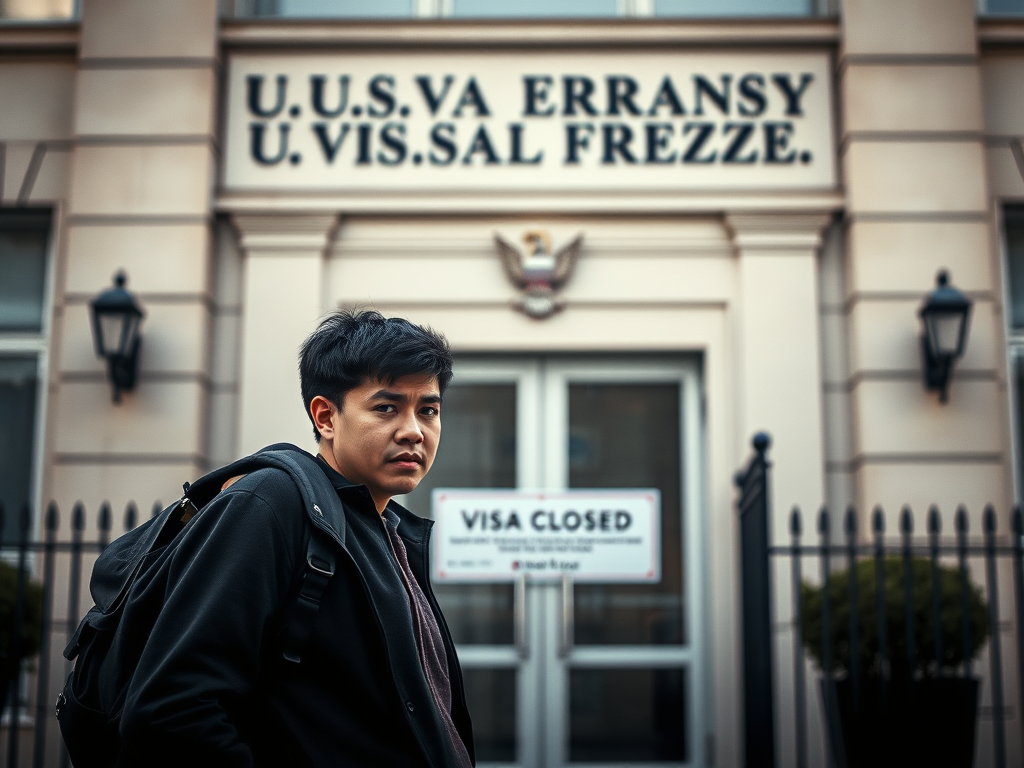

State Department Halts Interviews for Student and Exchange Visas


The U.S. State Department has ordered a temporary freeze on new interview appointments for foreign nationals applying for student and exchange visitor visas, as part of a broader initiative to intensify scrutiny of applicants’ social media presence. The decision, which is already affecting U.S. embassies and consulates globally, stems from an internal directive issued by Secretary of State Marco Rubio earlier this week.
The directive, dated Tuesday, was communicated through a classified cable and has since been confirmed by a State Department spokesperson. The order instructs consular officials to halt scheduling new interviews for these visa categories until further instructions are provided, citing national security concerns.
According to a formal statement from the department, officials are leveraging “all available information” when assessing visa applications, although no clear criteria were provided regarding what types of social media content may disqualify an applicant. Since 2019, visa applicants have been required to disclose usernames and handles for various platforms, but this policy now appears to be enforced with renewed intensity.
The development comes amid a tense political climate in which President Donald Trump has taken aim at perceived anti-Israel sentiment on college campuses. He has publicly pressured universities, particularly elite institutions such as Harvard, to crack down on political speech—especially messages seen as sympathetic to Palestinians or critical of Israel.

Earlier this month, President Trump announced plans to revoke Harvard University’s authorization to enroll international students, citing concerns over what he described as “anti-American and anti-Israel propaganda” being tolerated by the administration. However, a federal judge intervened, issuing a temporary restraining order that prevented the administration from executing the plan, at least for the time being.
This growing politicization of education and immigration policy has caused concern in academic and diplomatic circles. Many U.S. universities, especially research-intensive institutions, depend heavily on the tuition fees paid by international students. Beyond financial considerations, foreign students also contribute significantly to the academic landscape, with some departments—particularly in STEM fields—relying heavily on international talent for teaching, research, and innovation.
According to data from the Department of Homeland Security, more than 1.3 million foreign students were pursuing degrees in the United States in 2023. The freeze on visa interviews and the potential for increased denials now threatens not only individual academic journeys but also the broader research output and economic well-being of many universities.
While the current freeze primarily affects new applicants awaiting interviews, those who already have appointments scheduled are expected, in theory, to still be able to attend them. The State Department described the freeze as part of its “routine, dynamic scheduling” process, suggesting that it remains flexible depending on workload and background check requirements.
Yet, the language of the cable makes clear that the policy is far from routine. On March 25, Secretary Rubio issued instructions for consular officials to initiate enhanced review procedures for certain student and exchange visa applicants. Specifically, the cable directed that individuals be referred to the department’s Fraud Prevention Unit for mandatory social media evaluations. The criteria for such referrals remain unclear, raising questions about consistency and transparency in the process.
Secretary Rubio’s aggressive stance on immigration and student visas is closely linked to broader political efforts surrounding the war in Gaza and the domestic response to it. Over the past few months, he has repeatedly criticized student-led demonstrations that express support for Palestinians or call for divestment from Israel. While most campus protests have remained peaceful and within legal bounds, Rubio has accused them of threatening campus safety and creating hostile environments for other students.
As part of this campaign, Rubio has begun revoking the visas of foreign nationals deemed to have engaged in “un-American” or politically subversive behavior. Speaking to the press in late March, he claimed to have canceled over 300 visas, many of them issued to students. He also signaled that this trend would continue, stating that new visa reviews and cancellations were occurring daily.
One particularly controversial case involved Mahmoud Khalil, a Palestinian graduate of Columbia University and husband to a U.S. citizen. Rubio stripped Khalil of his green card, accusing him of undermining American foreign policy objectives. He was subsequently detained by immigration authorities, igniting outcry from civil liberties groups and immigration attorneys.
Several similar cases have made their way into courtrooms across the country. In response to lawsuits filed by affected individuals, federal judges have issued temporary restraining orders halting some of the government’s actions and demanding further justification. The legal challenges highlight a deepening divide between the executive branch’s approach to immigration enforcement and the judiciary’s commitment to due process.

Another high-profile example is the case of Rumeysa Ozturk, a Turkish Fulbright scholar and doctoral candidate at Tufts University. Ozturk was detained after the government revoked her visa, citing a co-authored op-ed in a student newspaper that advocated for Palestinian rights and called for institutional divestment from Israeli-linked companies. Despite the nonviolent and academic nature of her activism, the State Department treated the article as grounds for visa cancellation. A federal judge has since ordered her release from detention while her case is reviewed.
Critics argue that the administration is effectively punishing lawful expressions of opinion and seeking to impose ideological litmus tests on foreign nationals. The American Civil Liberties Union and other advocacy organizations have decried the measures as politically motivated censorship that conflicts with both the First Amendment and long-standing democratic values.
“Freedom of speech should not be a privilege reserved only for citizens,” said one immigration lawyer representing multiple affected students. “These policies are creating a chilling effect that will discourage talented individuals from coming to the U.S.—not because of fear of crime or instability, but because they fear being punished for their views.”
Despite growing backlash, the administration shows no signs of reversing course. The newly implemented review system emphasizes heightened vigilance toward applicants’ online behavior, and Rubio has signaled that more changes may be coming, including possible expansions of the social media screening program to other visa categories beyond students and scholars.
Meanwhile, American universities are scrambling to adapt to the uncertainty. Several institutions have issued public statements reaffirming their commitment to academic freedom and expressing concern about the impact of immigration policies on campus life. Some have begun exploring legal options to support affected students, including funding for legal defense and assistance with visa appeals.
As this policy landscape shifts, one thing remains clear: international students and scholars now face a far more hostile and unpredictable environment in the United States. From consular scrutiny to campus crackdowns, the space for dissent and diversity of thought appears to be narrowing.
In attempting to police political discourse through immigration policy, the government risks not only violating fundamental rights but also undermining the very institutions that make the U.S. a global leader in education and innovation. Whether this approach will hold up under legal challenge—or in the court of public opinion—remains to be seen.




Leave a Reply