
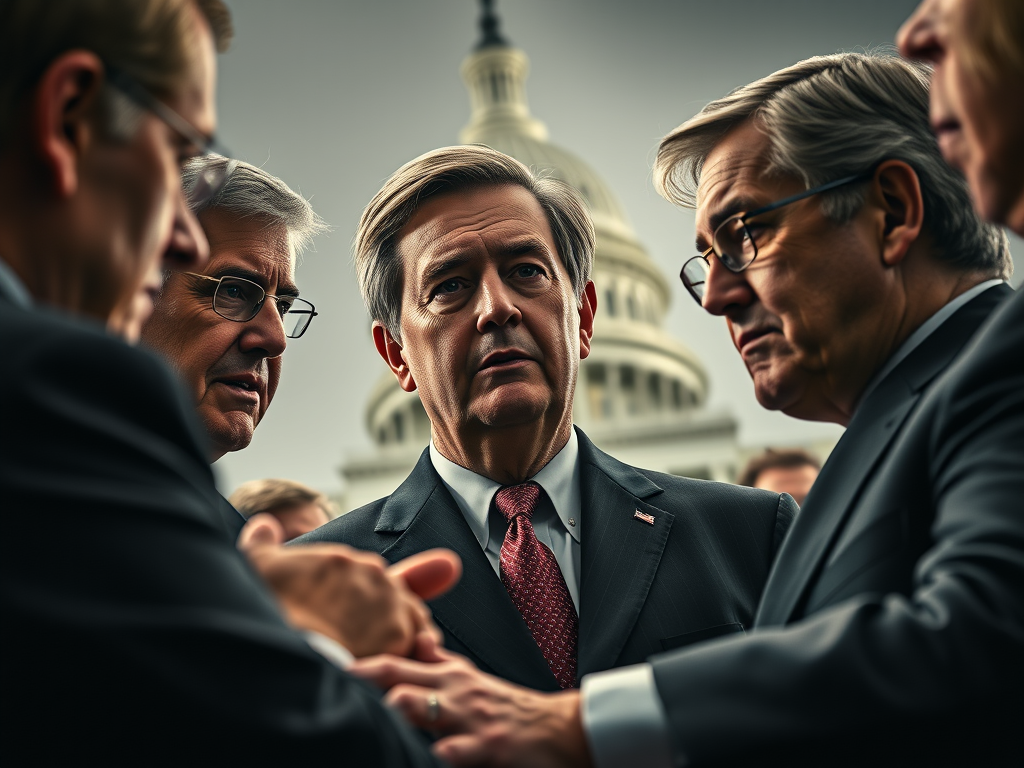

Republican Calls for Russia Sanctions Intensify Amid Escalating Strikes

A growing faction of Republican lawmakers in Congress is calling for stronger measures against Russia in response to its continued aggression in Ukraine. This marks a notable departure from former President Donald Trump’s more reserved and conciliatory stance on the issue. After months of remaining relatively silent and following Trump’s lead, these Republicans are beginning to voice mounting frustration and demand decisive action.
The calls for a harder line gained significant momentum over the weekend after Russia launched one of its most aggressive military offensives since the conflict began. This escalation has added urgency to a bipartisan Senate bill proposing sweeping new sanctions on Russia. The legislation now boasts 80 cosponsors—a number that easily surpasses the threshold needed to override a potential presidential veto.
Despite this growing momentum in the Senate, the same bill has struggled to gain traction in the House of Representatives, where support remains tepid among members of both parties. As a result, a direct clash with Trump over the issue does not appear imminent. Nevertheless, the increasing support in the Senate underscores a shifting mood on Capitol Hill—one characterized by heightened skepticism of Russia and increasing impatience with Trump’s restrained approach.
Leading the push for tougher sanctions are Senators Lindsey Graham, a Republican from South Carolina and a longtime Trump ally, and Richard Blumenthal, a Democrat from Connecticut. Their bipartisan effort signals that concern over Russia’s actions is transcending party lines. Speaking on the Senate floor last week, Graham delivered a pointed critique of President Trump’s hands-off strategy, suggesting that Trump’s belief in his personal influence over Russian President Vladimir Putin may be misplaced.

“Putin is playing us,” Graham declared. He detailed instances in which the Kremlin refused peace overtures while pretending to engage diplomatically. “President Trump proposed a 30-day ceasefire. Ukraine agreed; Russia rejected it. Trump urged both Zelensky and Putin to meet in Istanbul. Zelensky showed up. Putin didn’t.”
Graham emphasized that the U.S. has extended multiple opportunities for Russia to negotiate an honorable resolution to the war, but Moscow has shown little interest in genuine diplomacy. “They’re dragging this out, and they’ll keep doing it unless we raise the stakes,” he said. “We need moral clarity. Putin only understands strength.”
Meanwhile, former President Trump has signaled a slight change in tone. Following Russia’s recent assault, he told reporters he was “not happy” with Putin and hinted that additional sanctions were under consideration. In a social media post, Trump accused Putin of “playing with fire” and implied that his own presence on the world stage had prevented worse outcomes. “If it weren’t for me, a lot of terrible things would have already happened in Russia,” he wrote.
This statement provoked a sharp reply from Dmitri Medvedev, deputy chairman of Russia’s Security Council, who dismissed Trump’s remarks with a stark warning. “I only know of one REALLY BAD thing — World War III,” Medvedev posted online. “I hope Trump understands that.”
Despite this war of words, it remains unclear whether Trump’s recent remarks reflect any substantive shift in his broader policy outlook. In recent weeks, he has expressed a desire to end the war and explore potential economic partnerships with Russia in a post-conflict environment. According to a recent report in The New York Times, a senior White House adviser said that imposing new sanctions could obstruct future business opportunities, suggesting that Trump prefers to focus on maximizing potential collaboration with Russia once peace is achieved.

The White House has not responded to multiple requests for clarification on Trump’s current stance regarding sanctions or whether he supports the Senate’s proposed legislation. Officials have also not commented on whether the administration plans to provide additional aid or military assistance to Ukraine.
Responding to inquiries about Senator Graham’s bill, White House Press Secretary Karoline Leavitt issued a statement placing responsibility for the conflict on President Biden. “The Russia-Ukraine war is Joe Biden’s fault,” she said. “President Trump has always been clear in his call for a negotiated peace. He has also wisely kept all options open.”
However, Trump’s inclination to look beyond the ongoing conflict sharply contrasts with the position of many Congressional Republicans. For decades, the GOP has maintained a firm stance against Russia, viewing it as a hostile actor that must be countered with strength and resolve.
Senator Charles Grassley of Iowa, a senior Republican, took to social media to voice his disapproval of Russia’s actions and urge Trump to act decisively. “I’ve seen enough of Putin murdering innocent civilians,” he wrote. “It’s time to act. At the very least, impose sanctions.”
In a follow-up post, Grassley acknowledged Trump’s good intentions in believing that his rapport with Putin might yield peace, but insisted the time for sanctions had come. “Trump may have sincerely believed friendship would bring peace,” he said, “but now it’s time for sanctions strong enough that Putin knows the game is over.”
Grassley even likened the need to isolate Putin economically to Trump’s attempts to penalize Harvard University by cutting off federal funding. “Sanctions for Putin like no federal grants for Harvard,” he quipped.
Even before the most recent Russian offensive, other Republicans were expressing concern over Putin’s apparent lack of seriousness in pursuing peace. “He clearly hasn’t been sincere about negotiations,” said Senator John Cornyn of Texas last week. While he credited Trump for his efforts to initiate dialogue, Cornyn maintained that peace talks would only succeed if Putin showed genuine commitment.
Like many GOP lawmakers, both Cornyn and Grassley have sought to show respect for Trump’s leadership while increasingly emphasizing the need for a firmer response to Russia.
In an op-ed published in The Wall Street Journal, Senator Graham wrote that Trump had requested a clear proposal from Putin outlining the conditions for a ceasefire—an attempt to bring clarity to the peace process. “Depending on Russia’s response,” Graham wrote, “we will know what path to take.”
Yet some Republicans believe Russia’s recent escalation is an answer in itself—and not the one they had hoped for. “We need to bring the pain to Putin,” said Senator Todd Young of Indiana, expressing firm support for the sanctions proposal.

Some supporters of the Senate sanctions bill see it as a way to bolster Trump’s hand diplomatically. With strong bipartisan support, the Senate could assume the role of the “bad cop,” enabling Trump to act as the “good cop” in future negotiations.
“There’s reason to think Lindsey Graham is coordinating with the White House,” said William B. Taylor Jr., former U.S. ambassador to Ukraine. “He probably wouldn’t be pushing forward without at least some quiet approval.”
Still, Trump has so far refrained from taking concrete action against Russia, despite making multiple public threats.
“This isn’t the first time we’ve seen him express anger or frustration at Putin,” Taylor noted. “He’s called him crazy, he’s warned of consequences, and he’s talked about sanctions—but those threats haven’t been followed up. Without real action, it looks like he’s still unwilling to commit.”
In short, while Trump continues to project a desire for peace and future cooperation with Russia, many Republicans on Capitol Hill are increasingly unwilling to wait. The growing pressure from Congress reflects a broader consensus that the time has come for the U.S. to take a firmer stand—one that signals to both allies and adversaries that the nation will not tolerate continued aggression unchecked..”




Leave a Reply