

A Vermont Start-Up Was Close to Becoming Profitable. Then the Tariffs Hit.

Earlier this month, President Trump eased tariffs on Chinese imports, bringing them down from the staggering levels imposed in March. The stock market responded positively, and several economists expressed optimism that a recession was now less likely. However, for small-business owners like Carina Hamel and Robby Ringer, the challenges created by those tariffs are far from over.
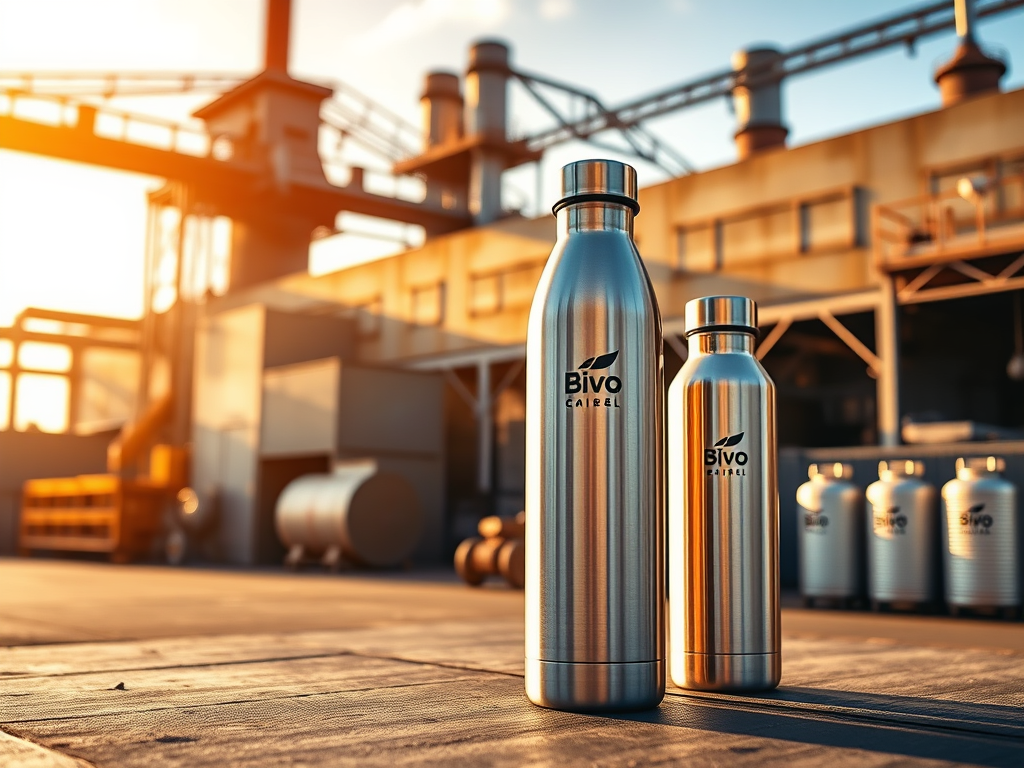
Hamel and Ringer are the founders of Bivo, a Vermont-based company that produces stainless-steel water bottles equipped with a patented nozzle, designed for quick and efficient drinking — particularly appealing to athletes and cyclists. For nearly five years, the business, headquartered in a repurposed corset factory in Richmond, Vermont, had been on a steady path toward profitability. But the sudden imposition of high tariffs earlier this year jeopardized their progress.
Although the tariff rate was recently reduced to 30 percent from the previous 145 percent on most Chinese products, the relief feels marginal at best. “If someone had told us six weeks ago that we’d face a 30 percent tariff, it would have seemed outrageous,” Ringer explained. “Now, it just feels like a less painful disaster.”
In fact, Bivo’s products are subject to even higher duties due to the materials used and the classification of their goods by customs. Non-insulated bottles face a 47 percent tariff, while insulated models incur a 37 percent rate.

Despite President Trump’s claims that foreign exporters bear the burden of tariffs, it’s American importers like Bivo who actually pay those fees upon arrival of goods at U.S. ports. This has caused significant financial strain on the company. “It’s a huge hit to our cash flow,” Ringer said. “We’ve had to completely rethink our strategy.”
Retailers, who account for approximately two-thirds of Bivo’s sales, have been scaling back orders due to broader economic uncertainty. As a result, Bivo anticipates revenue will be 30 percent lower than projected earlier in the year.
While large corporations like Walmart have indicated they may struggle to absorb the full weight of tariffs, the impact is even more profound for smaller firms. According to Harvard Business School assistant professor Ebehi Iyoha, small businesses are often more exposed to trade disruptions. They lack the deep financial reserves, negotiating power, and political leverage that larger companies possess. “It’s generally true that small enterprises are more susceptible to shocks in global trade,” Iyoha explained.
The National Federation of Independent Business (NFIB), which surveys small companies across the country, noted in April that members’ expectations for future sales had declined for the fourth straight month. Their accompanying analysis warned that millions of small firms rely on imported goods and are now facing severe disruptions to their supply chains.

In 2024, the U.S. imported approximately $439 billion worth of goods from China. For many businesses — Bivo included — sourcing comparable products elsewhere in the short term simply isn’t feasible.
The situation could have been even more dire for Hamel and Ringer. Just before the initial tariff hike earlier this year, they had imported about 50,000 bottles — an act Ringer described as “dumb luck.” That inventory gave the company a temporary cushion. But as tariffs spiked to 145 percent, importing more products became financially unviable. Yet, they were already contractually obligated to purchase another 30,000 bottles from Haers, their long-term manufacturing partner in Yongkang, China.
Faced with this dilemma, the couple and their six-person team quickly shifted into crisis mode. Hamel flew to Europe to explore alternative markets. She hoped to compensate for the U.S. slowdown by selling in the EU, but quickly discovered that building a robust sales pipeline there would take time. “I’m still confident we’ll survive,” she said during the trip. “But it’s going to be incredibly tough.”


She did, however, make progress. A German outdoor equipment retailer agreed to stock Bivo bottles, and Hamel secured a warehouse in the Netherlands to facilitate distribution across Europe directly from China.
Once Hamel returned to Vermont, Ringer headed to China to negotiate more favorable terms with Haers. While the manufacturer refused to lower its prices, it agreed to delay payment deadlines, giving Bivo some much-needed financial flexibility.
When Ringer visited the Haers warehouse, he noticed it was overflowing with goods awaiting shipment. Many customers, like Bivo, were delaying imports to avoid the crushing 145 percent duties. To reach their own products, Ringer had to navigate through tightly packed pallets.
Then, on May 12, President Trump announced a temporary 90-day reduction in tariffs. With that limited window, Hamel and Ringer decided to move forward with a small shipment — just 7,624 of the 30,000 bottles they had committed to buying. Even with the reduced rate, the duties on that batch totaled $24,436, compared to an estimated $3,645 they would have paid under pre-Trump policies.
Despite the rising costs, Bivo has no plans to raise the retail price of its bottles, which range between $34 and $54. Their production cost is about $8 per unit before tariffs, and they sell to wholesalers for approximately $20.

The couple’s entrepreneurial journey began in 2019 while cross-country skiing on Mount Hood in Oregon. They realized that most sports bottles were made of plastic and saw an opportunity to create a better alternative. Since launching Bivo, they’ve invested over $500,000 of their own savings into the company and even used their home as collateral to secure a line of credit.
Opponents of tariffs argue that policies like these disproportionately hurt small, innovative businesses like Bivo. On the other hand, supporters of the tariffs argue that they are necessary to counter China’s unfair industrial subsidies, particularly in sectors such as steel and aluminum, which give Chinese manufacturers an edge.
President Trump and his administration have frequently urged American businesses to shift production back to the U.S. However, Bivo explored this option and found that manufacturing domestically would cost a minimum of $50 per bottle — a price point that would likely drive them out of the market without substantial government assistance.
“The policy doesn’t really support U.S. manufacturing,” Ringer commented. “It’s not designed to build capacity here. It’s framed as a way to punish China, but it’s having the side effect of punishing American businesses as well.”
For now, Bivo continues to adapt, navigating an unpredictable economic environment while trying to stay true to its mission. The road ahead remains uncertain, but Hamel and Ringer are determined to weather the storm — no matter how high the tides may rise.




Leave a Reply