

Inside the Knicks’ biggest collapse ever

The New York Knicks have endured decades of disappointment, but what unfolded Wednesday night at Madison Square Garden was an entirely different kind of pain. Even the most battle-hardened Knicks supporters, those who’ve seen their share of heartbreak, could not have anticipated this.
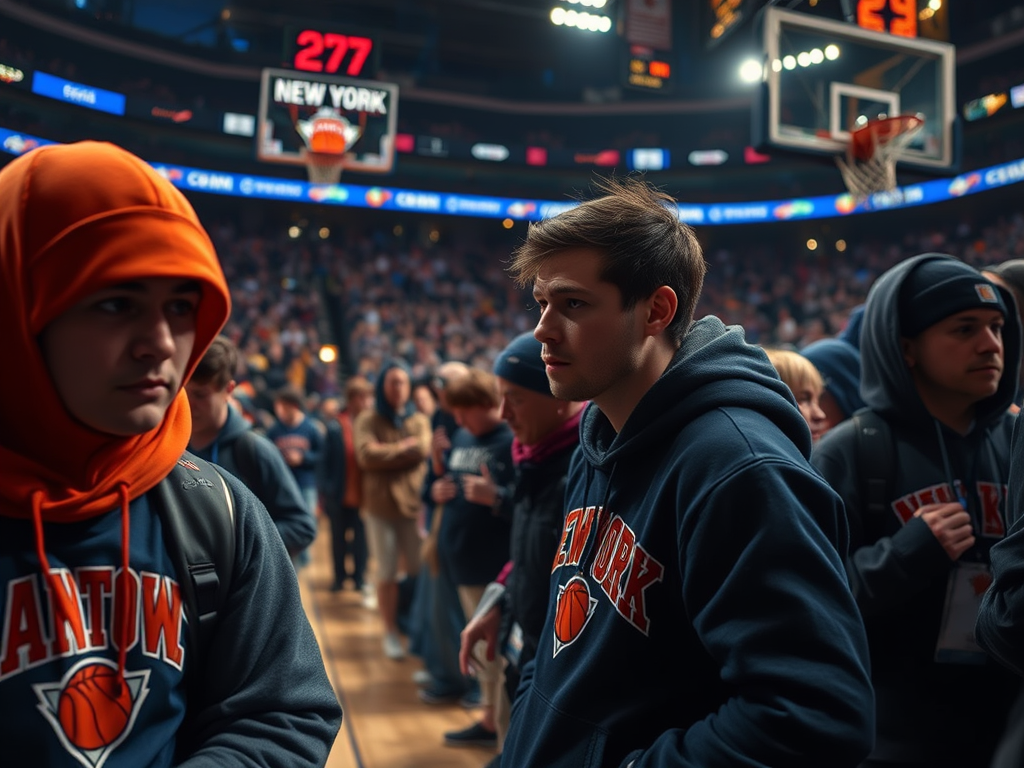
When the final buzzer sounded, Manhattan stood still. Hundreds of fans streamed out of MSG in stunned silence, their footsteps the only sound echoing through the concrete stairwells. Eyes were wide in disbelief, some damp with tears, others simply vacant. No shouting. No arguing. No cursing. Only silence.
“Why is it so quiet?” shouted Indiana Pacers guard Tyrese Haliburton as he strolled triumphantly toward the locker room.
The answer? The inconceivable had just taken place.
In the opening game of the Eastern Conference Finals, the Knicks held what should have been an insurmountable 14-point lead with just under three minutes to play. Fans were celebrating. Many had already begun to exit, confident that Jalen Brunson’s late three-pointer had sealed the win. The Garden was roaring. The atmosphere electric.
Then, inexplicably, everything began to unravel.
Even when Brunson scored again with 58 seconds left to put the Knicks ahead by nine, the remaining crowd erupted. That basket should’ve iced the game. It didn’t. Instead, a quiet unease began to spread — a sense that something was off.
The Pacers, refusing to die, kept launching and making threes. Indiana’s Aaron Nesmith delivered a historic performance, sinking six three-pointers in the fourth quarter alone — three of them coming within the final minute of regulation. His hand was ablaze. The Knicks, who had been firmly in control, suddenly found themselves under siege.

Down by two, the Pacers had one final possession in regulation. Haliburton dribbled upcourt, looked to drive, then suddenly pulled back. With time ticking away, he launched a deep jumper over two defenders. The ball struck the back iron, seemed destined to miss — until it arced high into the air and gently dropped through the net.
The arena gasped.
Replays confirmed his foot was just on the line. It was a two-pointer. Overtime.
That breathless moment set the stage for what became a 138-135 Pacers victory — a comeback that will echo through postseason history.
According to Elias Sports Bureau, no team in NBA playoff history had come back from a deficit of nine or more points in the final minute of regulation or overtime. Teams trailing in such situations were 0-1,414. They are now 1-1,414. What’s more, since 1997, teams leading by 14 or more points with 2:50 left in regulation were 977-0. That record? Now 977-1.

“We didn’t finish the job,” Knicks center Karl-Anthony Towns admitted afterward. “There were a lot of things we did well to put ourselves in position to win. But you’ve got to execute and stay locked in for 48 minutes. We only did that for 46.”
It’s ironic, almost cruel, considering how the Knicks earned their place in the conference finals. Throughout the postseason, it was they who had closed games with icy precision, snatching wins in the dying minutes from the jaws of defeat. They did it to the Pistons. They broke the spirit of the defending champion Celtics. Late-game excellence had been their calling card.
But not on this night.
This time, it was the Pacers who authored the final act. And the Knicks who blinked.
During most of the game, New York’s defense was composed and disciplined. But when the pressure spiked in the final minutes, that composure crumbled. Poor coverage on screens allowed Indiana shooters — especially Nesmith — to find rhythm and space. The Knicks failed to adjust. They were caught flat-footed on backdoor cuts. They gave up offensive rebounds. They committed careless fouls. In one key instance, they didn’t foul at all, allowing an easy dunk off an inbounds play.

Worse still, their offense dried up. While they had protected the ball well for most of the game, they coughed up three critical turnovers during overtime alone — each one coming with the score either tied or separated by a single point. Their ball movement stalled. Possessions became rushed. Opportunities were wasted.
They played like a team assuming the game was already won. And Indiana made them pay for it.
“We lost our intensity,” said Josh Hart. “We started to slow down and let them dictate the pace. You can’t do that against a team like this. We’ve got to take this as a lesson and get back to work.”
The only comfort New York can take from this loss is that for the vast majority of the contest, they were clearly the better team. Brunson finished with a dazzling 43 points. Towns added 35. The Knicks dominated the boards and dictated tempo. Indiana struggled to keep up — until the final two minutes, when they smelled opportunity and pounced.
And then, of course, there was the moment.
When Haliburton drained the game-tying shot, he turned and placed his hands around his neck in a mock “choke” gesture — a gesture Knicks fans know all too well. It was a deliberate nod to Pacers legend Reggie Miller, who taunted Spike Lee with the same move during Game 5 of the 1994 Eastern Conference semifinals. Miller, like Haliburton, engineered a stunning comeback that night.
But as Knicks fans will remind you — New York won that series.
Perhaps history will once again repeat itself. Maybe this shocking collapse will fade into memory as the Knicks regroup, recover, and rally to reach the NBA Finals. Or perhaps, this is the kind of defeat that lingers — that haunts — that breaks a team’s spirit.
Time will tell.
Friday’s Game 2 will offer answers.
“Yeah, it hurts,” said Brunson. “It should hurt. But this isn’t the end. We’ve got more basketball ahead. We can’t sit around feeling sorry for ourselves. We’ve got to get better and come back stronger.”
A painful chapter has been written. Whether it’s a final chapter or just a plot twist depends on what the Knicks do next.




Leave a Reply