

Trump’s New Position on the War in Ukraine: Not My Problem

Certainly! Here’s a rewritten version of the original article in over 1000 words. The core ideas, events, and implications remain the same, but the language, structure, and phrasing have been substantially reworded for originality and clarity:
For several months, President Trump has signaled his mounting impatience with ongoing efforts to negotiate a ceasefire between Russia and Ukraine. His growing frustration has led him to repeatedly threaten to pull the United States out of the process entirely—a threat that now appears to be materializing.
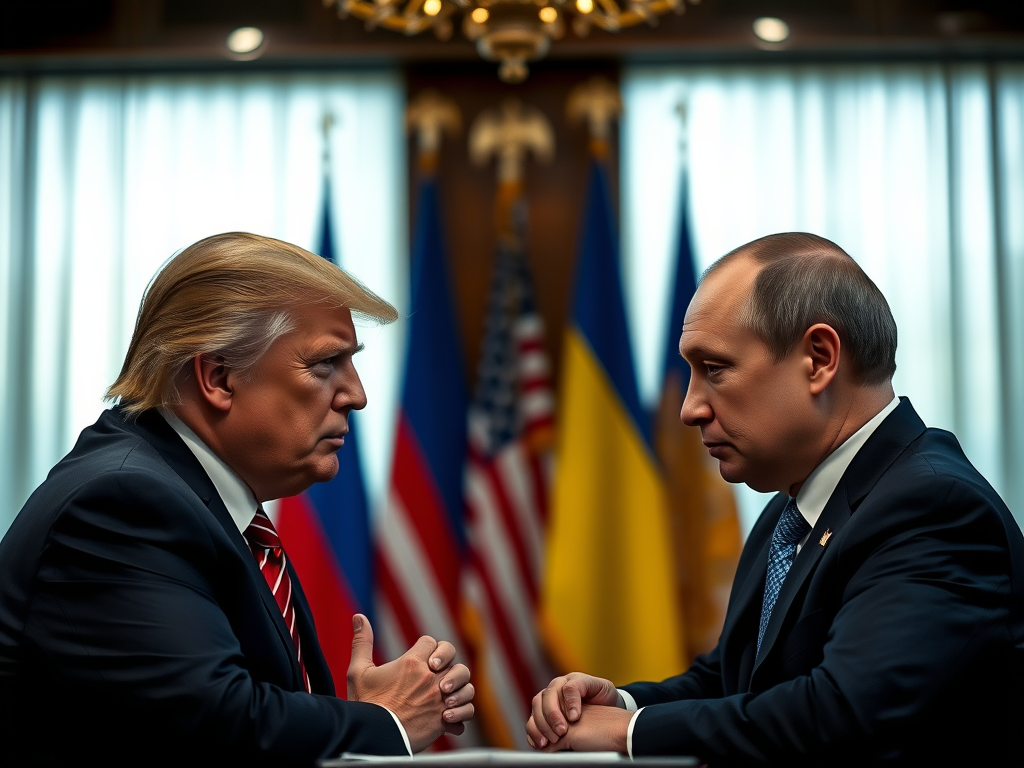
Following a phone conversation on Monday with Russian President Vladimir Putin, Trump has shifted the U.S. stance significantly. According to individuals with knowledge of the private exchange, Trump informed Ukrainian President Volodymyr Zelensky and key European leaders that it would be up to Russia and Ukraine to resolve the war on their own. This announcement came just days after Trump had asserted that only he and Putin were capable of securing peace.
At the same time, Trump reportedly stepped away from prior plans to align with European allies on implementing a new round of economic sanctions against Moscow. Six officials with insight into the discussions, speaking anonymously, confirmed that Trump no longer appeared committed to participating in coordinated financial pressure on the Kremlin.
This dramatic pivot has raised concerns that the American president may not only be disengaging from ceasefire talks but may also be retreating from the broader U.S. mission of supporting Ukraine, a fledgling democracy resisting Russian aggression since the 2022 invasion.

The White House’s current position represents a notable departure from Trump’s earlier, confident assertions that he could end the conflict within a single day. While those claims were met with skepticism from many quarters, they had nonetheless reinforced a sense of urgency surrounding U.S. involvement in negotiations. But Monday’s developments suggest a reversal of course—one that has significant implications for NATO unity and European-American relations.
Observers have been bracing for such a shift, particularly after Trump’s televised, contentious exchange with Zelensky during a recent Oval Office visit and the sudden resignation of the U.S. ambassador to Ukraine, Bridget A. Brink. Following her departure, Brink remarked that U.S. policy under the Trump administration had consistently focused pressure on Ukraine—the victim—rather than on Russia, the aggressor. In a farewell essay, she warned: “Seeking peace at any cost isn’t peace—it’s appeasement.”

Even when Trump appeared to offer concessions to Moscow, they failed to produce results. Defense Secretary Pete Hegseth recently announced that Ukraine would not be permitted to join NATO and must abandon its claim to regain all territory lost to Russian occupation—both major demands from the Kremlin. Still, these gestures were insufficient to convince Putin to accept a ceasefire.
While Trump often embraces the use of economic leverage—frequently resorting to tariffs and sanctions in his foreign policy—his administration is now arguing that further penalties against Russia would be counterproductive. In a statement to The New York Times, a White House official claimed that increasing sanctions would hamper American business opportunities, which the president aims to expand.
Supporters of the administration point out that existing sanctions imposed after Russia’s full-scale invasion remain in effect. Intelligence cooperation with Kyiv also continues. Secretary of State Marco Rubio defended the administration’s approach during testimony before the Senate Foreign Relations Committee, saying that Putin faced the same set of sanctions as before and that Ukraine was still receiving military aid.
Rubio emphasized that Trump’s goal is to bring an end to a war that has become a costly stalemate: “He is trying to resolve a bloody and expensive conflict that neither party can realistically win outright.”
Yet to many European diplomats, the message coming out of Trump’s recent call was unequivocal: The U.S. is stepping back from its prior leadership role in coordinating pressure on Russia. Several European officials said they were left with the impression that Washington would not be joining their efforts to intensify sanctions on the Kremlin any time soon.
This represents a significant shift for Trump. Just weeks earlier, he used his Truth Social account to threaten new sanctions if Russia did not adhere to a proposed 30-day, unconditional ceasefire. “If there is no ceasefire, the U.S. and its partners will take further action,” he wrote on May 8, following a conversation with Zelensky. He reiterated this warning in calls with British Prime Minister Keir Starmer, French President Emmanuel Macron, and German Chancellor Friedrich Merz, all of whom had traveled to Kyiv in a show of solidarity.
But those threats appear to have been abandoned following Trump’s latest call with Putin. The American president declined to reinforce them either publicly or privately. Instead, he portrayed the phone call as potentially productive, even though it was quickly made clear by both Ukrainian and European officials that Putin had offered little in return.
Russia has sent negotiators to meetings in Istanbul, but these efforts have been half-hearted at best, and the Kremlin continues to demand major concessions. Trump, who once boasted that he could settle the war in a single day due to his deal-making prowess, has now admitted that the process is more complex than he anticipated. He has even said that his original comments about a 24-hour resolution were made “a bit sarcastically.”
With Putin unwilling to budge and diplomatic progress stalling, Trump has increasingly voiced his desire to remove the U.S. from the negotiation process altogether. In a post made Monday, he suggested that only Russia and Ukraine were qualified to manage peace talks: “They alone possess the necessary details of the conflict to find a resolution.”
He then pivoted to an issue that many believe is driving his disengagement—his long-standing interest in restoring economic ties with Russia. “Once this tragic ‘bloodbath’ ends,” Trump wrote, “Russia is eager to pursue large-scale TRADE with the United States, and I fully support that. There is tremendous opportunity for job creation and wealth. Russia’s economic potential is UNLIMITED.”

What such normalization of relations might entail remains unclear. During his first term, Trump withdrew the U.S. from several key arms control treaties with Moscow. The last remaining one, New START—which limits the deployment of long-range nuclear weapons—is set to expire next February. No replacement agreement is currently being negotiated.
Nonetheless, Trump has shown enthusiasm for opening up U.S. commercial access to Russia’s lucrative energy resources and mineral reserves. Administration officials have maintained that no such deals will proceed until a peace agreement is reached, but Trump’s recent messaging casts doubt on how long that condition will remain in place.
Putin, for his part, appears to understand Trump’s business-oriented outlook. According to insiders familiar with the pair’s phone calls, the Russian leader has consistently steered conversations toward trade and economic development. Meanwhile, the European Union is moving forward with its own plans for tighter sanctions, while the U.S. appears increasingly disengaged.
This growing transatlantic divide is precisely what Putin has long hoped to exploit. A weakened NATO—divided over how to handle Russia—would represent a strategic victory for the Kremlin.
The rift was evident on Tuesday when the U.K. unveiled new sanctions targeting Russia’s defense, energy, and financial sectors in response to continued drone attacks on Ukrainian cities. British Foreign Secretary David Lammy condemned the strikes as “further proof of Putin’s brutality” and reiterated calls for an “immediate, unconditional ceasefire.”

Notably, the British statement made no mention of American involvement. Instead, it highlighted the European Union’s upcoming 17th round of sanctions as part of a shared effort to secure “a just and lasting peace in Ukraine.”
A senior European official who participated in private talks revealed that Trump never seemed deeply committed to supporting punitive measures against Russia. His threats, the official said, were largely symbolic, with the U.S. playing no central role in shaping new sanctions packages.
These tensions may come to a head in the weeks ahead during two high-level summits: the G7 meeting in Canada in mid-June, followed shortly by the NATO summit in The Hague. The latter gathering will focus on continued support for Ukraine and strategies to deter further Russian aggression—especially against more vulnerable NATO members.
And for Trump, the question will be whether he intends to uphold America’s commitments under the NATO treaty, or whether he is prepared to walk away—once again.




Leave a Reply