
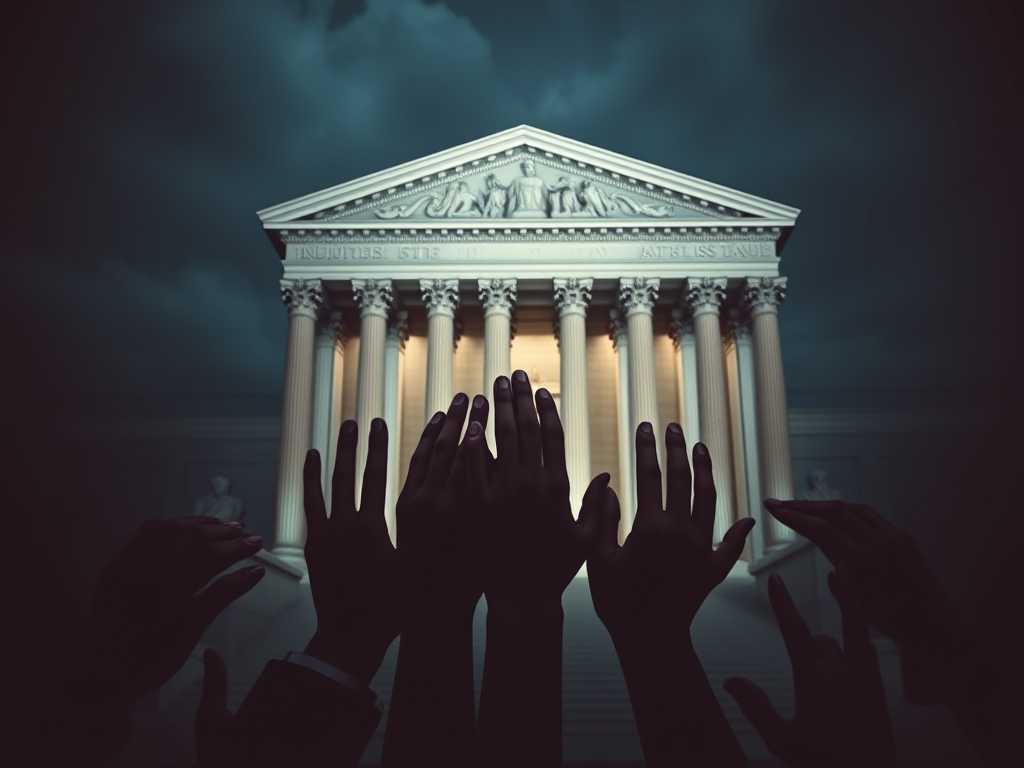

Trump Administration Targets DEI Programs with False Claims Act

In a significant move that has drawn both legal and public attention, the Trump administration announced late Monday that it plans to apply a federal anti-fraud statute — the False Claims Act — to scrutinize the diversity, equity, and inclusion (DEI) programs of academic institutions that receive government funding, such as Harvard University. Justice Department officials stated that this measure is part of a broader initiative to ensure that public funds are not used in ways that allegedly promote antisemitism or policies seen as divisive by the current administration.
Attorney General Pam Bondi emphasized that any institution benefiting from federal grants or contracts could risk losing access to those funds if it engages in behavior the administration deems inconsistent with civil rights protections. “Universities that accept government funding but tolerate antisemitic actions or support DEI practices that divide students along ideological or identity lines are jeopardizing their eligibility for public money,” Bondi stated. “The Justice Department will actively enforce civil rights standards — standing by passively is not an option.”

This legal strategy marks an escalation in the administration’s efforts to reshape higher education, particularly at elite institutions perceived to resist President Trump’s policy agenda. By invoking the False Claims Act — a 19th-century law originally enacted to combat fraud during the Civil War — the administration aims to hold universities accountable for what it sees as violations of federal law or policy.
Justice Department officials have pointed to antisemitic incidents on college campuses as justification for their intervention. However, critics argue that this justification is being used to target political opponents and institutions traditionally seen as liberal or progressive strongholds. Among those concerned is Harvard University, which was informed last week that it is the subject of a new federal investigation. The Justice Department is examining whether Harvard’s admissions process violated the Supreme Court’s recent ruling ending race-conscious admissions — commonly referred to as affirmative action — and whether its practices defrauded the government by ignoring that ruling.
In cases where violations of the False Claims Act are found, the department intends to pursue civil penalties and seek financial restitution. Deputy Attorney General Todd Blanche indicated in an internal memorandum that criminal prosecution could also be pursued in cases of egregious misconduct.

The new enforcement push will be coordinated by two divisions within the Justice Department: the Civil Rights Division and the anti-fraud unit. It is worth noting that under the Trump administration, the Civil Rights Division has experienced a dramatic shift in focus. Traditionally tasked with investigating race-based discrimination and protecting minority rights, the division has been reoriented to pursue cases aligned with the administration’s ideological and cultural agenda, including opposition to certain DEI practices.
Peter Hyun, who served in a senior Justice Department role during the Biden administration, warned that diverting resources and personnel to pursue politically motivated cases could have serious consequences. “This redirection means fewer staff and less capacity to investigate actual fraud — such as scams involving healthcare or COVID relief programs,” Hyun said. “The workforce was already overstretched. This will only exacerbate the issue.”

Even before this latest announcement, many colleges and universities had been anticipating increased scrutiny under the False Claims Act. The Trump administration has acted swiftly to revise existing policies tied to federal grants and contracts, prompting institutions to reassess how they administer DEI initiatives and report compliance.
An administrator at a private university, speaking anonymously due to the sensitivity of ongoing legal discussions, revealed that their institution had been shaken by a government request to certify that all DEI-related programming was in line with the administration’s interpretation of federal law. “We’ve been forced to reevaluate every aspect of our DEI programs,” the administrator said. “It’s not just about maintaining compliance anymore — it’s about anticipating how shifting political winds could expose us to new forms of legal risk.”
That institution, like many others, has taken precautionary steps such as temporarily suspending certain grant activities and forming internal review committees to preemptively identify any elements that could trigger government action. While these measures aim to avoid direct violations, the university is also preparing to respond to possible complaints, which could come from the government or from third parties, since the structure of the False Claims Act allows whistleblowers to initiate lawsuits on the government’s behalf.

It’s important to note that the Justice Department’s use of the False Claims Act in higher education is not without precedent. The federal government has, over the past few decades, increasingly relied on the law to hold institutions accountable for financial misconduct, particularly in areas related to student aid and recruitment practices.
For example, in 2019, North Greenville University in South Carolina agreed to pay $2.5 million to settle allegations that it had improperly provided incentive-based compensation to student recruiters, a practice that violates federal regulations. Similarly, in 2009, the University of Phoenix paid $67.5 million to settle a similar case involving recruitment incentives.
However, what distinguishes the current administration’s use of the law is the clear political dimension. The enforcement actions are being viewed as a means to exert pressure on elite universities — especially Harvard, one of the most prominent and well-funded academic institutions in the country — to revise their internal policies and operations in a way that aligns with President Trump’s ideological objectives.
In addition to the Justice Department’s efforts, the Department of Education has also taken steps to investigate Harvard. According to a letter reviewed by The New York Times, the agency recently informed the university that its undergraduate admissions practices are under a new compliance review. The review aims to determine whether Harvard is engaging in racial discrimination in its admissions process, a matter directly tied to the Supreme Court’s recent ruling.

Together, these moves underscore a concerted campaign by the federal government to assert more control over institutions of higher learning, particularly those seen as critical of the administration’s cultural and political stance. By leveraging powerful tools like the False Claims Act, the Trump administration is not only signaling its disapproval of affirmative action and DEI policies but also establishing a legal framework through which it can enforce ideological conformity on institutions reliant on federal funds.
The legality of this approach will undoubtedly be tested in the courts, and universities across the country are preparing for what many expect to be a prolonged and contentious legal battle. Yet, for now, the message from Washington is clear: support for DEI initiatives that diverge from the administration’s viewpoint may carry not only political consequences but potentially serious financial and legal ones as well.
If you’d like this text converted into a more formal report, policy analysis, or op-ed format, let me know — I can help tailor it to your needs.




Leave a Reply