

An Iranian Student in U.S. Detention Makes a Hard Choice: Stay or Go Home

After spending 42 days confined in an immigration detention center nestled in the pine woods of central Louisiana, Alireza Doroudi seemed to be nearing his release.
Just moments before his latest immigration hearing last Thursday, the government announced it was dropping one of the charges against him. Other international students who, like Doroudi, had been detained by immigration authorities were being released one by one. Yet, as the hearing approached, his fiancée, Sama Ebrahimi Bajgani, one of the few present to support him, remained skeptical. “To be honest, I don’t think I can trust anything,” she whispered.
Doroudi, a 32-year-old Iranian national, had been pursuing doctoral studies in mechanical engineering at the University of Alabama. His record was clean, save for a couple of minor traffic citations. But on the morning of March 25, immigration agents showed up at his apartment in Tuscaloosa and took him into custody.

At the time of his arrest, officials told the media that Doroudi posed “significant national security concerns,” though they never elaborated, even in court, according to Doroudi’s lawyer. The charges brought against him were related solely to his legal status as an international student.
International students enter the United States on visas that come with strict conditions. The case against Doroudi revolved around two allegations: that his visa had been revoked, and that he had subsequently failed to maintain legal status in the country. Doroudi’s attorney argued that the visa was only pertinent to his entry and that university records confirmed Doroudi had maintained his legal status throughout, even during his detention.

The Department of Homeland Security did not respond to requests for comment regarding the allegations.
In recent years, nearly 2,000 international students have had their visas revoked by the Trump administration, often for minor infractions such as traffic violations. Many students challenged the revocations in court, leading to the restoration of numerous visas. However, Doroudi’s case stood out. His was one of a select few where national security concerns were cited. Some of the other detained students had been vocal about Palestinian issues, but Doroudi’s fiancée maintained that he had no political involvement.
Other cases garnered significant public attention. Mahmoud Khalil, a Columbia University graduate and legal permanent resident, was detained in early March. Rumeysa Ozturk, a student at Tufts University, was also held in a Louisiana detention facility after co-authoring a pro-Palestinian essay. A federal judge ordered her release last Friday, and she exited the facility to a crowd of cheering supporters and assembled media.
Unlike Ozturk and Khalil, Doroudi’s case flew under the radar. His attorney, David Rozas, one of the few immigration lawyers in Louisiana, urged Doroudi to fight his detention in federal court. But Doroudi was reluctant. Isolated in a noisy group dormitory surrounded by barbed wire and fences, his physical and mental health were deteriorating, Bajgani said. His vision and hearing had worsened, and he felt increasingly despondent. He had come to believe that, no matter what, he would not be released.

Rozas noted a troubling trend: Clients with strong cases for release were growing despondent as their hearings were delayed and the odds of release seemed to diminish. Many had lived in the United States for years, only to feel unwanted by a country they had considered home.
Then, just before the hearing, Rozas received an unexpected email. The government had conceded that it had no evidence to support the charge on which Doroudi had been arrested. There was a glimmer of hope that he could walk free that day.
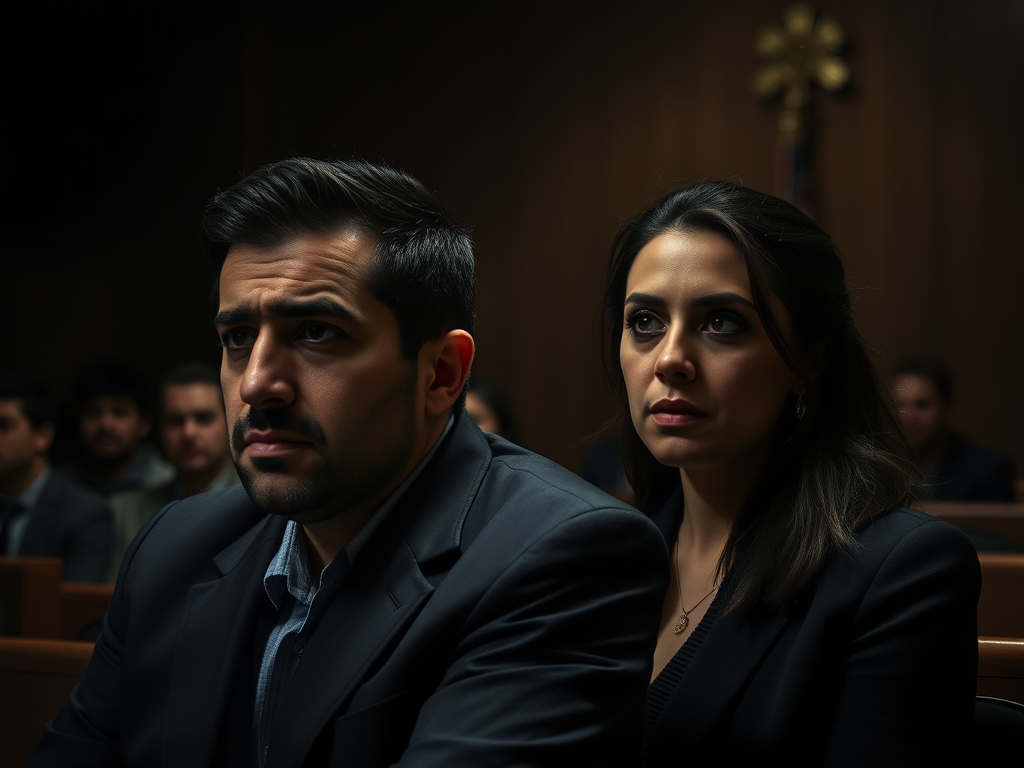
Inside Courtroom 4, a small, cinder-block room within the detention facility, Bajgani took a seat in the sparse gallery. She smiled weakly at Doroudi, who appeared thinner and more gaunt than she remembered.
“He looks like he’s lost weight,” she whispered. For weeks, Bajgani had reassured Doroudi’s worried parents back in Iran that everything would be fine. Now, she wasn’t so sure.
Judge Maithe Gonzalez entered the room. Within minutes, she announced her decision to sustain the first charge against Doroudi and ordered his removal. Rozas quickly interjected, pointing out that the government had already admitted that the evidence did not apply to Doroudi’s case. Numa Metoyer, representing the Department of Homeland Security, acknowledged the oversight but insisted that a second charge concerning Doroudi’s immigration status remained viable.

Rozas leaned over to Doroudi. “This second charge won’t hold up in federal court,” he whispered. “You’d win. One hundred percent.”
But Doroudi shook his head. “No, no,” he muttered.
The judge demanded that the government put its revised position in writing, setting another hearing for two weeks later. Doroudi, visibly distressed, whispered, “No, no.” Rozas requested bond for Doroudi, but the judge dismissed the motion. “That’s not how this works,” she said.
Turning to his lawyer, Doroudi said he wanted to voluntarily depart the United States, a decision Rozas described as “against my advice.” The judge asked Doroudi if he was sure. He took a deep breath.
“I came here to study in one of the best countries in the world,” he began, but Judge Gonzalez cut him off.
“Yes or no?” she asked.
“Honestly, I don’t want to stay here anymore,” Doroudi said. “This place is not good for me. I want to go home.”
Judge Gonzalez asked once more: “Yes or no?”
“Yes,” Doroudi said. Bajgani nodded quietly, her expression blank.
“You have been granted the privilege of voluntarily departing the United States,” the judge said, outlining the necessary logistical steps.
“Is this your final decision?” she asked.
“Thank you,” Doroudi said.
“Is that a yes?”
“Yes, your honor,” he replied.
And with that, the hearing was adjourned. The decision was made. Doroudi would leave the country he once aspired to call home.




Leave a Reply