
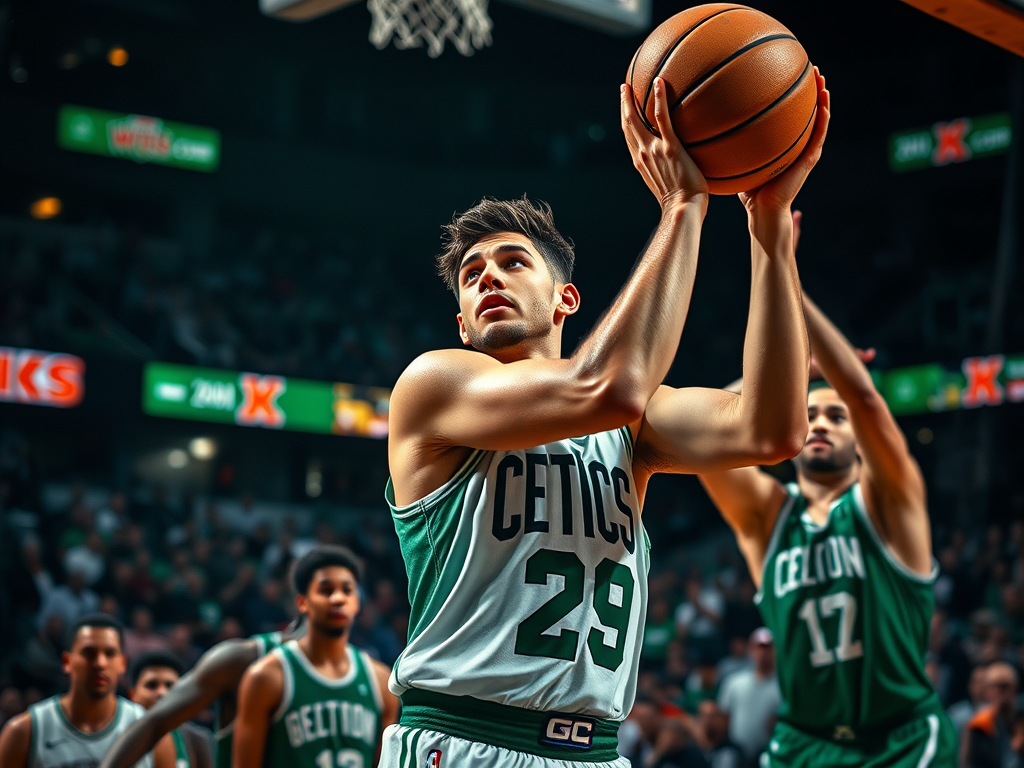

Celtics face identity crisis as Jayson Tatum, Jaylen Brown struggle to shoot again

In professional sports, a team’s identity is its cornerstone, shaping not only its style of play but also its reputation within the league. Over the past two seasons, the Boston Celtics have carved out a distinct identity centered around their relentless three-point shooting and versatile roster. This approach led them to a championship victory and positioned them as serious contenders heading into the playoffs.
However, that winning formula appears to be faltering. The Celtics currently find themselves facing an identity crisis, yet it’s one that could be resolved relatively easily. If they start hitting their shots, they will once again resemble the reigning champions, a team with answers to every challenge thrown their way.
In Wednesday’s matchup against the New York Knicks, the Celtics lost a nail-biter, 91-90, falling into a daunting 0-2 series deficit as the action shifts to New York. For a team that didn’t drop two games in a series last season, it was a startling turn of events.
The game was a defensive battle, with both sides struggling to score. The Celtics, in particular, looked disjointed, as if they had crammed for a test but could only recall the most basic points. Their shooting woes echoed the infamous Game 7 performance of the Houston Rockets during the 2018 Western Conference Finals when shots simply refused to drop. Mikal Bridges’ game-winning steal for New York punctuated the Celtics’ inability to execute in crucial moments.

The Knicks, who pulled off comeback wins against the Detroit Pistons in the first round, have managed to impose their defensive strategy effectively. While the Celtics appeared to have the upper hand in terms of talent and playoff experience, the Knicks continued to defy expectations.
During a critical possession in Game 1, Jayson Tatum attempted a step-back three over Mitchell Robinson but missed as OG Anunoby and Bridges awaited in the wings, leading to an overtime loss. In Game 2, Tatum opted to drive to the basket but ended up turning the ball over in a pivotal moment. Before he could address the media, a fire alarm forced everyone to evacuate, and when they returned, he was nowhere to be found.
In the regular season, the Knicks’ acquisitions of Anunoby and Bridges were initially seen as questionable moves, especially in terms of matching up with Tatum and Jaylen Brown. But as the postseason has progressed, the Knicks’ defensive strategy has proven effective, particularly with the Cavaliers having cleared the path by securing the top seed early in the season.
The Celtics’ strategy was supposed to mitigate these defensive matchups by creating open looks for others when Tatum struggled to find his shot. Yet, the results have been dismal, with the team shooting a mere 25 percent from beyond the arc in both games. Even when their three-point attempts became more selective, the shots continued to miss the mark.
While Jalen Brunson continues to command the fourth quarter for the Knicks, the Celtics’ stars have been conspicuously absent. Tatum and Brown managed just two field goals each in the final frame across both games, raising questions about their ability to step up when it matters most. Brown candidly acknowledged that the team was overly reliant on three-point shooting, a statement that echoed his frustrations after Game 1.

Brown’s call for more balanced play often resonates with the team, and in the past, his criticisms have led to adjustments. But after another frustrating loss, his message was clear: the team cannot afford to dwell on the past. “We were up by 20 points in both games and let them slip away. It’s unacceptable,” he said. “But we’ll learn from it and respond.”
Heading into Wednesday’s game, the league’s average three-point shooting percentage in the playoffs was 35 percent, a slight drop from the regular season’s 37 percent. Defenses have become more adept at identifying and exposing poor shooters, a tactic that burned the Celtics in Game 2 when Josh Hart erupted for 23 points by capitalizing on open looks.
Kristaps Porziņģis, who has been battling an illness since Game 1, acknowledged that his health has been a factor. He expressed frustration at being unable to contribute at his usual level, especially given how much the Celtics rely on his versatility. “I’m not feeling my best, but that’s no excuse. Nobody’s going to feel sorry for us,” he said.
Historically, teams that have dropped the first two games at home in a best-of-seven series have only managed to come back and win four out of 28 times. Porziņģis knows the odds, but he remains optimistic, emphasizing that despite the struggles, the Celtics have lost both games by razor-thin margins.
“It should sting,” Brown said in a post-game interview. “Let it sting for the night. But tomorrow’s a new day. We have to keep moving forward.”
If the Celtics are to reclaim their identity as defending champions, they’ll need to rediscover their shooting touch and recalibrate their offensive execution. The question is whether they can do it in time to salvage the series or if their struggles are indicative of deeper, systemic issues that go beyond a few missed shots.




Leave a Reply