

U.S. and Houthis Agree to Cease Military Action: Implications

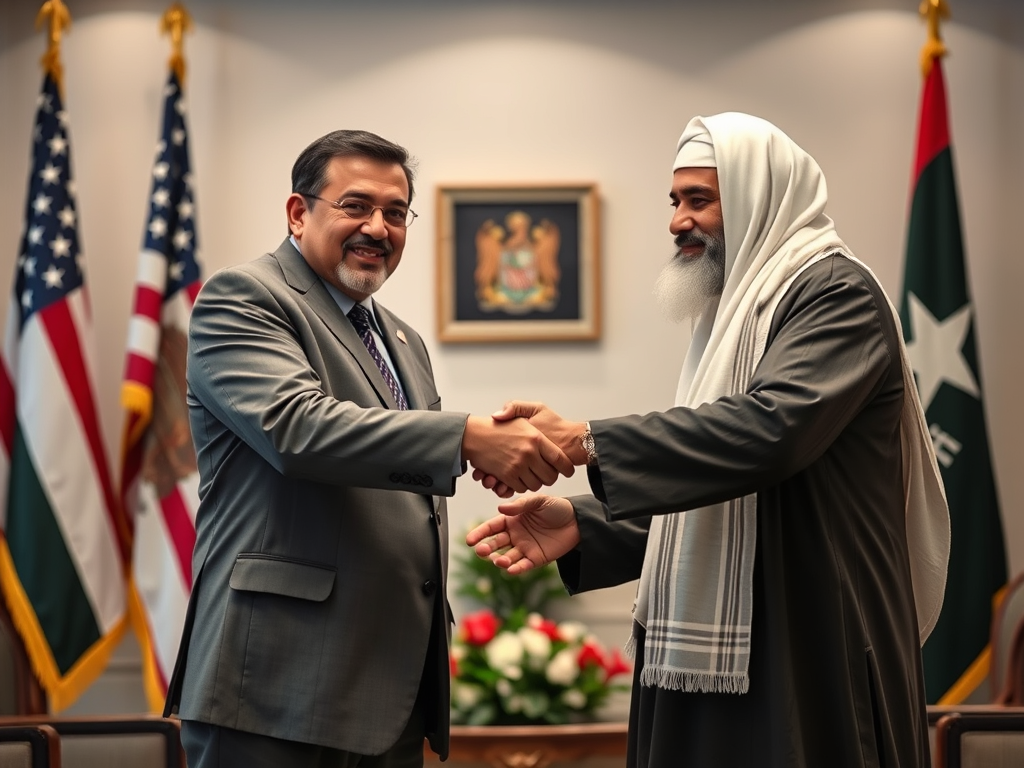
The United States and the Houthi militia in Yemen have reached an agreement to halt American airstrikes against the group in exchange for the Houthis ceasing attacks on American vessels in the Red Sea. President Donald Trump and mediators from Oman confirmed the development on Tuesday.
Trump made the announcement unexpectedly during an Oval Office meeting with Canada’s prime minister, leaving some Pentagon officials caught off guard. “They just don’t want to fight,” Trump said. “We’ll respect that and stop the bombings. They’ve given in, but more importantly, we’re taking them at their word. They say they won’t target ships anymore.”
Despite Trump’s declaration, it remains unclear if the United States has effectively stopped the Houthis from disrupting international shipping following a costly seven-week bombing campaign.
The Houthis, however, refrained from declaring a full ceasefire, instead emphasizing that they would continue to target Israel. Houthi officials and supporters quickly took to social media, portraying the agreement as a triumph over the United States, using the hashtag “Yemen Defeats America.”

For over a year, the Houthis have launched projectiles and drones at both commercial and military ships in the Red Sea, framing these actions as expressions of solidarity with Gaza and the Palestinian militant group Hamas.
In mid-March, the United States initiated a bombing campaign targeting hundreds of sites in an effort to reopen international shipping lanes. According to congressional officials briefed by the Pentagon last month, the campaign has already cost over $1 billion. Some military strategists expressed concerns that the operation’s heavy munitions usage could potentially weaken U.S. military preparedness, especially amid growing tensions with China.
After Trump’s sudden announcement, Oman’s Foreign Minister Badr Albusaidi confirmed that his country had facilitated the agreement. “Going forward, neither side will target the other, including American vessels, in the Red Sea and the Bab al-Mandab Strait, ensuring the smooth flow of international commerce,” he stated.
Mohammed Al-Bukhaiti, a prominent Houthi politician, echoed that sentiment, stating that if the United States ceased its attacks on Yemen, the Houthis would suspend their assaults on American military assets. Nevertheless, Al-Bukhaiti noted that the Houthis would persist in their fight against Israel, “no matter the sacrifices, even if it takes until Judgment Day.”
Al-Bukhaiti’s remarks left ambiguity as to whether the Houthis would continue attacking other ships in the region, particularly those they suspect of having Israeli connections. Previously, the group had claimed to only target vessels linked to Israel or the United States, but several attacks have also struck ships with no discernible ties to either nation.
Mahdi al-Mashat, another senior Houthi official, signaled the group’s intent to retaliate against Israel for a recent strike on Yemen’s primary international airport. “Our response will be devastating, unbearable for both Israel and America,” al-Mashat declared.
Mohammed Ali Al-Houthi also celebrated Trump’s announcement as a victory for the Houthis, suggesting in a social media post that the United States was no longer supporting Israel’s campaign against the group.
The U.S. Central Command, which has led operations against the Houthis, referred inquiries to the White House, which declined to comment further on Trump’s statements or outline how the U.S. would respond if the Houthis resumed attacks against Israeli-linked ships.
Trump’s remarks, which he is known to deliver off-the-cuff, seemed to catch even his own Defense Department by surprise. Three Pentagon officials said that as of Tuesday afternoon, they had not received instructions from the White House to cease military operations against the Houthis. They were left scrambling to determine how Trump’s comments had altered military strategy.
The truce with the Iranian-backed Houthis comes as the U.S. is engaged in broader negotiations with Tehran regarding its nuclear program. Two Iranian officials, who spoke on condition of anonymity, said that Iran had leveraged its influence over the Houthis to facilitate the truce, as part of Oman’s diplomatic efforts.
The Houthis, who receive financial and military support from Iran, are considered a key component of Iran’s “axis of resistance” in the region. However, in recent weeks, Iranian officials have publicly distanced themselves from the group, insisting that the Houthis act independently.
Ayatollah Ali Khamenei, Iran’s supreme leader, downplayed Iran’s connection to the group in a mid-March statement: “The Houthis make their own decisions based on their interests. Iran has no proxy militia in the region.”
Ahmad Zeidabadi, a well-known reformist analyst, characterized the truce as “the best news for moderates” in Iran, while simultaneously dealing a blow to hard-liners who support proxy warfare.
Despite the truce, security experts remain skeptical about the durability of the ceasefire. Trump’s announcement came just hours after the Houthis reaffirmed their intent to wage a “holy war” in support of Palestinians in Gaza against the “Israeli-American-British” alliance.
The Houthis have portrayed their attacks as efforts to pressure Israel to lift the blockade on Gaza, where over two million Palestinians face severe shortages of food and water. The siege, which intensified following a Hamas-led attack on southern Israel in October 2023, remains a point of contention.
Gregory Johnsen, a former member of the U.N. Security Council’s Panel of Experts on Yemen, expressed doubt that the Houthis would fully abide by the truce. “If the Houthis resume targeting Israeli-linked ships, what will the U.S. do? Restart airstrikes, or let Israel handle it?” he asked.
Johnsen also questioned whether international shipping would resume normal operations in the Red Sea, given that the Houthis have not been substantially weakened and could still pose a threat.
“They’ve only given a verbal assurance,” he noted. “Whether the shipping industry will trust that remains to be seen.”




Leave a Reply