
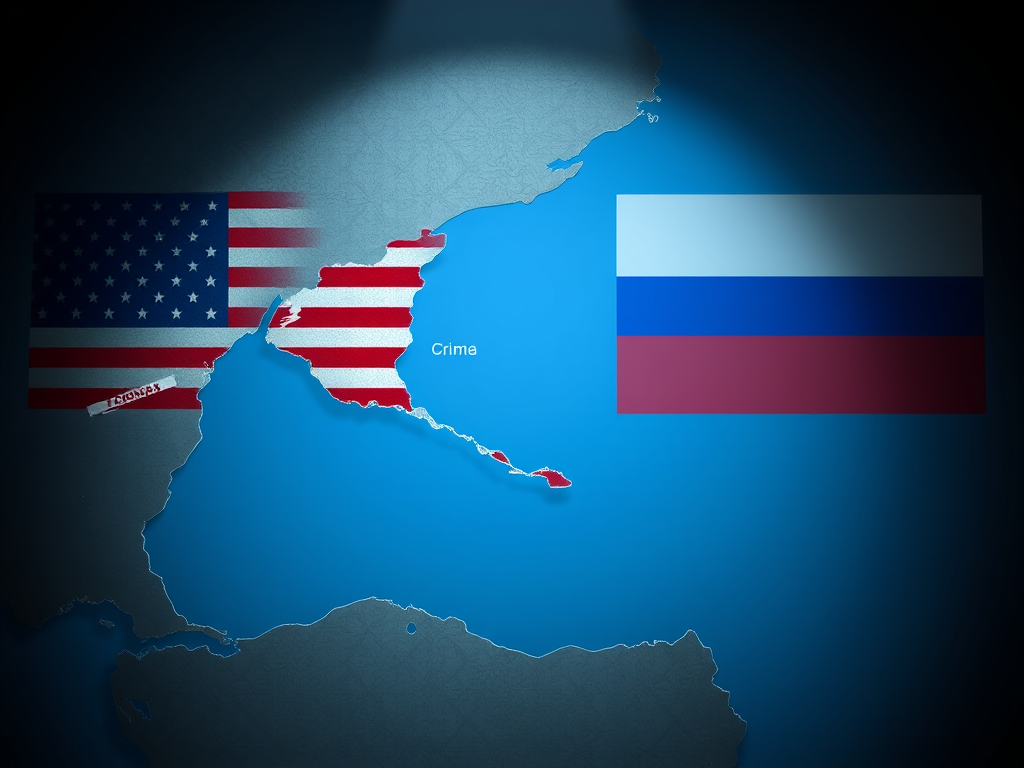

Trump’s Crimea Proposal Would End a Decade of U.S. Resistance

During Donald Trump’s first term as president, Ukraine harbored deep concerns that he might officially acknowledge Russia’s annexation of Crimea — a Ukrainian peninsula that Moscow seized by force in early 2014.
While campaigning, Trump signaled an openness to re-evaluating the U.S. stance on the issue, suggesting he would “take a look” at the situation. This was in stark contrast to the Obama administration and most Western powers, which had firmly condemned the Russian annexation. Trump even remarked, based on what he claimed to have heard, that “the people of Crimea… would rather be with Russia.”
However, despite these comments, Trump did not formally act on them while in office. In fact, his administration eventually took a stronger stance against Russia. In July 2018, then-Secretary of State Mike Pompeo released the official “Crimea Declaration,” asserting that the United States would never recognize Russia’s claims over Crimea until Ukraine’s full territorial sovereignty was restored.
Now, Trump seems ready to reverse that position as part of his efforts to broker an end to the ongoing war between Russia and Ukraine. According to U.S. and European officials, a new peace plan presented by the Trump team in London this week includes a provision under which the United States would recognize Crimea as Russian territory — a move that would signify a sharp break from over a decade of U.S. policy.
Former U.S. diplomat Daniel Fried, who has substantial experience in dealings with both Ukraine and Russia, criticized this aspect of the Trump proposal as its most troubling element. Many observers believe the plan heavily leans in favor of Russian interests.

Fried distinguished between tacitly accepting a temporary halt to hostilities along the current battle lines — which include Russian-occupied territories in eastern Ukraine — and formally legitimizing Russia’s control of Crimea. The latter, he argued, would represent a significant breach of international norms.
“There’s a world of difference between reluctantly tolerating the illegal occupation of parts of Ukraine and officially acknowledging changes in national borders achieved through force,” Fried stated.
His sentiment reflects the position Pompeo took in the 2018 declaration, which underscored a core principle shared by democratic nations: that no country has the right to unilaterally alter another country’s borders through military aggression.
Whether Trump ever truly supported Pompeo’s assertive approach to Russia remains unclear. Pompeo’s foreign policy stance, particularly regarding Moscow, often appeared more hardline than the president’s. Still, Pompeo’s viewpoint found broad support in Washington, including from figures like Marco Rubio, who would later succeed him as Secretary of State under a different administration.
Rubio, serving as a U.S. Senator at the time, co-sponsored legislation in October 2022 that prohibited the U.S. government from recognizing any Russian claim over Ukrainian territory. He warned that conceding such claims could set a “dangerous precedent” for authoritarian regimes worldwide — particularly China, which could interpret Western concessions as a green light to pursue similar territorial ambitions, such as taking control of Taiwan.
The notion of Crimea officially becoming part of Russia remains utterly unacceptable to Ukraine. On Wednesday, Ukrainian President Volodymyr Zelensky rejected any suggestion of such a concession, asserting that it would directly contravene Ukraine’s constitution. “There’s nothing to discuss. It is our land — the land of the Ukrainian people,” he declared.
Trump later attempted to clarify that he was not asking Ukraine or Zelensky to endorse Russia’s claim to Crimea. Instead, he appeared to suggest that the United States could take that step unilaterally. “Nobody is asking Zelenskyy to recognize Crimea as Russian Territory,” Trump wrote in a post.
Some political analysts believe that, although European leaders and Zelensky might strongly object, they could choose not to vocally oppose a shift in U.S. policy if it wasn’t accompanied by pressure on them to follow suit. This quiet acceptance, they argue, could be a way to maintain fragile diplomatic unity while avoiding outright conflict with the United States over the issue.
To others, Trump’s proposed policy shift may be less a concession and more a recognition of the geopolitical reality that has existed since 2014. That year, following Ukraine’s pro-Western revolution, Russian troops entered Crimea and organized a referendum — widely condemned as fraudulent — which allegedly showed public support for joining Russia.
Since then, Russia has consolidated its control over the peninsula. Moscow has increased its military presence, silenced dissenting voices, and constructed major infrastructure, including a bridge linking Crimea to mainland Russia. From a military and logistical standpoint, reclaiming Crimea would be a formidable challenge for Ukraine — especially considering its limited success in dislodging Russian forces from other occupied areas in the east.
For Russian President Vladimir Putin, Crimea holds immense strategic and emotional importance. The port city of Sevastopol — home to Russia’s Black Sea Fleet — is a vital military asset and the site of significant battles during both World War II and the earlier Crimean War in the 19th century.

Furthermore, from a historical perspective, Crimea has deep ties to Russia. It was part of the Russian Empire for centuries before being transferred to Ukraine in 1954 by then-Soviet leader Nikita Khrushchev. At the time, this gesture was largely symbolic — both Russia and Ukraine were part of the USSR — and few anticipated that the Soviet Union would dissolve in 1991, making the transfer politically significant.
Samuel Charap, an expert on Russia and Ukraine at the RAND Corporation, pointed out that Trump has a history of granting recognition to controversial territorial claims. In 2019, for example, Trump officially acknowledged Israel’s sovereignty over the Golan Heights, a region it had occupied since 1967. The following year, he backed Morocco’s claim to Western Sahara, reversing decades of U.S. policy in exchange for Morocco’s diplomatic recognition of Israel.
Nevertheless, Charap expressed doubts about whether recognizing Russia’s claim to Crimea would lead to any meaningful diplomatic breakthrough. He cited the historical precedent of the 1940 Welles Declaration, issued by acting U.S. Secretary of State Sumner Welles, in which the United States refused to acknowledge the Soviet occupation of the Baltic states — Latvia, Lithuania, and Estonia.
That declaration did not prevent periods of détente with the Soviet Union, nor did it block eventual negotiations to end the Cold War. In fact, the Welles Declaration is now seen as a prescient affirmation of Western values. The Baltic nations eventually regained their independence after the USSR’s collapse.
Fried echoed this point, recalling how many people initially dismissed the Welles Declaration as meaningless. “People sneered at it, said it was symbolic,” he recalled. “But in the end, it turned out to be a visionary and principled stance.”
As Trump pushes for a peace agreement that could include recognizing Crimea as Russian territory, many fear that it would undermine international law, embolden authoritarian leaders, and erode the West’s credibility in defending democratic values. Whether this proposal remains part of his final plan remains uncertain, but its potential implications are already stirring debate in both American and European political circles.




Leave a Reply