
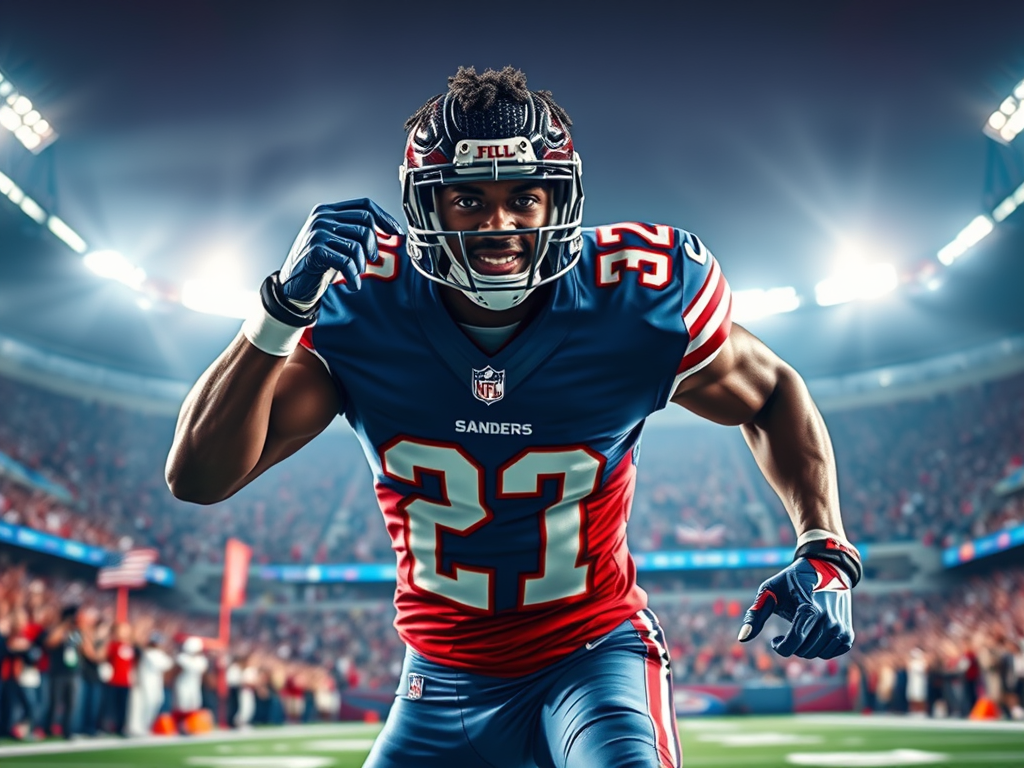

Shedeur Sanders, the 2025 NFL Draft’s biggest name, is also its biggest mystery

As the countdown to the 2025 NFL Draft begins, one name stands out not just for his talent but for the uncertainty surrounding his future: Shedeur Sanders. The draft kicks off Thursday, and unlike many other top prospects whose landing spots feel somewhat predictable, Sanders remains a genuine mystery. Where he will end up is still anyone’s guess.
In terms of pre-draft buzz, Sanders draws comparisons to past headline-grabbing quarterbacks like Tim Tebow and Johnny Manziel. Yet his résumé, while respectable, doesn’t quite match the accolades those two accumulated during their college careers. What sets him apart, however, is a unique combination of steady production, remarkable poise, and the shadow — or perhaps spotlight — of his iconic father, Deion Sanders.
Some within NFL circles believe Sanders could be a top-five pick, possibly even going as high as No. 3 overall to the New York Giants, who reportedly conducted a private workout with him in Boulder earlier this month. Interestingly, prior to last season’s Alamo Bowl, red and blue cleats were spotted in Sanders’ locker — a subtle detail some now interpret as symbolic, perhaps foreshadowing a connection to a team like the Giants.
However, not all projections are as generous. Dane Brugler of The Athletic recently mocked Sanders to the Pittsburgh Steelers at pick No. 21, underscoring the wide range of opinions scouts and analysts hold about him. This divergence in evaluations highlights the central truth about Shedeur Sanders: he’s a polarizing figure, both on and off the field.
A Proven Performer

What can’t be denied is Sanders’ production. Over the course of his four-year college career — the first two seasons at Jackson State and the latter two at Colorado — Sanders threw for 134 touchdowns and amassed 14,347 passing yards. It’s worth noting that had he played all four years at the FBS level, his touchdown total would rank fourth all-time, with his passing yardage comfortably within the top 15.
He may not possess the rocket arm or elite athletic traits associated with recent first-rounders like Anthony Richardson or Caleb Williams. But Sanders excels in areas that many coaches prize: accuracy, decision-making, and ball security. Across his collegiate career, he attempted 1,808 passes and was intercepted just 27 times — roughly one pick for every 67 throws.
Confidence, or Something More?
Yet the conversation around Sanders extends beyond the numbers. Much of the discourse centers on his confidence, which some interpret as charisma and leadership, and others view as bordering on arrogance. That’s where Deion Sanders, both a Hall of Famer and now a high-profile college coach, becomes part of the narrative.
Having played every college snap under his father’s guidance, Shedeur has been nurtured in an environment that is as unique as it is complicated. While Deion has publicly and consistently praised his son, NFL teams must now assess how Shedeur will adjust to a professional setting where his father isn’t the one calling the shots — and where fame and family legacy carry no weight in the locker room.
That concern came to the forefront after Colorado’s difficult outing against Nebraska in Week 2 last season. Sanders was sacked five times and threw a damaging pick-six. When asked about the offensive line’s performance, he responded in a way that caught the attention of scouts.
“How many times did (Nebraska quarterback Dylan) Raiola get touched?” Sanders said pointedly, following a question about Colorado’s struggles running the ball. “When you can run the ball well, it opens up the passing game. You just have to know what your team does best.”

That answer may have raised eyebrows, but it’s also true that Sanders regularly faced relentless pressure behind what was widely considered one of the weakest offensive lines in college football. Despite that, he rarely threw his teammates under the bus and often shouldered the blame himself. After a dominant win over Colorado State the following week, he brought the entire offensive line with him to the postgame press conference — a gesture that seemed to restore some goodwill.
“He’s tough,” one rival offensive coordinator told The Athletic. “But I hate the system he played in. He was sacked 94 times in two years. I know the line was bad, but come on — get the ball out faster!”
A Lightning Rod for Attention
Off the field, Sanders is equally headline-worthy. Before Colorado’s game against Nebraska, he flashed a luxury Audemars Piguet watch — retailing over $40,000 — in front of opposing players. The moment became iconic, serving as the inspiration for a celebration he would repeat throughout the season. EA Sports even incorporated it into their upcoming College Football 25 video game.
The celebration caught fire on social media and was even mimicked by celebrities like DJ Khaled. Later in the season, Sanders used the same celebration to mock Arizona State fans during a road game. It’s the kind of showmanship that endears him to younger fans but could be viewed as a red flag by more conservative NFL executives.
Sanders’ presence in the media doesn’t stop there. Earlier this year, he released a rap song titled “Perfect Timing,” which was played over the stadium PA system after touchdowns. The lyrics referenced his extravagant lifestyle, including the Maybach he drives — a car with a price tag north of $200,000. For NFL front offices, such expressions of wealth and flash in a college setting raise questions about leadership, relatability, and maturity.
A Complicated Legacy
The influence of Deion Sanders looms large over Shedeur’s football life. Deion began coaching because he was dissatisfied with how his son’s youth football team was run. That parental instinct eventually led him to become one of college football’s most talked-about coaches — and Shedeur’s career has been molded under that direct supervision ever since.
But if Shedeur struggles in the NFL, will Deion stay on the sidelines? Or will his protective nature cause friction in a professional environment that demands independence and resilience? Teams will be considering not just Shedeur the player, but Deion the presence — on the airwaves, on social media, and in any media scrum where questions about his son’s performance arise.
Not everyone will view this dynamic as problematic. Some may even see it as a strength, a support system that ensures Shedeur always has someone in his corner. But for teams hoping their quarterback can become the undisputed leader of their locker room, it adds a layer of complexity.
The Verdict: A Prospect Unlike Any Other
In the end, Shedeur Sanders is not a typical quarterback prospect. His skill set, production, and leadership style defy easy comparisons. While his numbers speak for themselves, the total package is harder to define — and that’s what makes evaluating him so difficult.
NFL franchises, particularly those seeking a new face for their franchise, will be weighing potential on-field impact against off-field narrative. In a league where quarterback decisions can define a team’s trajectory for a decade or more, every detail matters — and with Sanders, there’s no shortage of them to analyze.
Shedeur has the potential to thrive. But whether he’s seen as the next great NFL quarterback or a cautionary tale will depend not only on his talent, but on how teams interpret the story surrounding him — a story that, for now, remains unwritten.




Leave a Reply