

Losing International Students Could Devastate Many Colleges

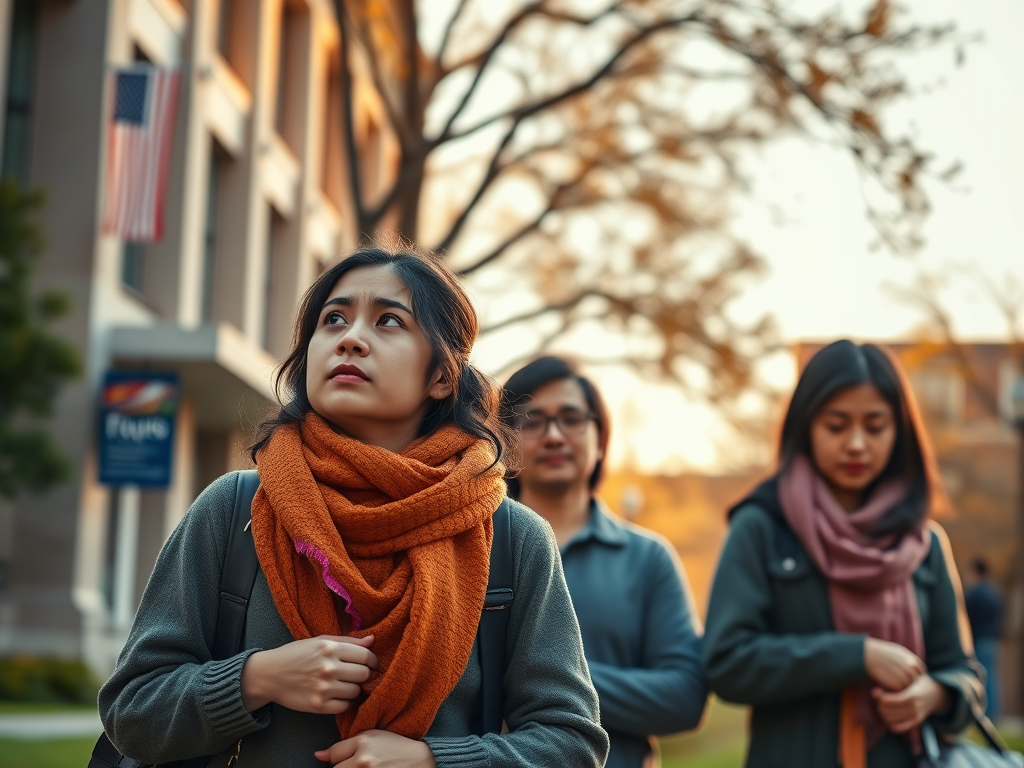
Xiaofeng Wan, once an admissions officer at Amherst College and now a private advisor for international applicants, has sensed a troubling shift. While visiting China recently and holding consultations with students hoping to pursue higher education in the United States, he noted a significant level of unease, especially among parents.
“They’re genuinely conflicted,” Wan explained during a phone call from Beijing. “There’s growing hesitation about sending their children to a country that seems increasingly unwelcoming to Chinese nationals and views China more as a rival than a partner. It’s a scenario unlike anything we’ve seen in the past.”
For decades, U.S. colleges and universities have been a magnet for students from across the globe, many of whom pay full tuition. These students not only bring cultural diversity but also contribute significantly to the financial stability of institutions by helping to offset the cost of educating domestic students.
However, the tone in Washington has changed. Recent actions by the Trump administration—including moves to revoke student visas and its broader political tensions with China—have instilled fear in international students and their families. The situation escalated further when the government asked Harvard University to submit a list of all its international students, adding to the growing anxiety on college campuses.
Suzanne Ortega, president of the Council of Graduate Schools, remarked that the abrupt visa cancellations were alarming. “Such actions send a strong, unsettling message to families and communities back home—that the United States may no longer be a secure or welcoming environment for their children.”

The implications of this shift are significant. If the U.S. develops a reputation for being antagonistic toward international students, the resulting fallout could severely impact its higher education sector.
According to a recent report by the Department of State’s Bureau of Educational and Cultural Affairs and the Institute of International Education (IIE), over 1.1 million international students studied in the U.S. during the 2023–2024 academic year. This figure includes students participating in post-graduation work programs, such as Optional Practical Training (OPT).
The report lists New York University, Northeastern University, and Columbia University as the top three institutions hosting the largest numbers of international students. At NYU, international enrollment has surged by nearly 250% in just the last ten years.
But this isn’t just a matter of enrollment numbers. Experts warn that the economic impact of losing these students could be enormous. International students contributed close to $44 billion to the U.S. economy in the previous year alone and supported nearly 378,000 jobs, according to NAFSA: Association of International Educators.
In fact, the financial strain has already begun to show. Moody’s, a leading bond rating agency, downgraded the financial outlook for the U.S. higher education sector to “negative,” citing uncertain federal policies as a key factor.
The Trump administration has justified its actions by asserting that it is targeting only those students who violate visa terms or pose national security risks. Secretary of State Marco Rubio recently emphasized this stance by stating, “No one is entitled to a U.S. visa.” In a public statement, he elaborated, “We will prioritize caution. Students are here to study—not to engage in political activism that undermines the mission of our universities.”
This hardline approach stands in contrast to long-standing trends. International student enrollment had steadily increased for decades, even helping public universities stay afloat during the Great Recession. Gaurav Khanna, an economist at the University of California, San Diego, who has researched the financial role of international students, explained that many public institutions used the influx of foreign tuition to avoid tuition hikes for in-state students and to preserve essential academic services.
“Welcoming international students allows universities to continue offering opportunities to domestic students,” Dr. Khanna said.
Beyond economics, there’s a broader concern about how reduced international enrollment could diminish America’s global standing in research and innovation. According to the IIE, international students represent nearly 6% of the U.S. higher education population.

At MIT—where more than 25% of students come from abroad—President Sally Kornbluth voiced strong support for maintaining international access. “Our institution would be profoundly weakened without the presence of students and scholars from around the world,” she said in a campus-wide communication. “Visa uncertainty discourages top talent from applying, and that undermines the U.S. in the long run.”
The long-term damage may already be underway. Chris R. Glass, a Boston College professor who studies trends in international education, estimates that between 50,000 and 75,000 graduate students in science and technology fields could be affected if federal funding continues to shrink.
In fact, if current policies persist, the total number of international students could dip below the one million mark for the first time since the 2014–2015 academic year.
An investigation by The New York Times revealed that over 1,500 student visas have been revoked across 222 schools nationwide. Some of these actions were linked to prior legal issues, while others were reportedly related to political activism. In many cases, students were not informed of the specific reasons for their visa cancellations.
Patrick, a 22-year-old student from London studying in New York, shared how fear now pervades international student communities. To avoid potential scrutiny, he recently deleted all his text messages before traveling back to the U.S. Despite his concerns, he intends to complete his final year and stay for an additional year post-graduation.
This isn’t the first time international student enrollment has been threatened under the Trump administration. The 2017 travel ban on seven predominantly Muslim countries discouraged many applicants, and the COVID-19 pandemic deepened those declines.
Dr. Khanna warned that while elite institutions may have the financial reserves to weather this storm, many other universities are far more vulnerable. “If you remove both public funding and international tuition revenue, they’re in a very precarious situation,” he noted.
For many international students, the goal of studying in the United States has long been to establish a professional life there after graduation. However, with growing restrictions on immigration and employment, that dream may now seem increasingly out of reach.
“The perception is changing,” Dr. Khanna said. “Students are beginning to realize that studying in the U.S. no longer guarantees the future they had envisioned.”
This comes at a particularly challenging time for U.S. higher education. Birth rates are declining, and the number of high school graduates—peaking at over 3.8 million this year—is projected to fall to 3.5 million by 2032, according to the National Center for Education Statistics.
In earlier years, universities responded to hostile political climates by reassuring prospective international students. Today, their efforts are more focused on supporting those who have already arrived but are now facing forced departures.
For instance, when the State Department rescinded the visas of 40 international students and recent alumni from Northeastern University in Boston, the institution scrambled to offer remote classes and transfers to its overseas campuses.
Looking forward, Dr. Khanna said the uncertainty remains unresolved. “There’s a pressing question now: Will the United States lose its global edge in higher education?”




Leave a Reply