
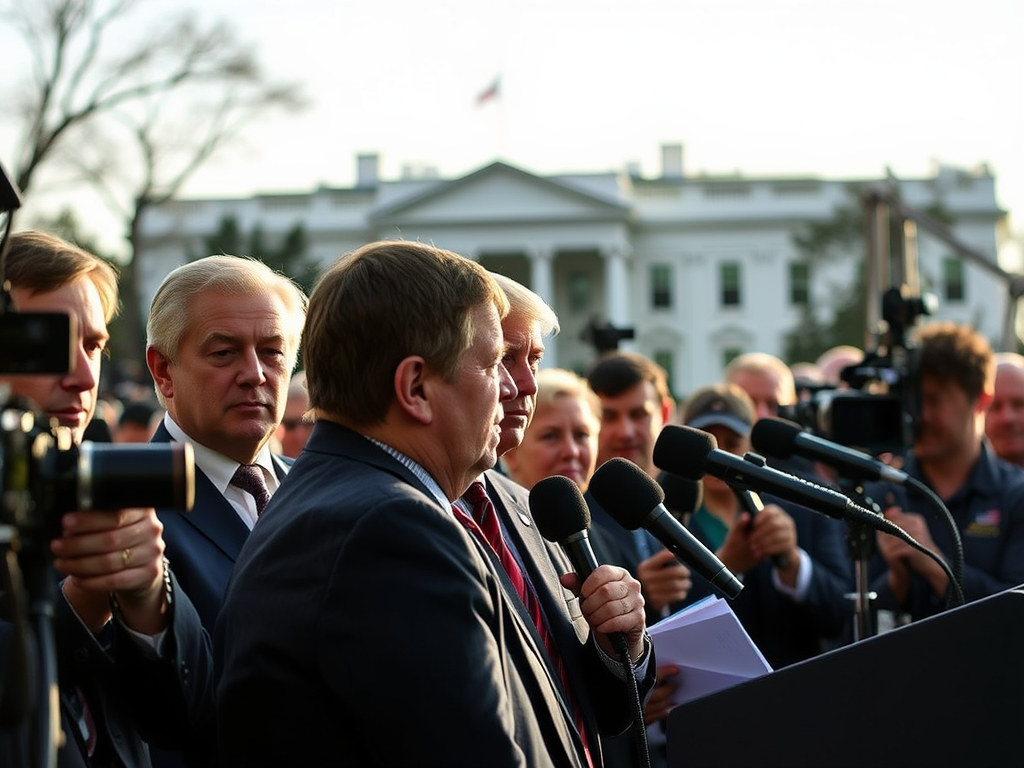

Trump Administration Alters Press Pool Rules: Impact on Media Access

On Tuesday, the Trump administration announced a significant change to how it manages the presidential press pool, stating it would no longer reserve a consistent spot for three major independent newswire services—The Associated Press (AP), Bloomberg News, and Reuters—despite their decades-long participation.
This shift marks the latest step in the administration’s broader strategy to tighten its control over the group of reporters tasked with providing daily coverage of the president’s activities. It also deepens an ongoing legal conflict with the AP, which has already been barred from attending smaller presidential events for over two months.
Last week, a federal judge ruled in favor of the AP, ordering that the White House must reinstate full access for its journalists. The judge determined that the administration’s exclusion of AP reporters violated the First Amendment, which protects freedom of the press. The White House, however, has appealed the decision, with a new hearing scheduled for Thursday.

The presidential press pool is a limited group of journalists who take turns covering events that are too small to accommodate the full press corps—such as meetings in the Oval Office. These reporters are granted exclusive access to such events and share their reports with the wider press community. The system is meant to ensure transparency and equitable media access, even in confined spaces.
For many years, the process of selecting which journalists would participate in the pool was handled by the independent White House Correspondents’ Association (WHCA), a longstanding press organization that has worked to ensure fairness and neutrality in media access. However, in a break from bipartisan tradition, the Trump administration announced in February that it would take direct control of press pool selections, bypassing the WHCA altogether. At the time, the WHCA strongly criticized the change, stating, “In a free society, government officials must not get to choose which journalists cover them.”

On Tuesday, White House Press Secretary Karoline Leavitt released a new set of press pool rules. Among the most controversial changes was the removal of the dedicated slot historically set aside for a reporter from one of the three major wire services. Instead, that space will now be assigned to a print journalist, chosen from a larger rotation of media outlets.
Leavitt clarified that while AP, Bloomberg, and Reuters reporters are still eligible to be selected for the pool under the general print rotation, they will no longer have guaranteed or daily access. This development was first reported by The New York Post.
In a memo detailing the revised policy, Leavitt stated, “The White House press secretary shall retain day-to-day discretion to determine the composition of the pool. This is necessary to ensure that the president’s message is effectively delivered to key audiences and that media outlets with relevant subject-matter expertise are present at appropriate events.”
This decision has drawn strong criticism from advocates of press freedom, who view it as part of a broader pattern in which the Trump administration seeks to undermine traditional, independent journalism.

President Trump and his administration have launched several campaigns targeting legacy media institutions. These include lawsuits against major broadcasters like ABC and CBS, and public threats to revoke the licenses of large television networks. Critics argue these actions are designed to intimidate the press and reduce public scrutiny of the executive branch.
The administration’s latest conflict with the AP stems from its continued use of the geographical term “Gulf of Mexico,” which President Trump unilaterally renamed the “Gulf of America” via executive order. The AP, maintaining its editorial independence, refused to adopt the new terminology in its reporting. In retaliation, White House officials blocked AP journalists from participating in the press pool starting in February, which prompted the wire service to sue for reinstatement of access.
As of Tuesday, representatives from Bloomberg and the AP had not responded to media inquiries regarding the changes. The White House Correspondents’ Association also refrained from immediate comment. However, a Reuters spokesperson did issue a brief statement: “We remain committed to covering the White House in an impartial, accurate, and independent way.”
Administration officials have defended the move by stating that it is designed to diversify the voices covering the president and reflect how Americans increasingly consume news from a wide range of sources—not just traditional legacy outlets.
“Outlets that have been part of the pool for years will still be included,” Leavitt said in a February briefing. “But this is also an opportunity to open the door for newer, less conventional media platforms.”

However, critics argue that limiting access for the wire services poses a serious threat to the public’s ability to stay informed about the workings of government. Wire services like the AP, Bloomberg, and Reuters are responsible for producing a large volume of content—articles, videos, and photos—that is syndicated to thousands of newspapers, websites, and broadcasters around the world, many of which do not have their own Washington correspondents.
In a joint statement released earlier this year, the three wire services emphasized the crucial role they play in the media landscape. “Much of the White House coverage that people read or watch in local news outlets, whether in the United States or abroad, originates from the wire services,” they wrote.
The statement continued, “In any democracy, it is vital that the public has access to news about its government through an independent and free press. Any governmental action that restricts access for major wire services threatens that democratic principle.”
The legal battle between the AP and the administration is ongoing. For now, the new press pool rules stand, pending the outcome of Thursday’s court hearing. Observers from the press freedom community and media law experts will be watching closely, as the case could set a precedent for future administrations regarding media access to the presidency.
While the Trump administration insists it is simply adjusting the system to better reflect modern media consumption habits, many journalists and free speech advocates view these changes as a troubling effort to control the narrative and limit scrutiny. As the situation unfolds, the broader implications for press freedom and democratic accountability remain a key concern for both the public and the media.




Leave a Reply