
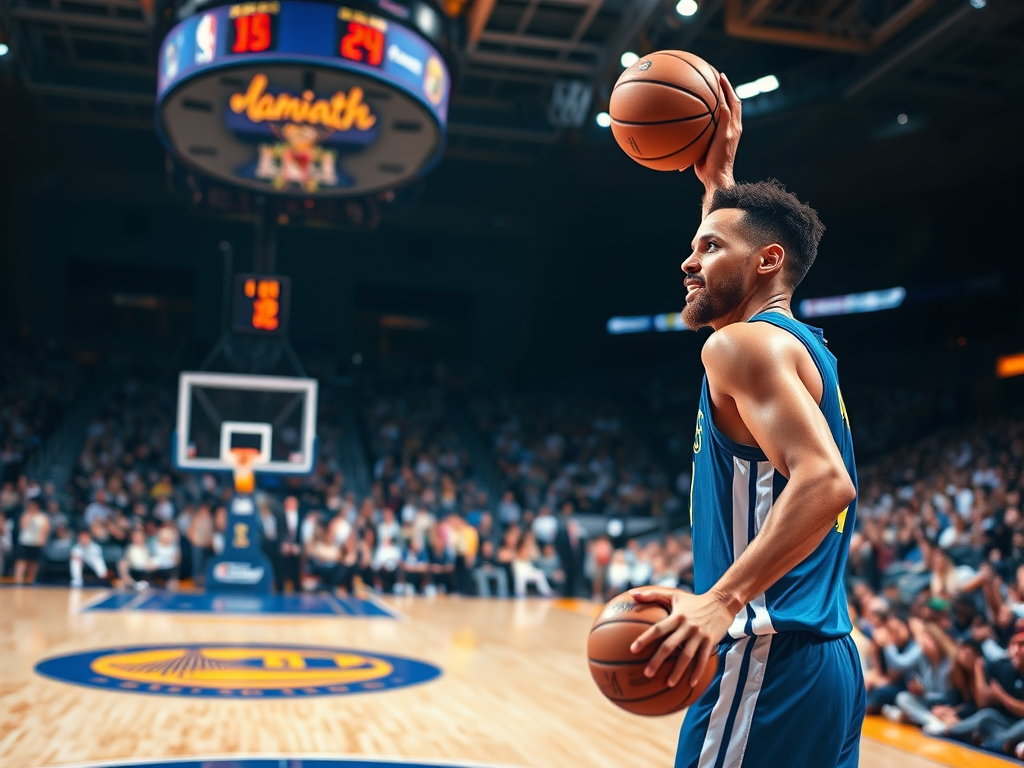

Warriors coach Steve Kerr thinks an 82-game NBA regular season is too much

Stephen Curry continues to be one of the NBA’s most magnetic stars. With his incredible shooting range, mesmerizing dribbling skills, and an infectious enthusiasm that lights up the court, Curry draws fans from all corners just to catch a glimpse of his pregame routine. His warmups alone have become events, with people arriving early just to see him let it fly from seemingly impossible distances.
Yet, despite his popularity, fans in New Orleans went through an extended drought without seeing him in action. For more than two years, Curry didn’t suit up for a single game in the city. In 2022 alone, he missed four straight appearances in New Orleans. Three of those absences were due to rest on the second night of back-to-back games, a common strategy to preserve player health over the course of the grueling season.
Ahead of a November 4, 2022, matchup against the Pelicans, Warriors head coach Steve Kerr addressed the absence of his star player and issued a public apology to fans. Many had marked the date on their calendar with hopes of witnessing the two-time MVP live.
“We’re always trying to take the long view,” Kerr explained. “Player health is paramount—not only for our team’s success but even more so for the longevity of the players’ careers. It outweighs fan disappointment, even though we understand and regret it.”
Kerr has long been a vocal supporter of reducing the length of the NBA season, advocating for a cut from 82 games down to 65. His belief in this adjustment runs so deep that he personally reached out to NBA Commissioner Adam Silver via email before the start of the season to reiterate his stance.
“I worry about the product on the floor,” Kerr said back in November. “The demands on players have never been higher. The game has evolved to the point where performing at a high level night after night is an almost superhuman task. We all need to start thinking more seriously about what we’re asking of these athletes.”
As a former player himself, Kerr has a unique perspective. During his time with the Chicago Bulls, he played alongside Michael Jordan, who famously played all 82 games in multiple seasons. Kerr, too, managed to go through entire seasons without missing a game, including during four consecutive campaigns from 1993 to 1997. In that span, including playoff contests, Kerr appeared in 385 games—averaging more than 96 games per season.
But even with that old-school resume, Kerr firmly believes the modern NBA is a different beast.
“Back then, you weren’t required to chase shooters out to 30 feet,” he said. “The game was played in a much tighter space. Now, the court is fully stretched. You’re covering more ground, running at higher speeds, and switching constantly. The physical demands are just greater.”
The game’s rapid evolution is reflected in the numbers. When Kerr played his final season in 2002-03 with the Spurs, the Boston Celtics led the league in three-point attempts with just 26.3 per game. The Kings were considered the fastest team in the league, averaging 96.6 possessions per 48 minutes.

Compare that to the modern game: This season, Boston again tops the league in three-point attempts—but now they take nearly 48 per game. Seven of their players average at least five attempts from deep each night. Meanwhile, the Memphis Grizzlies are leading the league in pace, clocking in at 104 possessions per game—almost an 8 percent increase over the early-2000s Kings.
“The data shows a clear uptick in movement,” Kerr said. “Players are being asked to do a lot more physically than even 15 or 20 years ago. It’s measurable. It aligns with what we’re seeing every night on the court.”
In January 2024, the NBA released a comprehensive 57-page report examining the rising trend of player absences. It focused particularly on stars—defined as recent All-Stars or All-NBA selections—and tracked data across five decades. The findings were stark: In the 2020s, top players are missing more than twice as many games on average as their 1980s counterparts.
Interestingly, the study concluded that there is no definitive link between resting players (a practice known as load management) and reduced injury risk in the future. This echoed earlier statements by NBA Executive VP of Basketball Operations Joe Dumars, who had relayed similar conclusions to skeptical coaches a few months prior.
In response to growing concern over player availability, the NBA implemented a Player Participation Policy for the 2023-24 season. It barred teams from resting star players during national TV broadcasts or In-Season Tournament games. Additionally, a new eligibility rule for end-of-season awards now requires players to appear in at least 65 games.

“There’s been a noticeable increase in player participation this season,” Commissioner Adam Silver noted during the February 2024 All-Star break. “And early indications show a decrease in injuries. But it’s too early to know whether this is a lasting trend.”
Despite that optimistic outlook, injury totals remain high. Jeff Stotts, a leading injury analyst and founder of In Street Clothes, tracks every missed game. By April 10, players had missed 6,525 games due to injury—up from 5,681 at the same point the previous season.
Stotts believes multiple factors are fueling this increase. For one, young athletes today are specializing in basketball earlier, which can increase injury risk over time. Michael Jordan, for instance, played multiple sports throughout his youth. Today’s elite prospects, by contrast, often compete in basketball year-round, with packed AAU schedules that include multiple games per day.
He also points to how the game has changed more quickly than medical science can keep up. Take someone like Shaquille O’Neal. While Stotts is confident Shaq would dominate in any era, the demands on his body today would be much greater.
“Shaq was always going to be a force,” Stotts said. “But imagine him defending the perimeter in today’s game. That’s not what he had to do back then. It would increase his injury risk significantly.”
Kerr remains one of the NBA’s most passionate voices in favor of trimming the regular season. But even he admits that such a change is unlikely.
“We all know fewer games would help,” Kerr said. “But it comes down to money. Who’s going to agree to take less?”
Right now, the financial picture is more robust than ever. In July, the NBA finalized a new broadcasting agreement worth an astounding $76 billion over 11 years. That revenue feeds into the league’s Basketball Related Income (BRI), which is shared between owners and players. As a result, the salary cap is expected to jump by the maximum 10 percent next season—and continue to rise. Some project that within the next decade, individual player salaries could reach $100 million annually.
For many, including CJ McCollum—the president of the NBA Players Association and a current player—the grind of the 82-game season remains an accepted challenge.
“The game’s evolving fast,” McCollum said. “Sure, injuries are up, but I still believe in the full season. I enjoy the challenge of surviving it—the late-night flights, the back-to-backs, the schedule losses. This is a short window in life when we get to do this. I want to maximize every opportunity.”
Back when Kerr retired in 2003, the salary cap was $43.8 million. Next year, it’s projected to be $154.6 million. Players may be missing more games, but the league’s profitability shows no signs of slowing down.
Kerr argues that fewer games would lead to better performances and more compelling matchups. But he’s also realistic about what change requires.
“Rules have changed. The game has changed,” Kerr said. “It’s up to us as coaches and caretakers of the sport to evolve with it. I deeply respect what Adam Silver and the league office are doing.”
But Kerr remains skeptical about the broader culture of the sport.
“What I don’t trust,” he added, “is America’s willingness to sacrifice a little profit in the name of quality. That’s just not who we are.”




Leave a Reply