
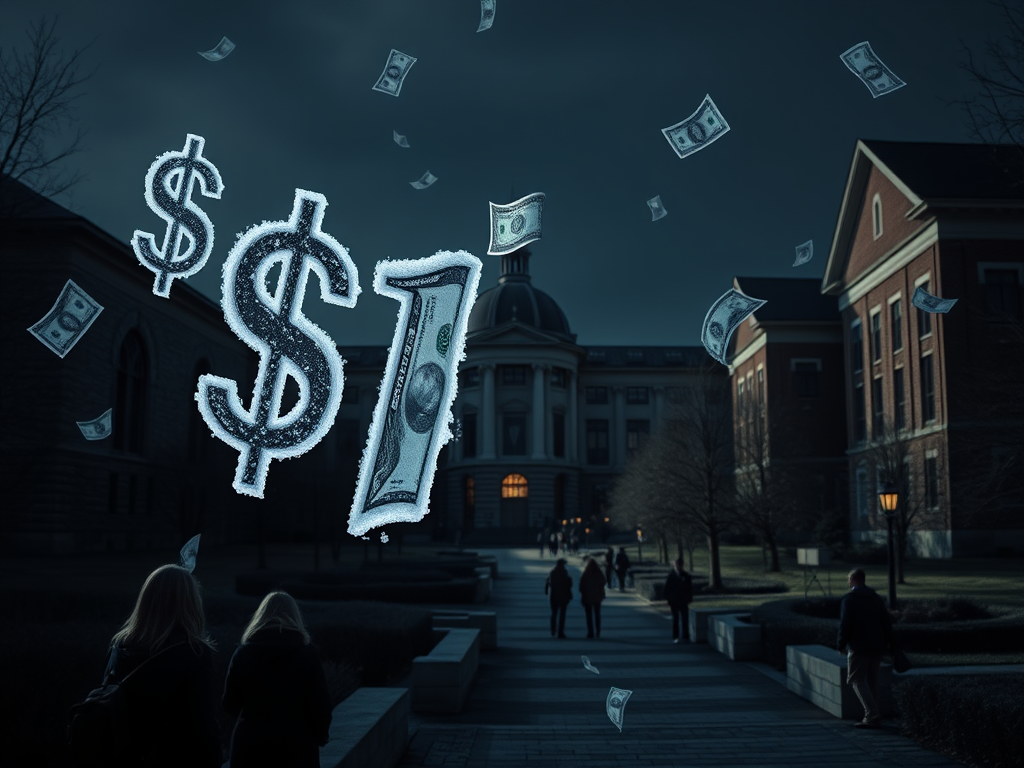

Trump Officials Freeze $1 Billion for Cornell and $790 Million for Northwestern

The Trump administration has taken a dramatic step in its ongoing scrutiny of elite academic institutions by freezing over $1 billion in federal funds earmarked for Cornell University and another $790 million intended for Northwestern University, according to two U.S. officials familiar with the matter.
The suspended funding largely comprises grants and contractual agreements from several key government departments, including the Departments of Agriculture, Defense, Education, and Health and Human Services. The officials, who requested anonymity because the decision has not been officially announced, revealed that this action is part of a broader and intensifying campaign targeting some of the nation’s most prestigious universities.
This latest development represents the most sweeping and financially significant move yet in a series of federal investigations that have, in just over a month, placed approximately $3.3 billion in government funding under suspension or review. Alongside Cornell and Northwestern, other top-tier universities including Harvard, Princeton, Columbia, Brown, and the University of Pennsylvania have also been drawn into the spotlight over similar concerns.
The investigations center on accusations that these universities have failed to adequately address incidents of antisemitism, while also scrutinizing their diversity initiatives for possible racial discrimination. Both Cornell and Northwestern are currently subjects of ongoing federal inquiries related to these issues.

Cornell has yet to issue an official response to the news of the funding freeze. Northwestern’s spokesperson, Jon Yates, stated that the university had not received any formal communication from the federal government regarding the halt in funding. He expressed concern over the implications of such a decision, noting that many vital research initiatives are now in jeopardy.
“Federal support plays a critical role in advancing groundbreaking and life-saving research at Northwestern,” Yates said, highlighting recent accomplishments such as the creation of the world’s smallest pacemaker and continued progress in combating Alzheimer’s disease. “This funding freeze threatens to undermine those efforts.”
Yates emphasized that Northwestern has been cooperative throughout the federal and congressional investigations and reaffirmed the university’s commitment to fostering a safe and inclusive environment for all students. Just last week, Northwestern released a public “progress report” outlining its actions to address antisemitism on campus. Measures included mandatory training sessions on antisemitism for students, faculty, and staff, aimed at improving awareness and sensitivity.
The decision to freeze Northwestern’s funding marks a notable shift in the administration’s focus beyond the Ivy League. As a member of the Big Ten, Northwestern becomes the first non-Ivy League school to be subjected to funding restrictions tied to civil rights investigations by the Trump administration.

Linda McMahon, the current Secretary of Education, has openly expressed the administration’s intent to hold elite institutions accountable. Echoing former President Trump’s criticism of universities as hubs of liberal ideology, McMahon has stated that receiving federal support is not an entitlement, but a privilege—one that may be revoked if schools are found to be in violation of civil rights statutes.
Cornell and Northwestern, like many American universities, have recently been embroiled in campus disputes related to the ongoing conflict in Gaza. These tensions have further fueled federal interest in how universities are managing politically and socially sensitive issues, especially in relation to Jewish and minority students.
Last month, both institutions were among 60 universities that received formal warnings from the Trump administration. These warnings pointed to the possibility of enforcement actions as a result of ongoing federal investigations into allegations of antisemitic behavior and discriminatory practices tied to diversity programs. Investigations into race-related complaints are also still pending at both universities.

In addition to federal scrutiny, Northwestern faced criticism from congressional leaders over the activities of its legal clinics. These clinics, part of the university’s law school, had previously provided legal representation to organizers of an anti-Israel protest. While university officials have clarified that these clinics function as academic training environments and do not reflect the school’s political stance, some lawmakers were not convinced.
In a formal letter to Northwestern’s leadership, Representatives Tim Walberg and Burgess Owens—chairs of the House Education Committee and its higher education subcommittee, respectively—condemned the clinics’ involvement, labeling the activities as “unlawful, antisemitic conduct.” The lawmakers argued that such actions contribute to a hostile environment for Jewish students and demanded stronger institutional oversight.
Cornell, too, has come under fire for allegedly not doing enough to counter antisemitic incidents on campus. In a recent op-ed published in The New York Times, Cornell’s president, Michael Kotlikoff, defended the university’s approach and called for a more thoughtful understanding of the role that higher education plays in society.
“Universities are designed to serve as guardians and promoters of democratic values, even in times of heightened political pressure and legal uncertainty,” Dr. Kotlikoff wrote. “It’s true that a chaotic event captured in a viral video can alarm alumni and donors, adding fuel to an already volatile environment. But if we allow fear to dictate our purpose, we risk abandoning the very principles we are meant to uphold. Colleges and universities must remain strongholds of democracy and defenders against authoritarianism.”
The Trump administration’s aggressive stance has caused growing concern in academic circles, where federal funding is often essential for sustaining research, student support programs, and faculty salaries. Critics of the administration argue that these investigations are politically motivated and risk stifling academic freedom by using financial pressure to control campus discourse.
Supporters of the administration, however, claim that the probes are necessary to enforce civil rights laws and to ensure universities remain accountable to the public. They contend that taxpayer dollars should not be allocated to institutions that fail to protect students from discrimination or that promote ideologically biased programs under the guise of diversity and inclusion.
As of now, it remains unclear whether the frozen funds will eventually be restored or if more universities will find themselves caught in similar investigations. For institutions like Cornell and Northwestern, the financial and reputational consequences of these federal actions are already being felt, even as they continue to defend their policies and practices.
What’s certain is that the tension between elite academic institutions and the Trump-era federal government continues to escalate, with billions of dollars and the future of campus governance hanging in the balance.




Leave a Reply