
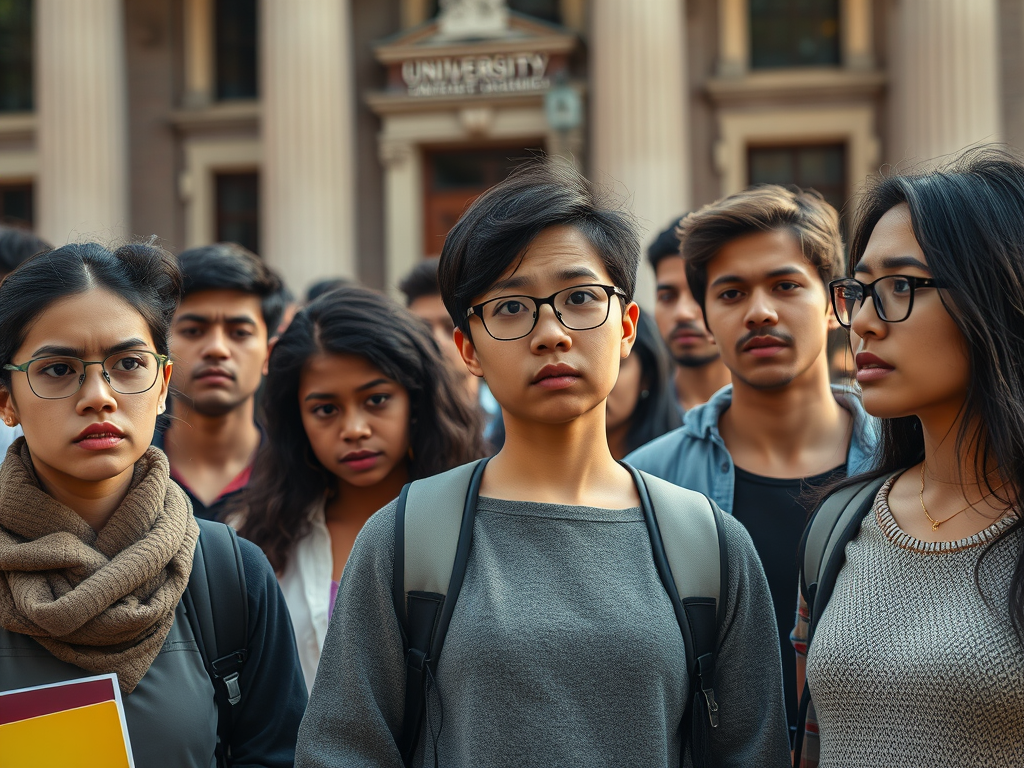

Nearly 150 Students Have Had Visas Revoked and Could Face Deportation

In a sweeping and largely unexplained crackdown, at least 147 international students across the United States have had their legal immigration status abruptly revoked in recent days, according to multiple university sources and media accounts. The sudden loss of visa privileges has thrown these students into turmoil and sparked confusion among educational institutions now rushing to assist students at risk of detention or deportation.
This troubling development has impacted students attending a diverse range of institutions—from prestigious private universities such as Harvard and Stanford to prominent public institutions including the University of Texas at Austin and Minnesota State University-Mankato. Numerous students across the University of California system have also reportedly been affected.
Immigration attorneys interviewed by The New York Times said they were inundated late last week with desperate phone calls and emails from international students who had just received notices from their universities or the U.S. State Department stating that their visas or immigration statuses had been revoked. In most instances, no clear explanation was provided.
While certain types of criminal convictions have long jeopardized visa status, attorneys noted that minor infractions—such as traffic violations or past political activities—rarely warranted deportation. However, some of the recent cases involve students who were arrested or targeted due to their support of pro-Palestinian causes. Others were flagged for infractions that occurred years ago, including driving offenses like DUIs.
What’s especially alarming to legal experts is the lack of transparency surrounding the recent visa terminations. Attorneys stated that, unlike in past cases where clear documentation explained the basis for immigration actions, students are now being penalized without any formal rationale. “This is a complete departure from standard government procedures,” said Miriam Feldblum, Executive Director of the Presidents’ Alliance on Higher Education and Immigration, an organization representing more than 570 U.S. colleges and universities. “We are seeing visa terminations issued in unprecedented ways, with virtually no explanation and very little opportunity for students or institutions to appeal or correct the record.”
The situation may be tied to broader policy shifts. Just weeks ago, Secretary of State Marco Rubio reportedly instructed U.S. embassies and consulates to review the social media activity of visa applicants, particularly targeting individuals suspected of posting content critical of the United States or Israel. Both the State Department and the Department of Homeland Security declined to comment on the recent visa cancellations when contacted by media outlets.

These developments have intensified concerns among international education advocates who warn that such tactics could severely damage the United States’ global reputation as a welcoming destination for students and scholars. In 2024 alone, more than 400,000 student visas were issued, reflecting the country’s longstanding role as a leading host of international talent.
The recent wave of visa revocations has brought national attention to the case of Mahmoud Khalil, a recent graduate student from Columbia University, who was known for his involvement in pro-Palestinian demonstrations on campus last year. Despite holding permanent residency, Khalil was arrested in his apartment and transferred to a detention facility in Louisiana for potential deportation proceedings. Shortly after, Rumeysa Ozturk, a Turkish student at Tufts University who had published a pro-Palestinian op-ed, was similarly detained by masked agents from U.S. Immigration and Customs Enforcement (ICE) while en route to meet friends. She was also taken to a Louisiana facility.
These arrests appear to be part of a broader effort by the Trump administration to reduce both legal and undocumented immigration and to pressure universities to confront what the administration describes as widespread antisemitism on college campuses.
Legal experts stress that many of the students now facing visa revocations had not committed offenses that typically justify such drastic action. Some had minor run-ins with law enforcement, such as traffic violations, or had past immigration issues that had already been resolved. One student, an Indian national who had received a DUI charge more than a decade ago, had openly disclosed the incident when applying for a new student visa—yet his legal status was recently terminated with no clear reason provided.
“This is something I have never witnessed in over 20 years of practicing immigration law,” said Fuji Whittenburg, an attorney based in Calabasas, California. “Even a minor encounter with law enforcement—one that didn’t lead to an arrest or a conviction—seems to be enough to justify visa revocation in the current environment.”
She added that in the past, minor offenses would not have warranted any further action, especially if they had already been disclosed to consular authorities. The sudden reversals are alarming, she said, and speak to a climate of fear among international students.
At Harvard, officials recently hosted a webinar to advise international students not to travel abroad if possible. According to The Harvard Crimson, the university also cautioned students that expressing support for pro-Palestinian causes, whether through speech or protest, could pose significant legal risks. During the session, university attorney Jason Corral noted a troubling trend. “What we are witnessing now is a change from what we saw during Trump’s first term,” he said. “Now, we’re seeing cases where students’ visas appear to be revoked simply due to their speech or political expression.”
National student journalism organizations have also issued warnings. In a recent statement, a coalition urged student media outlets to practice caution and prioritize student safety, citing rising concerns over freedom of speech and surveillance.

Meanwhile, faculty organizations have begun to speak out. On Monday, the Council of University of California Faculty Associations sent a letter to University of California President Michael Drake, urging him to support affected students. The letter, also signed by the University Council-AFT—a union representing lecturers and librarians—argued that the university system has a moral and legal obligation to defend its students and scholars. Recommendations included allowing deported or detained students to continue their studies remotely, maintaining their financial aid packages, and offering legal assistance.
Legal challenges are already underway. Several students have initiated lawsuits against the federal government in an attempt to reverse their visa terminations. Immigration attorney Stacy Tolchin filed two cases in federal court in Los Angeles over the weekend and said she expects to file more in the coming days.
In one high-profile case, the American Civil Liberties Union (ACLU) is representing Xiaotian Liu, a Chinese doctoral student in computer science at Dartmouth College. According to court filings, Liu has not been involved in any criminal activity or political protest, yet received a notice that his visa had been terminated. Dartmouth officials informed him that the situation was “not standard or normal,” as cited in the legal complaint submitted to a federal court in New Hampshire.
The suit claims that Liu’s ability to finish his Ph.D. is now in serious jeopardy. “Xiaotian’s dream of earning his doctorate at Dartmouth College is hanging by a thread,” the lawsuit states.
As more stories like Liu’s emerge, legal experts, university officials, and advocacy groups are raising the alarm about what appears to be an unprecedented shift in U.S. immigration enforcement—one that threatens to undermine the stability, safety, and future prospects of thousands of international students who came to the United States seeking education and opportunity.




Leave a Reply