

Minnesota Student Detained by ICE Was Not an Activist, Lawsuit Says

A graduate student from the University of Minnesota, who was detained by immigration authorities last week, had not been involved in campus activism or voiced strong political opinions, according to a lawsuit he filed on Sunday in federal court to contest the legality of his arrest.
Rather than political activity, the reason that seems to have drawn Immigration and Customs Enforcement’s (ICE) attention to the student, Dogukan Gunaydin, was a far more routine matter: a 2023 incident of driving under the influence (DUI), to which he had pleaded guilty.
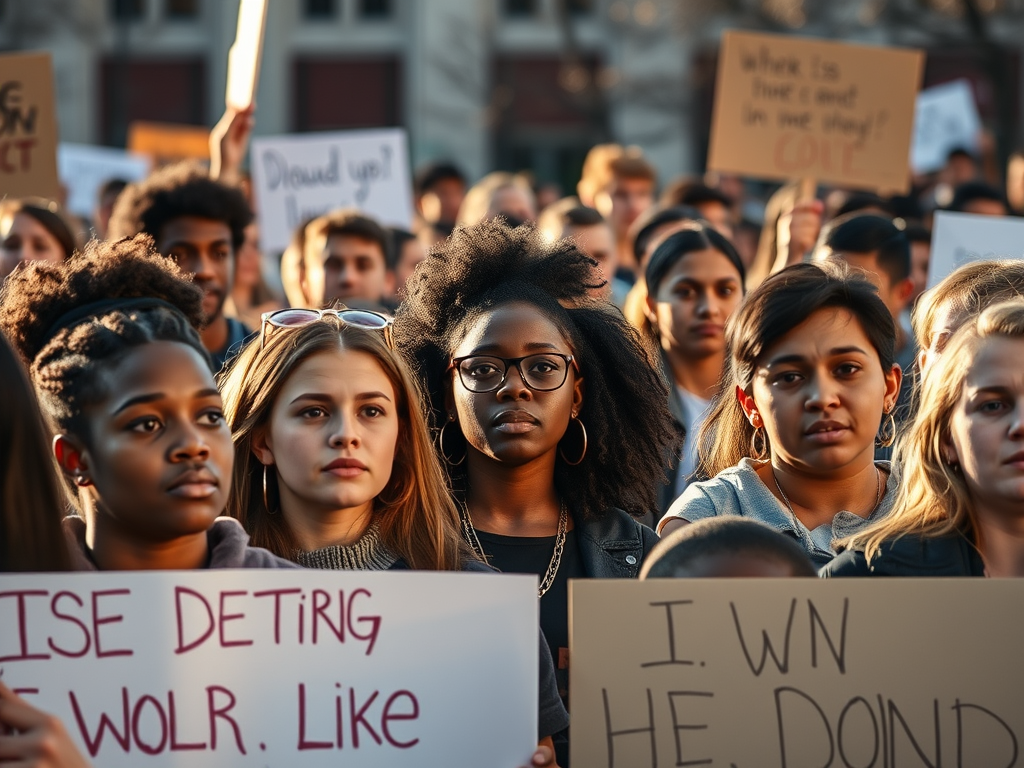
Following a university statement on Friday night confirming that a student had been taken into immigration custody, speculation quickly arose that the arrest was linked to pro-Palestinian demonstrations, as had occurred at other universities. This prompted top officials, including Minnesota Governor Tim Walz and members of Congress, to express concern. In response, students organized protests on campus.
However, no evidence has surfaced suggesting that Mr. Gunaydin, a 28-year-old Turkish citizen pursuing a master’s degree in business administration, was involved in activism. The Department of Homeland Security clarified in an email statement that his arrest followed the revocation of his visa by the State Department due to his DUI conviction. “This is not related to student protests,” the statement emphasized.

Legal and immigration experts fear that this incident may reflect a shift in the Trump administration’s immigration enforcement strategy. While student visas are frequently revoked following criminal offenses, affected individuals are typically given the opportunity to challenge the revocation with legal assistance or allowed to leave the country voluntarily.
Mr. Gunaydin’s case, however, deviated from this norm. According to the lawsuit, an additional irregularity was that the system did not register his visa as revoked until several hours after his arrest on Thursday morning.
Since 2015, the State Department has maintained a policy that an arrest for driving under the influence can serve as grounds for visa revocation. Immigration attorney Debra Schneider, based in Minneapolis, noted that numerous foreign students and workers in the U.S. have since received revocation notices following legal infractions.
Despite this, Ms. Schneider pointed out that individuals on temporary work or student visas often succeed in having their visas reinstated, especially in cases where the violations are not severe.
“I’ve never seen ICE detain someone solely over a DUI,” she remarked.

The State Department declined to discuss Mr. Gunaydin’s case, citing privacy concerns, but reiterated its firm stance on noncitizens who violate U.S. laws. “The United States has zero tolerance for those who break the law, including students, who may face visa refusal, revocation, and/or deportation,” the statement read.
Hannah Brown, Mr. Gunaydin’s attorney, did not provide any comments when contacted on Monday.
According to the lawsuit, Mr. Gunaydin was detained around 9:30 a.m. on Thursday as he exited his residence in St. Paul, Minnesota, on his way to class. Immigration officers transported him to the ICE office in St. Paul, where he was informed that his visa had been “retroactively revoked.”
“Mr. Gunaydin feared he was being kidnapped,” the lawsuit stated, noting that authorities did not provide a reason for the revocation.
Approximately seven hours after his detention, the government’s online system for tracking international student visas reflected the revocation of his visa, listing him as having failed to maintain legal status. However, no further explanation was provided.
That evening, officials informed Mr. Gunaydin that he would appear before an immigration judge on April 8. He was later transferred to Sherburne County Jail, located roughly 35 miles northwest of Minneapolis.
As of Monday, it remained unclear whether formal deportation proceedings had begun against him.
His lawsuit names then-President Trump, Secretary of State Marco Rubio, and several senior Homeland Security officials as defendants. It seeks his release from custody, arguing that his detention violated his constitutional right to due process and that administrative law had been breached, given that his visa was still valid at the time of his arrest.
Carl C. Risch, a former assistant secretary of state responsible for visa matters during much of Trump’s first term, stated that visa revocations following arrests had been a common practice for years. However, he found it unusual for ICE to detain an international student over an old DUI case without prior notice.
In his current role at the law firm Kurzban Kurzban Tetzeli & Pratt, Mr. Risch noted that in the past, federal authorities had focused on detaining individuals considered threats to public safety—such as those with serious criminal records or suspected ties to terrorism.
If the government starts routinely detaining and deporting visa holders for minor infractions like DUIs, he added, that would represent “a shift in policy, an escalation.”

Meanwhile, another Minnesota university reported a similar incident. On Monday, Edward S. Inch, president of Minnesota State University, Mankato, disclosed that one of their students had also been taken into ICE custody the previous week.
Mr. Inch did not specify the reasons for the arrest but stated that he had contacted state and federal officials to express his concerns and seek assistance in preventing similar actions within the academic community.
Details surrounding the student’s identity and the circumstances leading to the arrest were not provided.
Mr. Gunaydin’s legal troubles began on June 24, 2023, when a Minneapolis police officer observed a vehicle driving erratically around 1:50 a.m., according to the charge sheet. Upon being stopped, Mr. Gunaydin admitted to having consumed vodka earlier in the evening. A breathalyzer test revealed a blood alcohol concentration of 0.17 percent—more than twice the legal driving limit of 0.08 percent.
In March of the following year, he pleaded guilty to impaired driving, a misdemeanor, as per court records. The court ordered him to complete community service, attend a DUI education program, and avoid further traffic violations.
Following his conviction, Mr. Gunaydin secured admission to business school and was awarded a scholarship.
“He has maintained a full course load with a high GPA and is actively involved in the MBA Student Association,” the lawsuit stated.




Leave a Reply