
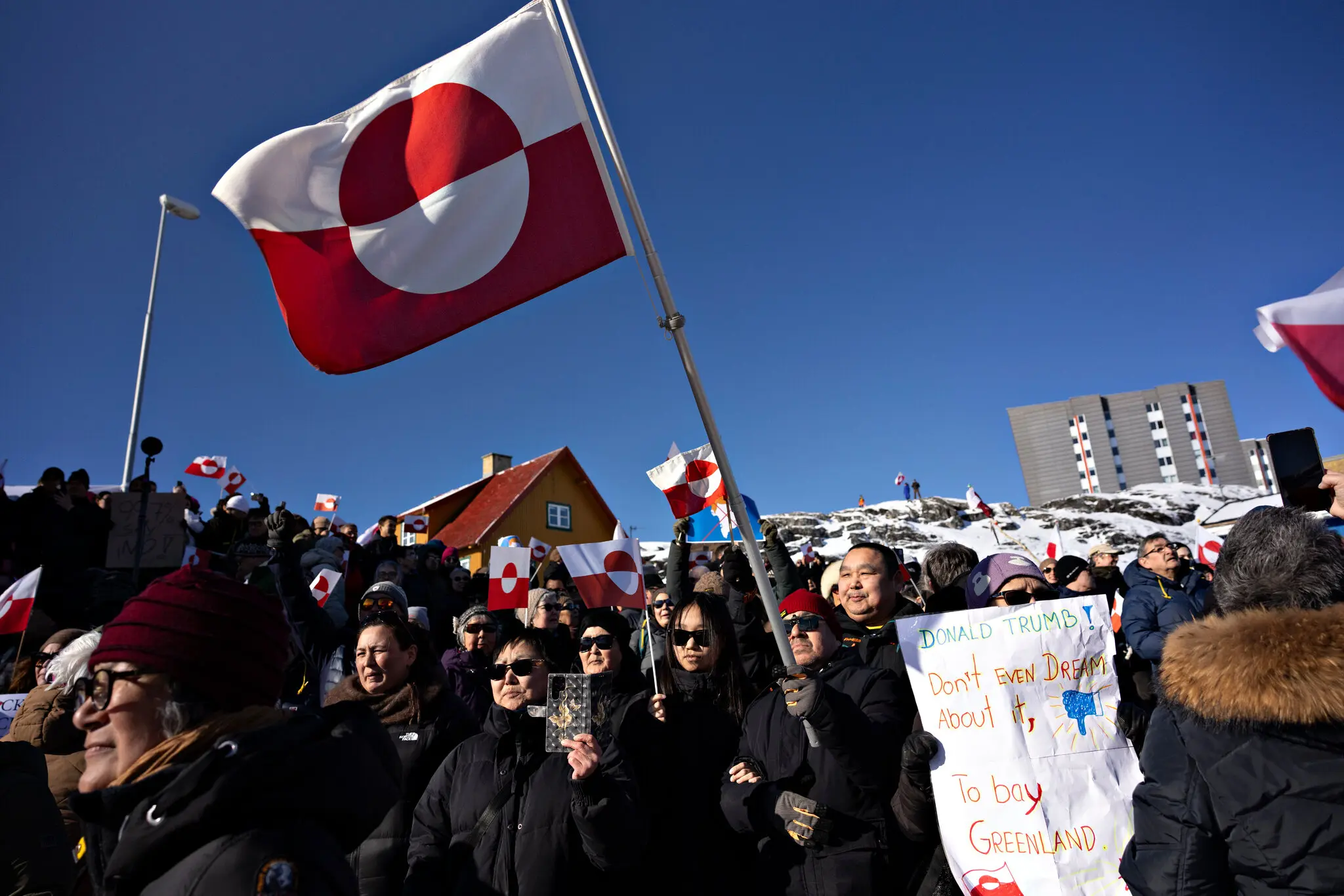

Trump’s Moves on Greenland Appear to Be Backfiring

For over 150 years, U.S. officials, as President Trump puts it, have been attempting to “get” Greenland.
This idea first emerged in the 1860s and reappeared before and after the world wars. In a sense, the timing now seems optimal, as Greenlanders are reconsidering their painful colonial past under Denmark, with many eager to separate from Denmark, which still manages some of the island’s affairs.
However, President Trump may have gone too far this time.
His announcement this past weekend, sending a powerful U.S. delegation to the island — apparently without an invitation — is already causing backlash. The administration tried to spin it as a friendly gesture, mentioning that Usha Vance, the wife of Vice President JD Vance, would attend a dogsled race with one of their sons and that Michael Waltz, the national security adviser, would tour an American military base.
But instead of gaining the favor of Greenland’s 56,000 people, this move, coupled with Trump’s recent declaration that “one way or the other, we’re going to get it,” is pushing Greenland further away.
In the past 24 hours, Greenland’s government has shifted from a position of caution and ambiguity in response to Trump’s assertiveness. It now condemns him as “aggressive” and is seeking support from Europe. The planned visit may end up strengthening the bond between Greenland — a vast ice-covered land three times the size of Texas — and Denmark.

Lars Trier Mogensen, a political analyst based in Copenhagen, commented, “This will clearly have the opposite effect of what the Americans want. This offensive move pushes Greenland further away from the U.S., despite the fact that just a year ago, all parties in Greenland were eager for more business with the Americans.”
His forecast? Greenlanders will likely “seek safety in the status quo — within the Kingdom of Denmark and its alliances.”
Even the dogsled race has shown reluctance. The organizers of the Avannaata Qimussersua, the “Super Bowl” of dogsled races, stated on Sunday that Ms. Vance and her son were “not invited,” though they noted the event is open to the public, meaning they could attend as spectators.
This Greenland saga began during Trump’s first term when he proposed buying the island from Denmark, citing its strategic location at the edge of North America and along the Arctic Ocean. But the idea faded. Despite how outlandish it seemed, Trump wasn’t the first to propose such an idea.
In 1868, Secretary of State William Seward, fresh from purchasing Alaska, commissioned a study on acquiring Greenland. He was interested in Greenland’s coal, but the plan went nowhere. The idea resurfaced in 1910 and again in 1946, with American officials seeing Greenland as a strategically important territory, but each time, Denmark refused to part with it.

What’s changed in recent years is Denmark’s hold over Greenland. In 2009, Denmark granted Greenland limited self-rule, allowing the island to manage most of its affairs, except defense, foreign policy, and a few others. A movement for full independence has been growing, and this month, a closely watched election produced a divided result: the leading party favors slow progress toward independence, while the second-place party advocates for immediate independence and includes a pro-Trump member who attended Trump’s inauguration.
The timing of the visit also raises questions, as Greenland’s political parties are still negotiating the formation of a new government.
“It’s bad timing. We don’t even have a new government yet. They should have waited,” said Jens Peter Lange, a dental technician in Ilulissat, a town in the Arctic Circle.
However, he added, “Is it disrespectful? Not really. I’d rather say: they lack situational awareness.”

Svend Hardenberg, a mining executive and star of a Danish Netflix series set in Greenland, offered a more nuanced view.
“People are reading political intent into something that, in practice, is quite straightforward,” he said. “This was supposed to be a positive, cultural celebration — and now it’s turned into a geopolitical standoff.”
He blamed the media, particularly in Denmark, for “shaping public opinion in a direction that creates mistrust,” adding, “It’s the Danish narrative — Denmark defending its place in the world. That’s what we’re seeing here.”
The visit has been in the works for weeks. Jørgen Boassen, a Greenlandic bricklayer and vocal Trump supporter, said he helped plan the trip. Boassen has been involved in several of Trump’s efforts in Greenland, including the visit by Donald Trump Jr. in January, which was followed by pro-Trump social media influencers distributing $100 bills. Many Greenlanders were not pleased by that, either.
Still, Boassen said, “Instead of rejecting them, we should cooperate with the Americans. We simply can’t avoid the U.S. as a partner.”
“I think it’s absolutely great that they’re coming,” he added. “It’s a huge promotion for our Greenlandic sled dogs.”




Leave a Reply