

Trump to Sign Order Aimed at Dismantling Education Department

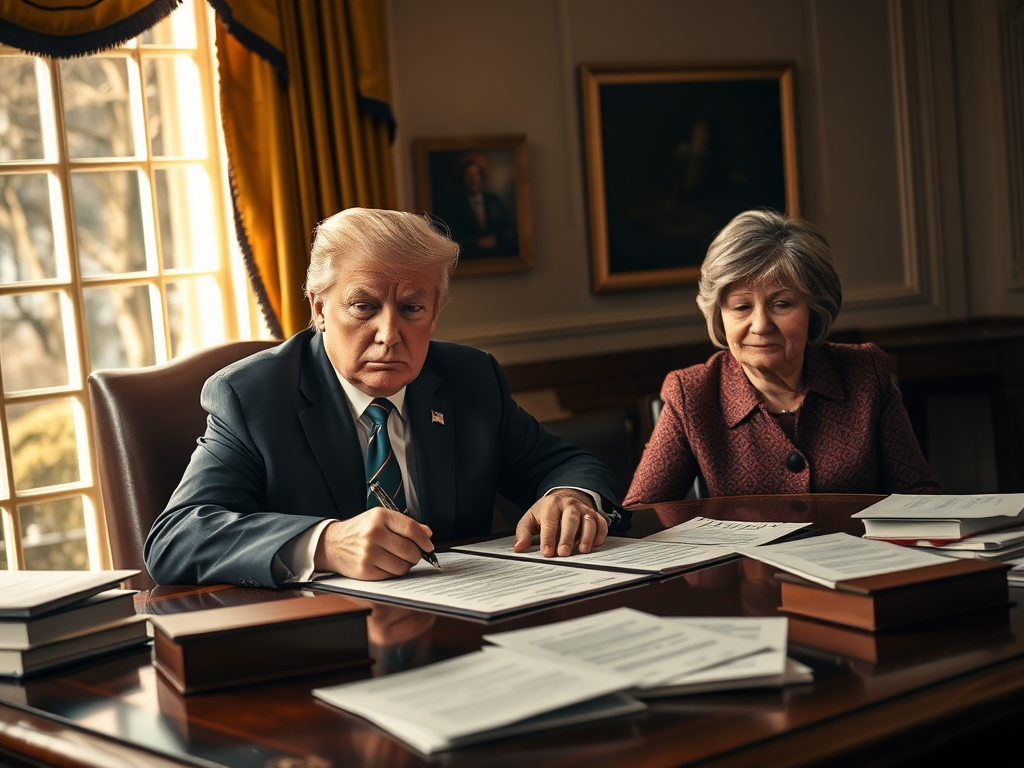
President Trump is set to sign an executive order on Thursday directing Education Secretary Linda McMahon to initiate the process of dismantling the Department of Education, according to two White House officials.
Although the department cannot be abolished without congressional approval—since it was established by Congress—the Trump administration has already taken measures to limit its authority, reduce its workforce, and signal its intention to eventually shut it down.
The officials, who spoke on condition of anonymity because they were not authorized to discuss the matter publicly, stated that the order instructs McMahon to shift control over education back to the states.
USA Today was the first to report Trump’s plan to sign the order on Thursday.
Efforts to eliminate the department date back to the 1980s among Republican lawmakers. However, the movement gained momentum in recent years, fueled by a parental rights movement that emerged in response to school closures and policies implemented during the COVID-19 pandemic.
This movement, which includes key grassroots activists aligned with Trump, has expanded its opposition to progressive education policies, particularly mandates on educational standards and inclusive policies for LGBTQ students. Activists argue that such policies infringe upon parental rights and values.

However, deep political divides over education have existed for decades. Progressive-leaning teachers’ unions opposed President George W. Bush’s “No Child Left Behind” policies, while conservative Republicans in the 2016 presidential race campaigned against Common Core standards, which had been promoted under President Barack Obama’s “Race to the Top” initiative.
Caught in this political tug-of-war are the nation’s 50 million public school students, 15% of whom have disabilities. Also affected are undergraduate students who rely on Pell Grants due to low-income status—nearly one-third of all college students—and the 28% of students who take out federal loans.
Public education is primarily funded by state and local taxes, meaning states already exert significant control over school funding. The federal government contributes approximately 10% of total funding, which is allocated through the Education Department in accordance with federal law, rather than at the president’s discretion.
This division of power partly explains why no modern president has ever attempted to unilaterally dismantle a federal agency. The Education Department was created in 1979 through congressional legislation, meaning lawmakers would need to approve any move to eliminate it.

Public opinion surveys indicate widespread opposition to shutting down the department. Several recent polls show that about two-thirds of Americans disapprove of the proposal.
Trump’s executive order is expected to trigger another legal battle for his administration, which is already facing multiple lawsuits.
No modern president has ever successfully shut down a federal agency on their own. Previous agencies, such as the Interstate Commerce Commission and the Civil Aeronautics Board, were phased out under Presidents Bill Clinton and Ronald Reagan, but only with congressional backing.
Furthermore, no cabinet-level department has been abolished outright since the U.S. Postal Service replaced the Post Office Department more than 50 years ago. Many of the programs managed by the Education Department provide crucial support to schools and students, and lawmakers have historically been reluctant to put them at risk.
Nonetheless, Republican lawmakers have demonstrated an unusual level of deference to Trump, even as he has taken steps to challenge Congress’s authority. For example, he previously instructed federal agencies not to spend funds approved by Congress on programs he opposed—an action prohibited by law and potentially unconstitutional.
Even if the department were dissolved, the legal framework supporting federal funding for public schools, disadvantaged districts, and specific student populations—including those with disabilities—would remain intact. Additionally, many education policies fall under the jurisdiction of other agencies, and the department does not oversee schools on military bases or in Native American territories.
Under Trump’s leadership, the Education Department has already shifted its priorities to align with his agenda by ending investigations launched under the previous administration, initiating new inquiries based on its own priorities, rolling back protections for transgender students, and limiting diversity programs.




Leave a Reply