
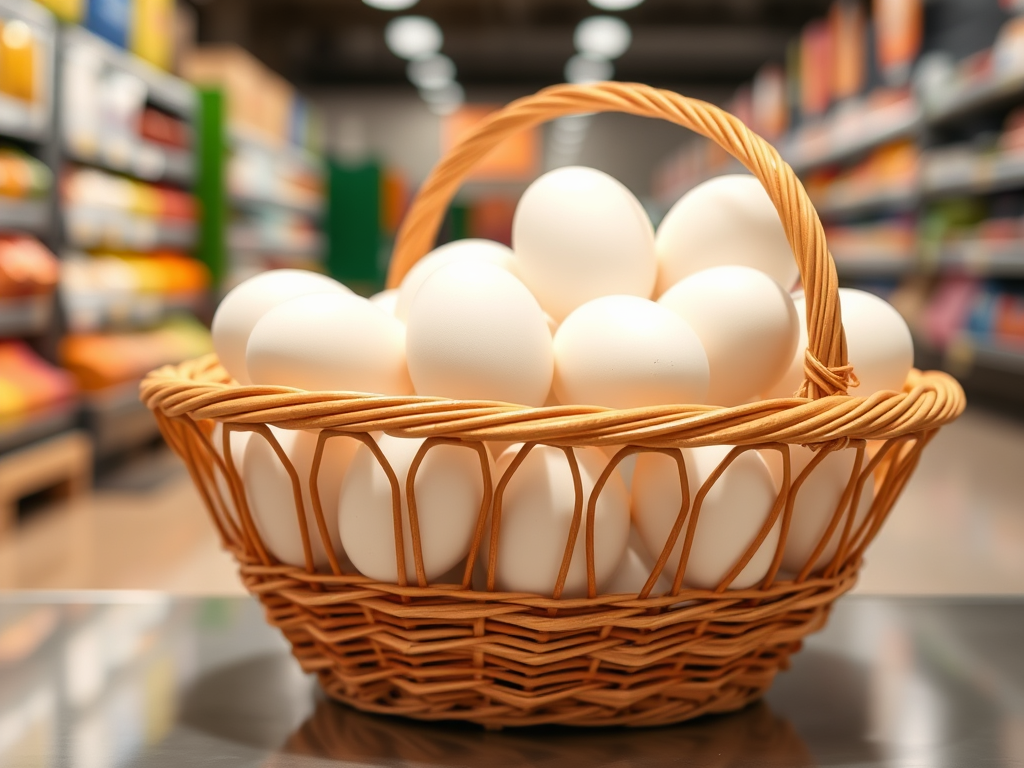

Since early March, wholesale egg prices have plummeted following months of steep increases, but grocery shoppers may have to wait a few more weeks before seeing a noticeable drop in retail prices.
Egg Prices Have Dropped, Though You May Not Have Noticed

According to recent data from the Agriculture Department, the national average price for a dozen large white eggs has fallen to just over $4—down significantly from its late February peak of more than $8. However, due to eggs’ typical four-week shelf life, consumers might not experience lower prices at grocery stores until late March, explained Jeremy Horpedahl, an associate professor of economics at the University of Central Arkansas. Some retailers may keep prices unchanged until they sell through their existing stock.
Economists attribute the decline in wholesale egg prices—though still above long-term averages—to several factors: the containment of bird flu, weaker consumer demand, increased supply, and strategic pricing decisions by producers. The Agriculture Department has reported no major avian flu outbreaks in March, but economists caution that any resurgence of the virus could drive prices back up. Since late last year, egg producers have had to cull tens of millions of hens due to the disease.
Retail egg prices surged by 10.4% in February compared to the previous month, continuing a prolonged upward trend, according to data from the Bureau of Labor Statistics. However, price reductions may not be uniform across the country. Horpedahl noted that areas with multiple competing grocery stores might see egg prices fall more rapidly, whereas regions dominated by a single supermarket chain could experience slower price adjustments. Some retailers may also opt to maintain higher prices despite lower wholesale costs, while others might reduce them to attract customers.
“Retailers can choose to pass the entire wholesale savings onto consumers, keep prices unchanged, or settle somewhere in between,” said David Anderson, a professor of economics and business at Centre College in Danville, Kentucky. He also pointed out that strong demand ahead of Easter could sustain elevated prices in the near term.
Former President Trump, who has prioritized reducing grocery costs as part of his campaign, highlighted the decline in wholesale egg prices in a recent speech at the Justice Department. However, his broad tariff policies have raised concerns about rising costs for a range of goods, including everyday groceries.
During the Biden administration, rising grocery prices—including eggs—became a major concern for voters ahead of the 2024 election. The 2022 bird flu outbreak, combined with increased fuel, feed, and packaging costs linked to the COVID-19 pandemic, had previously driven wholesale egg prices close to $5 per dozen at their peak. While the recent spike in egg prices has been less severe, overall inflation remains a strain on household budgets.

Egg producers have pointed to avian flu as a key factor in tightening supply. The industry trade group United Egg Producers reported that more than 40 million egg-laying hens were lost in 2024, with 31 million culled in the first two months of this year alone as the virus spread.
Anderson emphasized that the bird flu had significantly impacted supply. However, he also suggested that some industry players might be using the crisis to justify additional price hikes that are not entirely necessary.
“Part of it is a genuine response to a supply crisis,” he said. “But part of it could also be a question of whether they have an opportunity to keep prices artificially high.”
Meanwhile, the Justice Department has launched an early-stage antitrust investigation into whether major egg producers coordinated pricing and supply strategies that contributed to the recent price surge. Some lawmakers and consumer advocacy groups had previously urged federal regulators to scrutinize the industry’s pricing practices.




Leave a Reply