

In No Hurry for Cease-Fire, Putin Demands Numerous Ukrainian Concessions

On Thursday, Russian President Vladimir V. Putin did not dismiss a U.S.- and Ukrainian-backed proposal for a monthlong cease-fire. However, he laid out a series of conditions that would likely delay any agreement—or even render it unattainable.
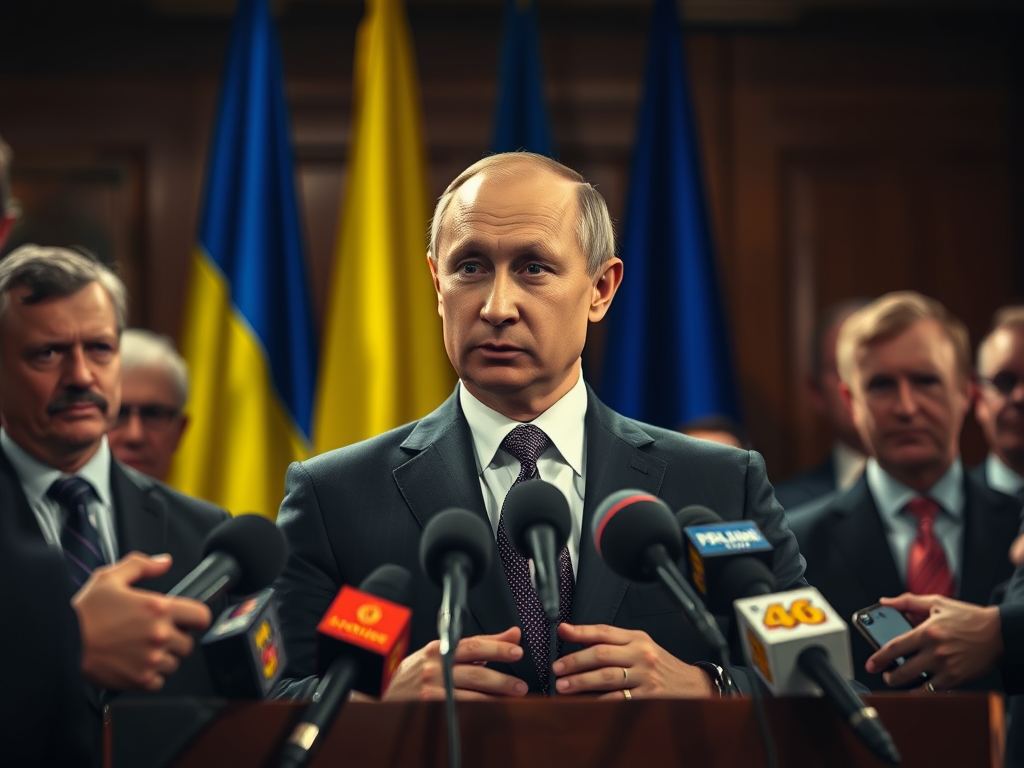
Speaking at a press conference, Mr. Putin sought to strike a delicate balance: projecting confidence in Russia’s military position while keeping diplomatic channels open with the United States and avoiding tensions with President Trump. The U.S. leader, who has disrupted alliances and shifted American foreign policy in Russia’s favor, has become a crucial geopolitical partner for Mr. Putin.

Later in the day, Ukrainian President Volodymyr Zelensky sharply criticized Putin’s stance, stating that the Russian leader had imposed so many conditions that “nothing will come of it, or it will be dragged out indefinitely.”
Mr. Putin’s remarks came just before a scheduled meeting with Steve Witkoff, President Trump’s Middle East envoy, to discuss the cease-fire proposal, which Ukraine had already accepted. As of early Friday morning in Moscow, the Kremlin had yet to provide any updates on the meeting’s outcome. However, it confirmed that Mr. Putin had also spoken by phone with Crown Prince Mohammed bin Salman, Saudi Arabia’s de facto leader, about the ongoing conflict in Ukraine.
Meanwhile, Russia maintained its momentum in the critical battle in the Kursk region, where its forces appeared on the verge of pushing Ukraine out of the territory it had seized last summer. Such a development would weaken Kyiv’s position in any future peace negotiations.

“The proposal itself is fundamentally sound, and we certainly support it,” Mr. Putin said regarding the cease-fire. “But there are aspects that require further discussion, and we need to address these with our American colleagues and partners.”
Among the conditions he hinted at were restrictions on Ukraine’s ability to mobilize troops and acquire weaponry during the cease-fire—limitations that could leave Kyiv in a weaker position should hostilities resume.
This was the first time Mr. Putin had publicly commented on the cease-fire proposal, which emerged from talks between the U.S. and Ukraine in Saudi Arabia earlier this week. His remarks indicated that he viewed the proposal as just one element of a broader negotiation between Washington and Moscow. He also appeared eager to engage with Mr. Trump’s efforts to end the war that he himself had initiated three years ago with a full-scale invasion.
Mr. Putin even suggested that he might “speak with President Trump and discuss the matter.” When later asked if he would engage in talks with the Russian president, Mr. Trump responded, “I’d love to meet and talk with him.”
“We want to see a cease-fire from Russia,” Mr. Trump told reporters while meeting with NATO Secretary General Mark Rutte in the Oval Office.

He also revealed that the U.S. had discussed possible territorial concessions with Ukraine as part of a peace agreement. “We’ve been discussing which lands will be kept and which will be lost, along with other details of a final deal,” Mr. Trump said, adding, “A lot of the specifics have already been talked through.”
For Mr. Putin, maintaining a positive relationship with Mr. Trump is strategically advantageous, given the geopolitical wins the Kremlin has already secured under his administration.
At the same time, Mr. Putin’s comments underscored his belief that Russian forces currently hold the upper hand on the battlefield. Extending negotiations would likely work to Russia’s advantage.
On Thursday, he reiterated that Russia would continue pushing for a peace deal addressing the “original causes” of the war—suggesting that his demand for significant Western concessions, such as scaling back NATO’s presence in Eastern Europe, remained unchanged. However, it was unclear whether he would make such conditions a prerequisite for a temporary cease-fire.
President Zelensky dismissed Mr. Putin’s response as “highly predictable and deliberately manipulative.”
“Putin is, of course, too afraid to tell President Trump outright that he wants this war to continue and that he intends to keep killing Ukrainians,” Zelensky said in his evening address.
Mr. Putin was frank in stating that a cease-fire, even a short one, would benefit Ukraine more than Russia.
“Under these circumstances, I believe a cease-fire—even if just for 30 days—would be in Ukraine’s best interest,” he said. “And we are open to it. But there are details to consider.”

He proceeded to outline these “details,” beginning with the presence of Ukrainian forces in Kursk. He asserted that Russia would not permit those troops to withdraw peacefully, suggesting instead that Ukraine’s leadership could order them to “surrender.”
In August, Ukraine caught Russia off guard with a cross-border offensive in Kursk, capturing several hundred square miles of territory.
However, Russia’s Defense Ministry announced on Thursday that its military had retaken full control of Sudzha, a key town in Kursk that Ukraine had occupied. While Ukrainian officials had yet to confirm a withdrawal, Kyiv’s military reported intense combat there as recently as Wednesday night. If the retreat is verified, Ukraine would retain control over only small pockets of Russian land near the border.
Additionally, Mr. Putin implied that he might demand a halt to Western arms shipments to Ukraine, noting the challenges of monitoring a cease-fire along a 700-mile front line.
“These are complex issues that require careful examination,” he said.
Although Mr. Putin’s conditions may be unacceptable to Ukraine, he notably refrained from repeating his previous demand that a cease-fire be contingent on Ukraine withdrawing from four regions that Russia had claimed as its own but did not fully control.
Still, Dara Massicot, a Russian military expert at the Carnegie Endowment for International Peace, warned that Putin’s latest demands posed a serious threat to Ukraine.
“In essence, Putin is pushing for a scenario in which the West would be unable to help Ukraine rebuild its military, while Russia’s arms production continues unimpeded,” she said.




Leave a Reply