
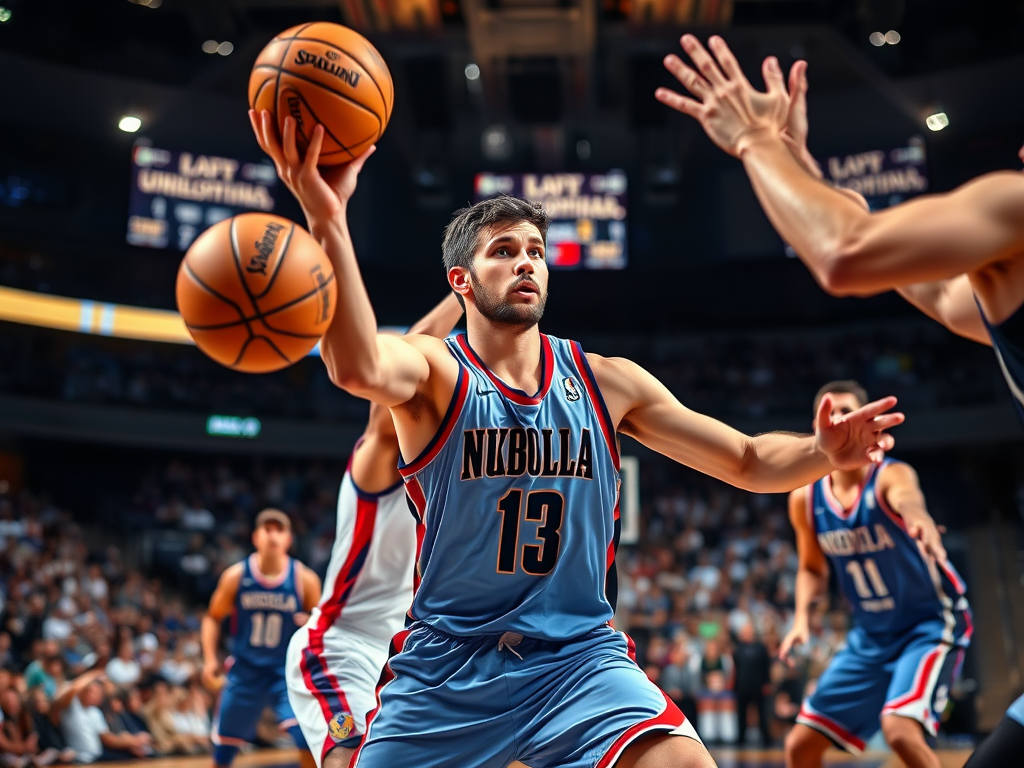

The Nikola Jokić problem: Why we will never fully explain his brilliance

Draymond Green is the epitome of certainty. Standing barely 6-foot-6 without shoes, he has carved out a guaranteed Hall of Fame career through sheer force of will. His legacy is cemented as the backbone of the Golden State Warriors’ small-ball revolution, a player who defied the odds by holding his own against much bigger opponents.
Green’s success is built on toughness, grit, basketball IQ, and psychological warfare. He firmly believes—bolstered by years of accumulated basketball wisdom—that he can go toe-to-toe with just about any center in the NBA.
Known for his selective praise, Green made no effort to conceal his admiration. Real recognizes real. Players understand his value. The real question is whether the spectators fully grasp the brilliance of Nikola Jokić.
And yet, Jokić remains almost unreal. Perhaps this is the side effect of an era dominated by LeBron James, Stephen Curry, and Kevin Durant—greatness has become so normalized that we risk overlooking its newest ambassador.
We’re going to regret this. If we don’t get this right now, history will call us out for it.

A compelling explanation will be required. We should start crafting the narrative now—one we can pass down to future generations. We’ve seen this cycle play out before. If we don’t take notice, the future won’t believe us.
Just as Gen X was skeptical about the legends of Wilt Chamberlain, Kareem Abdul-Jabbar, and Jerry West. Just as millennials reduced Michael Jordan’s competition to part-time plumbers and accountants, dismissed Karl Malone as little more than a cowboy calendar model, and joked that Clyde Drexler looked like a middle school PE teacher in sweatpants.
Now, imagine how Jokić will be ridiculed. That he was a towering figure in an era of small ball. That his success was a product of pace-and-space basketball and nonexistent defense. That a league where the best player lacked visible muscle definition couldn’t have been all that competitive.
And when the skepticism arrives, we’ll be left speechless. We’ll have no way to explain it, just exasperated sighs and knowing looks. Because true awe transcends language.
The future won’t believe us about Jokić.
Even his numbers won’t help make the case—they’re so absurd they defy belief. They fuel doubt rather than admiration, ammunition for skeptics rather than proof for true believers.
It’s been five days since Jokić short-circuited the stat sheet with 31 points, 21 rebounds, and 22 assists. A historic performance, yet already fading from collective memory.
Jokić has made the extraordinary so routine that we’ve become numb to his brilliance. For history to fully recognize him, he may need six MVPs, ten championships, and an endless highlight reel of jaw-dropping moments—anything to make sure future generations understand just how special he was.
This reminds me of March 28, 1995, when Michael Jordan dropped 55 points at Madison Square Garden in just his fifth game back from baseball. It was immortalized as the “double-nickel” game, a phrase that lodged itself into my teenage brain. A double nickel is ten cents, not 55 points, but it stuck because of how iconic that performance was.
The context was different. The media landscape was different. But the key factor was that everyone knew they were witnessing something legendary.
Do we realize that with Jokić? Do we truly understand what we are watching? Sure, he plays in Denver, far from the spotlight. His supporting cast isn’t packed with superstars. And he seems more content tending to his horses in Serbia than basking in NBA superstardom.
With our track record of failing to appreciate greatness in real time, selling Jokić’s legacy to future generations will be a challenge. It’s already hard enough to grasp in the moment. Imagine how the narrative will warp over time, reducing this era to one of softness, three-point excess, and load management.
But Jokić, a nearly 7-foot playmaker with unassuming athleticism, is simply unguardable. He’s the league’s best and most creative passer, wielding an elite basketball IQ. He shoots better than most guards, orchestrates the offense in crunch time, and dominates the paint like a traditional big.
He dismantles every defensive scheme thrown his way. He plays tirelessly. He has transformed his defensive weaknesses into strengths, once considered the ceiling on his game. He feels the game, adapts, and thrives in competition. He is, in every sense, remarkable.
Yet the word “remarkable” has lost its power. Superlatives are handed out like Halloween candy, diluting their impact. We need a new way to describe Jokić.
Because sports history often struggles with translation. Stats, highlights, and anecdotes get passed down, but one crucial element is always lost:
Inevitability.
It’s hard to convey just how unstoppable a player felt in his prime. How his opponents knew resistance was futile before the game even started. How he embodied dominance in a way that transcended mere numbers.
Remember when DeMar DeRozan jokingly offered $100 to anyone who could stop LeBron? When Kevin Durant declared, “You know who I am,” and no one questioned it? When defenders and coaches admitted their helplessness against Curry?
NBA legends are among the most self-assured people on the planet. They fiercely protect the gate to their exclusive club. When they acknowledge someone’s greatness without hesitation, it’s the ultimate validation.
“He’s one of the best players to ever play this game. It’s that simple.”
LeBron James said this last April.
“He does everything. The most important thing is he changes the way his teammates think about their own play,” James continued. “When you’re able to inspire your teammates to play at a level that sometimes they don’t even feel like they can play at, that’s a true testament of a great one.”
Jokić isn’t just an all-time great. He isn’t just a future Hall of Famer. He’s one of those rare players whose name will still be in the conversation decades from now when we debate the best to ever do it.
And when that time comes, simply rolling our eyes, shaking our heads, and throwing up our hands won’t be enough.
Because nobody will believe us.




Leave a Reply