
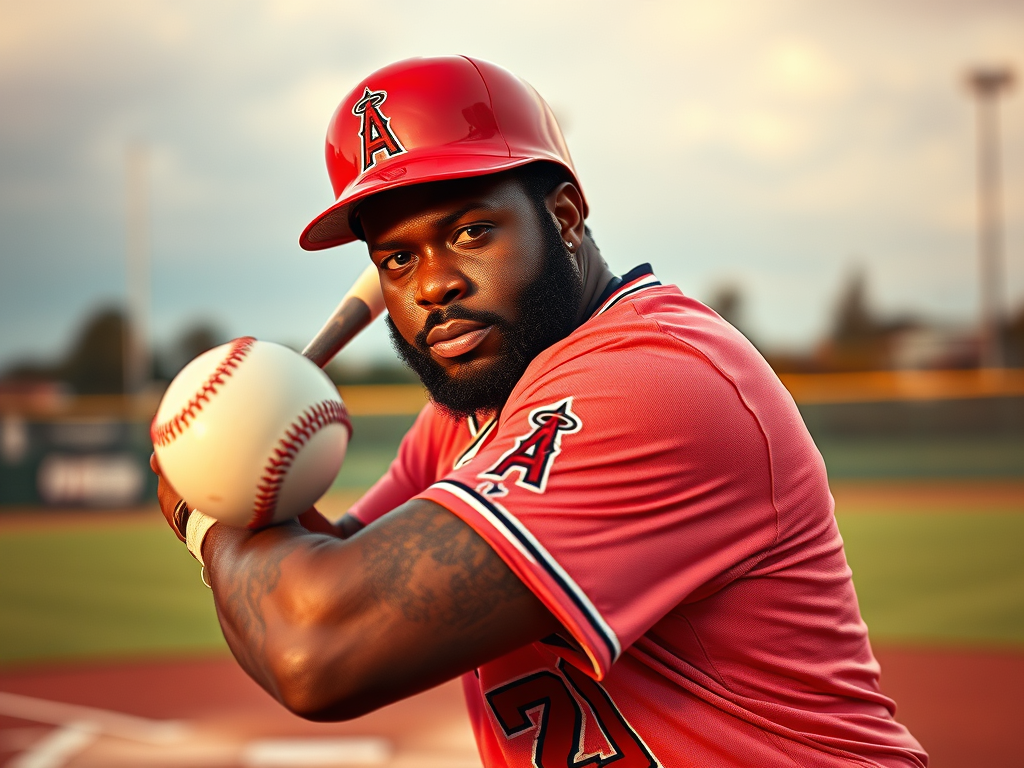

Mo Vaughn, fearsome slugger named in Mitchell Report, admits to using HGH: Exclusive

Former slugger Mo Vaughn has admitted to using human growth hormone (HGH) in an attempt to prolong his career, confirming details first revealed in the 2007 Mitchell Report. Speaking with The Athletic, Vaughn acknowledged for the first time that he turned to HGH in hopes of staying on the field.
“I was doing everything I could,” Vaughn told The Athletic, explaining his determination to keep playing. “I knew my knee was in bad shape, degenerative. I was injecting HGH into it—anything that could help the healing process…”
This revelation emerged during a recent interview in which Vaughn discussed how reconnecting with his 12-year-old son, Lee, reignited his passion for baseball after years of estrangement from the sport. The former American League MVP stated that being named in the Mitchell Report did not tarnish his legacy, nor was it the reason he distanced himself from baseball. Instead, he attributed his frustration with the game to the injuries that, in his view, prevented him from reaching his full potential.
Commissioned by former MLB commissioner Bud Selig, the Mitchell Report investigated the use of steroids and other performance-enhancing drugs in Major League Baseball. It presented evidence that Vaughn had purchased HGH three times in 2001. However, Vaughn declined to be interviewed by the report’s author, former U.S. Senator George J. Mitchell of Maine.
Vaughn’s physical struggles began early in his tenure with the Anaheim Angels. During the 1999 season opener—his first game after signing a then-record six-year, $80 million free-agent contract—he chased a foul ball near the Cleveland dugout, tumbled down the steps, and injured his left ankle and knee. In 2001, he missed the entire season due to a ruptured biceps tendon, and recurring knee issues ultimately forced him into retirement in May 2003.
According to the Mitchell Report, Kirk Radomski, a former Mets batboy and clubhouse employee who supplied Vaughn with HGH, claimed that Vaughn never purchased steroids because he was “afraid of the big needles.” Vaughn, for his part, noted that HGH injections required smaller needles.
Major League Baseball did not officially ban HGH until 2005, nearly two years after Vaughn played his final game. In 2013, the league, in partnership with the Players Association, became the first professional sport to implement in-season, unannounced random blood testing for HGH.
Vaughn’s case is similar to that of former pitcher Andy Pettitte, another player mentioned in the Mitchell Report for using HGH. Pettitte admitted in 2007 that he had used the substance to recover from an elbow injury.
“I felt I owed it to my team to return as quickly as possible,” Pettitte explained. “That was my only reason for trying human growth hormone for two days. Although it wasn’t against baseball’s rules at the time, I was uncomfortable with it, so I stopped.”
Pettitte’s admission may have affected his Hall of Fame prospects; in his seventh year on the ballot, he garnered only 27.9 percent of the vote—well short of the 75 percent required for induction. Vaughn, who won the AL MVP in 1995 but lacked the overall achievements of Pettitte, received just 1.1 percent of the vote in 2009, his first year of eligibility, and was subsequently removed from the ballot.
Over his 12-season career, Vaughn primarily played for the Red Sox, with later stints for the Angels and Mets. A three-time All-Star, he retired with 328 home runs and a career .293 batting average.




Leave a Reply