
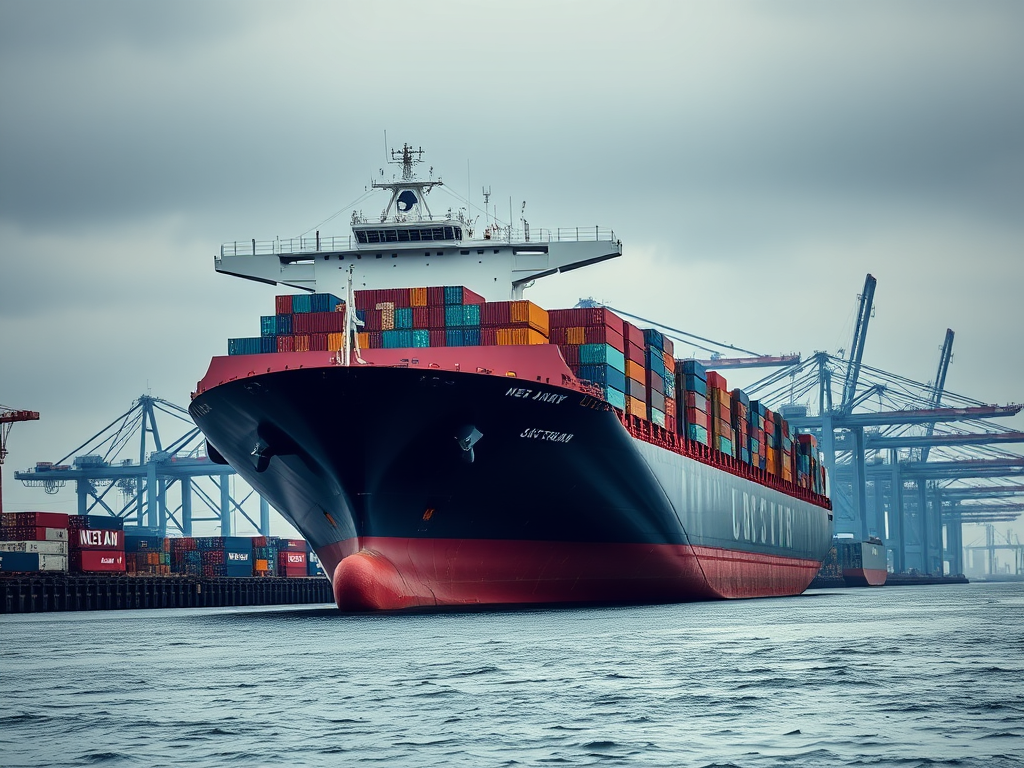

Trump Aims at Chinese Shipping, Risking Another Shock for Businesses

The Trump administration has escalated its global trade conflict, unveiling a proposal to impose fees of up to $1.5 million on Chinese-made ships arriving at U.S. ports.
This levy could extend to vessels made in other countries if their operators’ fleets include Chinese-built ships, potentially driving up costs for a wide range of imports, from raw materials to finished goods.
These new fees, which could raise consumer prices, may conflict with President Trump’s efforts to combat inflation. While nearly 80 percent of U.S. foreign trade by weight is shipped by sea, only about 2 percent is carried by American-flagged vessels, according to Gavekal Research.
As detailed by the U.S. Trade Representative’s office, the proposal reflects Trump’s “America First” agenda. It is intended to reduce reliance on Chinese vessels for supplying goods to Americans, while also aiming to revive the dormant U.S. shipbuilding industry, which has seen little activity over the past 50 years.
Combined with his broad tariffs, this move signals a rejection of the global trading system established by the U.S. and its allies post-World War II. A belief in the world as a bustling marketplace is being replaced by a preference for self-sufficiency, marked by hostility toward globalization.
The proposed plan is part of a broader strategy to isolate China and reduce U.S. dependence on its industries, an issue that enjoys bipartisan support in Washington. The plan stems from an investigation, launched during the Biden administration, into the dominance of China’s shipping industry, which followed a petition from labor unions.
The bank’s researchers warned that the new fees could significantly impact U.S. imports, with the added costs likely being passed down the chain to importers, exporters, and ultimately consumers.
Public comment on the proposal will be accepted until March 24, after which Trump could implement the levies by executive order.
The fees would vary depending on how much of a carrier’s fleet is made up of Chinese-built vessels. For ships made in China, fees could reach $1.5 million per port call, while carriers with large orders from Chinese shipyards could face charges of up to $1 million per visit.
For major carriers that visit multiple U.S. ports, these charges could exceed $3 million per trip, generating $10 to $15 million in revenue, according to Flexport CEO Ryan Petersen.
Harvard Business School’s Willy Shih criticized the proposal as “aggressive,” saying it could result in higher shipping costs that would be passed on to consumers. He called it a reflection of an administration either disconnected from global realities or intentionally creating chaos.
While Trump has sought to encourage U.S. manufacturing, the higher shipping costs could undermine his efforts, given that over a quarter of U.S. imports are raw materials or parts, according to World Bank data. Increased costs on these goods could make domestic production less economically viable.
The proposal also aims to counter China’s dominance in global shipbuilding, which has grown from 5 percent of the world’s commercial cargo vessels in 1999 to more than 50 percent today, according to the U.S. Trade Representative’s office.
Under the new policy, at least 15 percent of American exports would need to be shipped on U.S.-flagged vessels within seven years, and 5 percent of shipping fleets would need to be built in the U.S.
However, industry experts, like Lars Jensen, CEO of Vespucci Maritime, have called this plan unrealistic. He pointed out that building a U.S. shipbuilding industry from scratch would require vast amounts of money and time.
Additionally, the plan could face challenges due to higher steel prices, exacerbated by Trump’s tariffs.
In the meantime, the proposal could benefit established shipyards in South Korea and Japan, further disrupting global shipping logistics.
If implemented, the levies could force businesses to rethink their U.S. operations, creating more uncertainty. Many may choose to reroute shipments through Mexico and Canada, where ports are already congested and may not have the capacity to handle the extra volume.




Leave a Reply