
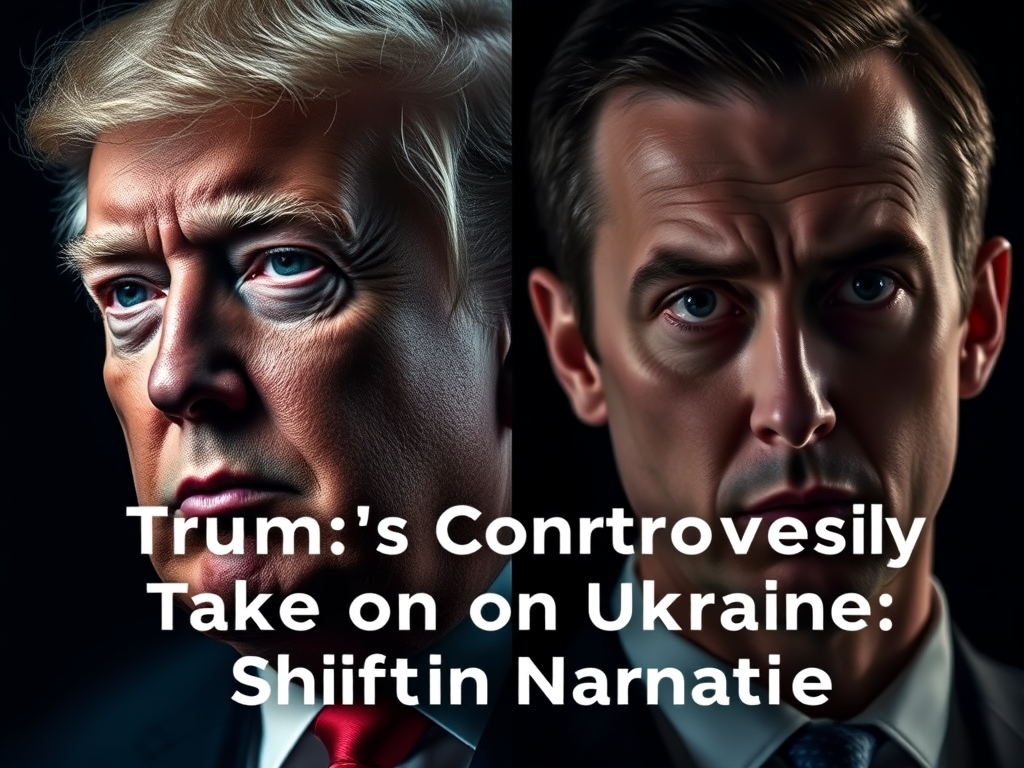

In 2022, when Russian forces surged into Ukraine with the goal of eradicating its independence, the United States swiftly stepped in to support the embattled country, elevating its president, Volodymyr Zelensky, as a symbol of resistance.
Now, three years later, President Trump is reinterpreting the narrative of Russia’s invasion. In this retelling, Ukraine is not portrayed as a victim, but as the aggressor. Zelensky is no longer hailed as a modern-day Winston Churchill, but as a “dictator without elections” who supposedly instigated the conflict and manipulated the U.S. into offering its support.

Trump’s version of events could lead to a significant shift in global geopolitics, especially as he begins negotiating with Russia—an endeavor that many fear could harm Ukraine. By casting Zelensky in a negative light and redirecting blame for the war from Moscow to Kyiv, Trump appears to be laying the groundwork for reducing support for an ally under siege.https://svtoday.org/

The heated exchange between Trump and Zelensky this week marks a sharp contrast to previous U.S. presidential attitudes. Even Trump, who has consistently been skeptical of Ukraine and has shown admiration for Russian President Vladimir Putin, shocked both Americans and Europeans with his intense criticism of Zelensky.
Trump’s accusation that Ukraine “started” the war was quickly followed by an even bolder claim, suggesting that Zelensky—a comedian-turned-president—convinced the U.S. to waste $350 billion on an unwinnable war. This portrayal is a gross misrepresentation of the facts: Zelensky didn’t lead the U.S. into war; rather, Ukraine was attacked, and the U.S., under President Biden, responded with financial aid, which was actually about a third of the amount Trump cited.

Trump’s portrayal of Zelensky as an “enemy of democracy” instead of a defender contradicts the reality that Zelensky was democratically elected in 2019 with international approval. Moreover, his approval rating in Ukraine remains high, well above Trump’s. Ironically, Trump’s criticism of Zelensky came shortly before he referred to himself as “the king” in reference to a domestic issue, an image reinforced by his supporters.
The president’s comments, while leaving Putin largely unscathed, caused an uproar among European leaders and even some Republicans in the U.S. Former Vice President Mike Pence sharply rebuked Trump’s version of events, emphasizing that Russia was the aggressor. Other prominent figures, like Charles Kupperman, warned that Trump’s actions mirrored historical appeasement strategies, reminiscent of British Prime Minister Neville Chamberlain’s concessions to Hitler.
Meanwhile, Russian officials expressed approval of Trump’s rhetoric. Dmitri Medvedev, an ally of Putin, praised Trump’s remarks, calling them “200 percent right.”
Despite occasional tensions between U.S. presidents and foreign leaders during wartime—such as Roosevelt’s strained relationship with de Gaulle or Kennedy’s with Diem—those leaders generally continued to support their allies’ causes. In stark contrast, Trump’s hostility towards Zelensky raises questions about whether he will continue to back Ukraine’s fight against Russia. His public hostility towards an ally facing existential threats is unprecedented in recent American politics.

Trump’s approach to Ukraine has long been colored by his belief that Ukraine interfered in the 2016 U.S. election. This belief, largely propagated by Russian disinformation, fueled Trump’s personal animosity towards the country. His impeachment over a 2019 phone call with Zelensky demanding political favors was just one example of how deeply this issue has shaped his views on Ukraine.
When Russia launched its full-scale invasion in 2022, Trump downplayed the threat and even praised Putin’s actions, further distancing himself from support for Ukraine. Since then, Trump has repeatedly questioned Biden’s decision to fund Ukraine’s defense, aligning with some far-right figures in the U.S.
In response to mounting pressure, Republican leaders in the House initially blocked new aid to Ukraine, weakening Ukraine’s position and buying Russia time to strengthen its forces. Eventually, after significant lobbying, Trump allowed the aid to go through.
Despite the understandable concerns many Americans have about funding foreign wars, Trump goes even further by suggesting that Ukraine isn’t truly the victim in this conflict. He continues to place much of the blame on Zelensky for the destruction and loss of life in Ukraine, claiming that the country is “shattered” and that millions have died unnecessarily.




Leave a Reply