
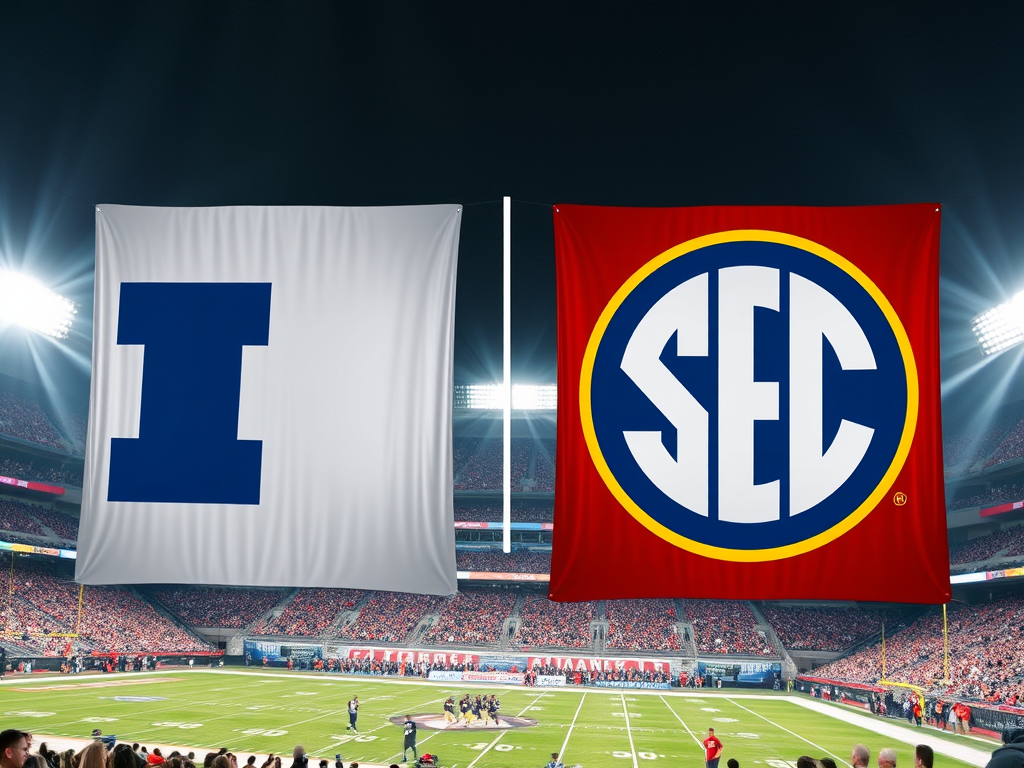

Mandel: Arrogance of Big Ten, SEC leaders on full display in New Orleans college football meetings

For the past 20 years, the unpredictable shifts in college football could be traced back to one simple explanation: “No one’s in charge.”
Now, however, two powerful forces dominate the sport: the Big Ten and the SEC. And they’re ready to ignite a full-scale overhaul.
This week, leaders from both conferences are convening in New Orleans, where they’re poised to push ahead with a complete takeover of the College Football Playoff. Starting in 2026, the playoff will likely expand to 14 or 16 teams, with the Big Ten and SEC each claiming four automatic spots. The ACC and Big 12 would get two, the Group of 5 would get one, leaving just a handful of at-large spots.
This move is both absurd and unnecessary, made possible by the fact that the Power 2 conferences already secured privileged status in the new CFP contract, effective next year. The previous agreement required unanimous consent from all 10 FBS conferences and Notre Dame to make changes to the format. Now, the Big Ten and SEC have the power to dictate the terms.https://svtoday.org/
Though this four-spot proposal was floated a year ago, just before the 2024 season, it seems audacious for the SEC to push it through so soon after securing just three bids last season.
The inaugural year of the 12-team CFP exposed a few manageable issues with seeding and byes, but overall, it succeeded in meeting its objectives. New teams—Arizona State, Indiana, SMU—got a taste of the spotlight, and the bowl season gained much-needed excitement from those mid-December games. Ohio State (No. 8 seed) and Notre Dame (No. 7 seed) earned their spots in the championship game, a far cry from the old system where they might have been voted in.
But what better way to undermine the credibility of the event before it even gains full momentum than by preemptively stacking the deck for two conferences that were already likely to dominate, with or without special treatment?
Big Ten and SEC officials will argue that this change is simply a reflection of the new, post-realignment reality, as if they weren’t the architects of it all. Oklahoma and Texas didn’t accidentally end up in the SEC, and the Pac-12 wouldn’t have dissolved if the Big Ten hadn’t decided to poach USC and UCLA from across the country.
The two conferences will also point out that their proposed allocation of spots aligns with historical averages for the number of bids those leagues would have earned. That’s true, but it doesn’t mean those spots should be guaranteed. What if a conference has a down year, like the SEC did last season?
Additionally, the Big Ten and SEC will try to frame this as a way to reduce subjectivity in the system. Instead of allowing a selection committee to apply fluctuating criteria, we’d just use league standings. As if those conferences’ own tangled tiebreaker rules aren’t just as arbitrary.

If this model had been in place last season, the SEC’s four automatic spots would have gone to Texas (7-1 in conference play), Georgia (6-2), Tennessee (6-2), and whoever emerged from a six-way tie of 5-3 teams, including Alabama, LSU, Ole Miss, Missouri, South Carolina, and Texas A&M. A fraction of a win percentage would have been the deciding factor between a CFP berth and a minor bowl game.
The irony is that these same conferences, along with the others, have spent the last four years criticizing other major changes to the sport—the so-called “Wild West” of NIL and the transfer portal—which have, in reality, had no negative impact. If anything, they’ve spread talent more evenly, increasing the likelihood of teams outside the Power 2 making the Playoff.
But the biggest threat to college football’s future is this latest wave of realignment. It has cost 12 West Coast schools their traditional rivals, isolated Oregon State and Washington State, and effectively told fans outside the Big Ten and SEC that their teams don’t matter. Cementing this imbalance in the playoff structure will alienate large parts of the fanbase.
All for something that isn’t necessary.
The Big Ten and SEC will often claim eight spots, with Notre Dame occasionally taking one. In some years, they might take nine, with the ACC, Big 12, and Group of 5 each getting one.
Moreover, the Big Ten and SEC are already raking in more money than everyone else. They secured 29 percent of the revenue from the CFP’s new six-year deal with ESPN, which averages $1.3 billion annually, compared to just 17 percent for the ACC and 15 percent for the Big 12. This amounts to more than $21 million per school—more than triple their previous share.
But that’s still not enough. The addition of more playoff games will generate even more television revenue, though it’s unlikely to be split equally. And the next logical step will likely be for the Big Ten and SEC to create their own “NBA Play-In” tournaments to determine who gets those third and fourth automatic spots. More money, more money, more money.
But at what cost?
While the Big Ten and SEC dominate with the highest-profile programs and consistently top TV ratings, they only make up about 25 percent of all FBS schools. Alienating the other 75 percent of your customers is hardly a winning strategy. But it seems the two conferences are only focused on their own interests.




Leave a Reply