

Can the Fed Look Past Trump’s Tariffs?

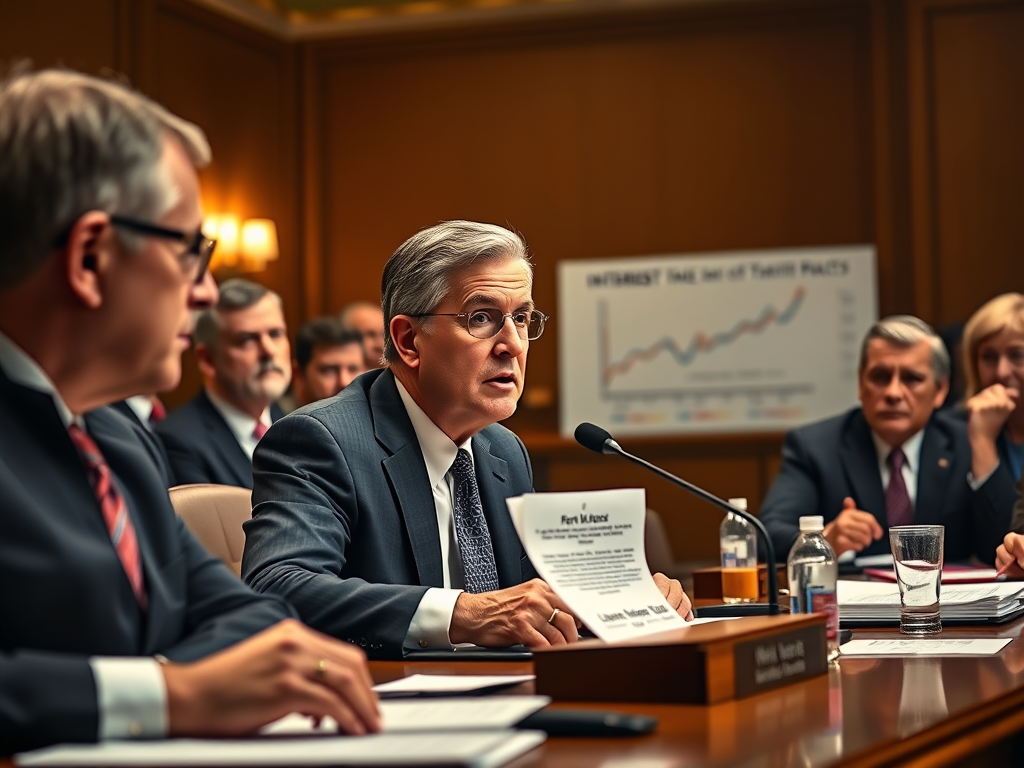
As President Trump’s attempts to overhaul the global trade system with expansive tariffs begin to take form, one key question remains a challenge for Federal Reserve officials: How will these new policies affect the central bank’s plans to reduce interest rates?
On Monday, a prominent Fed governor made it clear that he didn’t foresee President Trump’s tariffs derailing the Fed’s efforts to control inflation, indicating that more interest rate cuts could still be on the table for this year.https://svtoday.org/
“My basic view is that any tariffs imposed will only lead to a small and temporary increase in prices,” said Christopher J. Waller, the Fed official, during a speech in Australia on Monday evening. “So, I think it’s best to look beyond these effects when determining monetary policy to the best of our ability.”
Economists worry that tariffs, which essentially act as taxes on American consumers, will push prices higher in the U.S. in the short term and may dampen economic growth over time.
Waller acknowledged that the tariffs’ economic impact could be more significant than expected depending on their structure and implementation. However, he suggested that any price hikes from tariffs could be offset by other policies that could have “positive supply effects and put downward pressure on inflation.”
Waller’s opinion is especially important since he is one of the seven voting members of the Federal Reserve Board of Governors and votes at every policy meeting.
In addition to tariffs, President Trump has made boosting domestic energy production, deregulation, and tax cuts central components of his economic strategy. His administration is also pursuing mass deportations of illegal immigrants and reducing government spending by cutting the federal workforce.
So far, Fed officials have been cautious about drawing firm conclusions on how these policies will affect the economy and, by extension, the future of interest rates. The current borrowing rates are between 4.25 percent and 4.5 percent, with the Fed opting to hold rates steady last month until it gains more confidence that inflation is under control.
The last time the Fed had to navigate a prolonged trade conflict was in 2018, during Trump’s first term in office. However, the economic conditions at that time were vastly different from those today.
Inflation was low and consistently under the Fed’s 2 percent target, while interest rates were around 2 percent. Economic growth was also slowing as businesses pulled back on large investments. These conditions gave the Fed the flexibility to act preemptively, and by the end of 2019, it had reduced rates by three-quarters of a percentage point.
The same “look beyond” approach could apply now if concerns about a slowdown from tariffs overshadow a potentially temporary increase in consumer prices. But consumers are still feeling the effects of the worst inflation shock in four decades and remain anxious about future price hikes, making the situation more complex for policymakers.
Fed officials received more discouraging news last week when the latest Consumer Price Index (CPI) report showed that inflation pressures rose again in January. The primary drivers were soaring grocery prices, especially a 15 percent increase in egg prices due to an ongoing bird flu outbreak, and rising energy costs.
Even when excluding these volatile items, core inflation rose at its fastest pace in two years.
However, the release of the Producer Price Index (PPI), which tracks the costs businesses pay for goods and services, offered some relief. It suggested that overall inflation, as measured by the Fed’s preferred Personal Consumption Expenditures (PCE) index, was less troubling than initially feared.
Waller described the inflation data as “mildly disappointing,” acknowledging that inflation remains well above the Fed’s target, with progress toward controlling it remaining “excruciatingly slow” over the past year.

However, he raised doubts about drawing definitive conclusions from the latest data. Consumer price growth typically runs high early in the year before easing in the second half, and Waller and other economists believe this could be due to seasonal factors that may distort the actual rate of inflation.
Research by the Fed’s economists shows this pattern has occurred in 16 of the past 22 years. In a separate speech, Patrick Harker, president of the Federal Reserve Bank of Philadelphia, pointed out that January CPI inflation has exceeded expectations nine out of the last 10 years.
“If this winter slowdown is temporary, as it was last year, then further rate cuts will be necessary,” Waller stated. “But until we know for sure, I believe it’s best to keep the policy rate steady.”
Michelle Bowman, another Fed governor, also reiterated her support on Monday for a “cautious and gradual” approach to future rate cuts. She mentioned that while she’s waiting for further evidence that inflation is moderating, she still expects it to happen this year. This cautious stance is shared by most of the Fed officials, bolstered by a solid labor market.

Bowman emphasized the need for “clarity” on the Trump administration’s plans.
“It’s crucial to have a better understanding of these policies, how they will be implemented, and to establish greater confidence in how the economy will react in the coming months,” she said. Like Waller, Bowman was appointed to the Fed by Trump during his first term.
The president and his team have tempered their rhetoric on controlling inflation, shifting from an early promise to tackle it on “Day 1” to a more cautious approach.
Kevin Hassett, head of Trump’s National Economic Council, told CBS News on Sunday that the administration has a “multifaceted plan to reduce inflation,” highlighting tax cuts, efforts by Elon Musk to cut government spending, deregulation, and increased energy production.
Still, investors have lowered their expectations for how much the Fed will cut rates this year. They’ve also delayed their projections for when those cuts might happen, amid concerns that Trump’s policies could fuel higher inflation. Now, futures markets are forecasting a mere quarter-point cut in December.
Harker expressed optimism on Monday that not only would inflation decrease over time, but interest rates could also decline in the long run.
“This doesn’t mean there won’t be areas of concern,” he added. “In fact, the one thing I can say with certainty is that there are many uncertainties.”




Leave a Reply