

‘Risk of a Collision and Loss of Life’: D.C. Crash Warnings Were Years in the Making

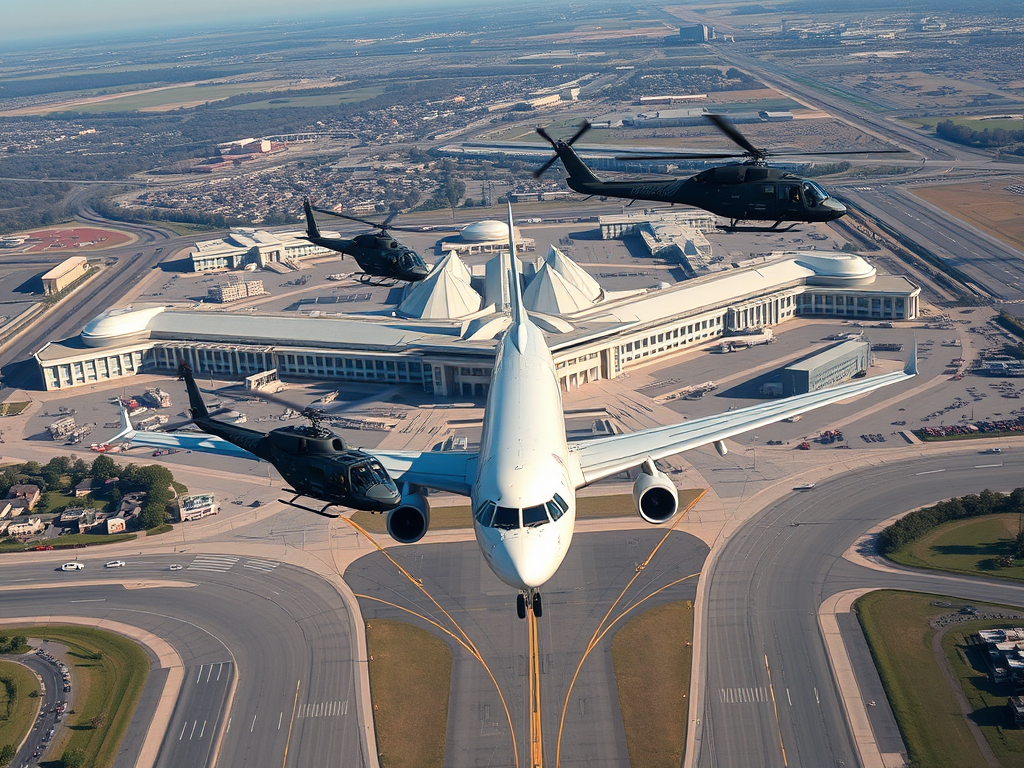
On a clear, sunny morning in July 2018, three military helicopters heading south along the Potomac River came perilously close to colliding with a plane approaching Ronald Reagan National Airport. The air traffic controller failed to warn the aircraft about the impending danger, forcing the helicopters to make swift maneuvers to avoid a crash.https://svtoday.org/
The Federal Aviation Administration (FAA) documented the incident in safety reports and included it in a nationwide training program for air traffic controllers, emphasizing the importance of providing timely and accurate warnings to pilots in potential danger zones.
Despite these efforts, issues with air traffic management near Reagan National continued. Controllers, pilots, and military officials grew increasingly concerned about the busy helicopter routes in the area, leading them to form safety groups in an attempt to prevent an accident, according to four individuals familiar with the discussions.
By 2019, after a series of close calls, an internal report warned that repeated errors by air traffic controllers were heightening the risk of a collision and potential loss of life.
Tragically, just two weeks ago, an Army Black Hawk helicopter collided with American Airlines Flight 5342 at nearly the same location as the 2018 incident, resulting in the deaths of all 67 people aboard both aircraft.
This crash marked the culmination of a series of warning signs at Reagan National, as detailed in interviews with more than a dozen air traffic controllers, pilots, aviation safety experts, and FAA records reviewed by The New York Times. Investigations into the incident are still ongoing, but early findings suggest that the helicopter was flying at an unauthorized altitude and that its pilots were dealing with complex circumstances. However, even before a final determination is made, evidence is emerging that the crash was the result of a long-standing series of failures, including issues within air traffic control, whose role is to ensure the safe navigation of aircraft.
Despite efforts to address these problems, multiple attempts to highlight safety lapses at Reagan National’s control tower were ignored, according to four sources familiar with the matter and FAA safety reports reviewed by The Times.
Given its proximity to Washington, Reagan National is one of the nation’s most high-profile airports, frequently used by lawmakers and government officials. It is also one of the busiest airports, requiring intense concentration and specialized training for pilots. Helicopters often operate in close proximity to regular flight paths, compounding the complexity of managing air traffic.
The control tower at Reagan National has also faced chronic understaffing, adding additional pressure on air traffic controllers. Reports indicate that controllers were often criticized for failing to follow FAA protocols for communicating with pilots and maintaining safe distances between aircraft.
As of last month, staffing at the control tower was nearly 20% below the target level, with 23 fully certified controllers instead of the required 28, according to union data obtained by The Times. This is not an isolated issue; more than 90% of air traffic control facilities across the country operate below recommended staffing levels, raising concerns about the risks posed by overtime and controller fatigue.
Before the fatal crash, there had been other concerning incidents at Reagan National. In March of the previous year, three near-misses occurred on the same runway within a span of just three hours. In April, two passenger planes narrowly avoided a collision. The following month, there was another close call between a commercial airliner and a private jet.
These issues at Reagan National’s control tower highlight broader safety concerns across the U.S. air traffic control system. A Times investigation in 2023 found that close calls between passenger planes occurred on average several times a week nationwide, with human error often being the primary cause.
At Reagan National, the crowded helicopter routes became a significant concern, prompting safety groups to identify potential conflict zones, where the risk of a collision was highest. One such location was over the Potomac River, near Runway 33, the site of the recent Black Hawk crash.
Safety groups proposed moving the helicopter routes farther east to reduce risk, but the routes remained unchanged.
As these groups convened, air traffic controllers at Reagan National were frequently scrutinized for allowing planes to come too close together and for failing to provide proper guidance to pilots.
To address these issues, the FAA identified several areas for improvement, such as adhering more closely to its rules for pilot communication, maintaining safer distances between aircraft, and issuing clearer warnings to pilots about potential collisions. Despite additional training for controllers, some remained skeptical that the training was addressing the core safety issues, as near-misses continued.
Following a close call in May, the National Transportation Safety Board’s (NTSB) preliminary report noted “safety concerns” related to “human performance” at the airport’s air traffic control tower, suggesting the need for further investigation.
“Doing so much, with so little,” wrote Timothy Harman, the former top manager of the control tower, in a LinkedIn post about six months ago. “It’s a testament to your dedication and perseverance.”
The night of January 29, 2023, many of these longstanding issues came to a head. As the passenger plane circled to land on Runway 33, it was heading toward one of the known conflict points. The helicopter was flying higher than authorized, reducing the vertical separation needed for safe distance between the aircraft.
According to an internal FAA report, staffing at the control tower was inadequate for the volume of traffic at that time. The tower was operating with just five fully trained controllers, one controller-in-training, one supervisor, and one supervisor-in-training. Only five of these personnel were actively managing air traffic during the incident, including one controller directing both the helicopter and the plane, even though managing helicopter traffic is typically a separate responsibility.

Communication issues also played a role in the incident. The controller failed to use proper phraseology and did not alert the American Airlines pilots about the nearby helicopter. As a result, both aircraft were unaware of their proximity to each other.
As the two aircraft converged, the controller’s final instruction to the helicopter was to “pass behind the CRJ,” but this may have come too late. The controller was also preoccupied with another task—directing a plane departing on a different runway, which intersected with the landing path of the American flight.
NTSB investigators have since interviewed five individuals working in the tower that night, while the rest of the team has resumed their work managing air traffic.
Meanwhile, from their high vantage point in the tower, the controllers could see the giant red crane in the Potomac, pulling wreckage from the crash site.




Leave a Reply