
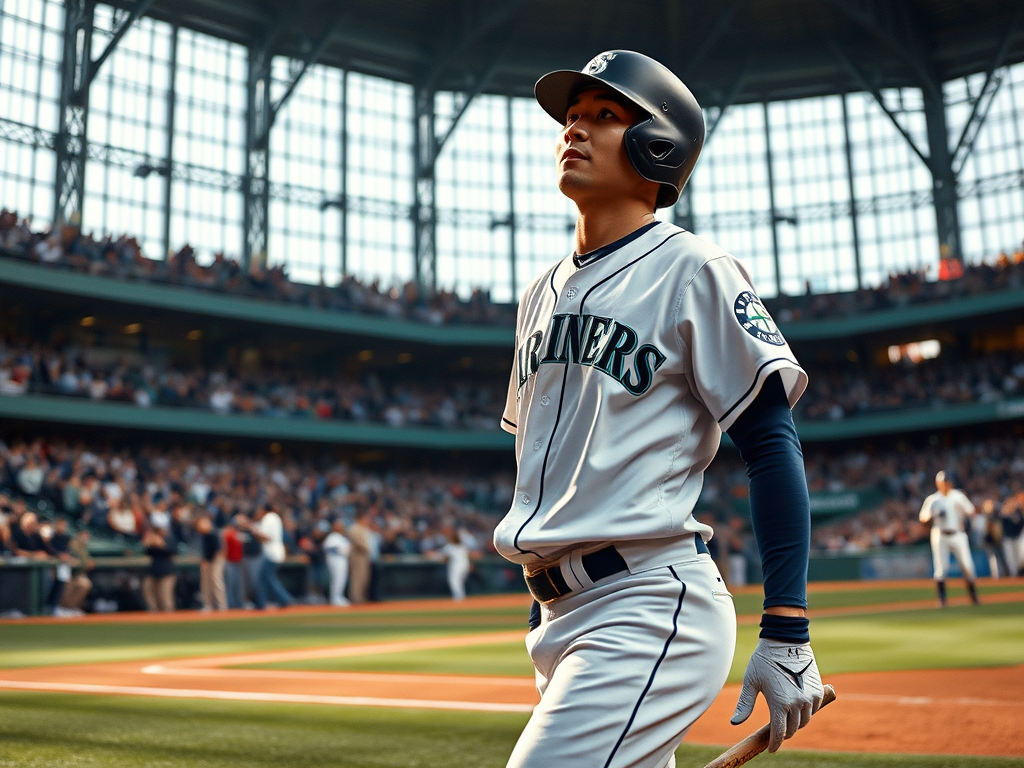

Fourth outfielder? Slap hitter? Ichiro got to Cooperstown by silencing early skeptics

On a chilly April 2, 2001, Bret Boone jogged to second base for Seattle’s Opening Day at Safeco Field. The roof was open, the up-and-coming Oakland Athletics were visiting, and ESPN2 was broadcasting the game nationwide. Boone was gearing up for the first pitch of his 10th MLB season when second base umpire Kerwin Danley called out to him.https://svtoday.org/
“Hey, what about your boy Ichiro?” Danley asked. “Do you know what he just said to me?”
What about Ichiro? That was the question on everyone’s mind across Major League Baseball.
This week, Ichiro Suzuki came within one vote of becoming the first position player unanimously elected to the Baseball Hall of Fame—a testament to the universal recognition of his greatness as a hitter. But when Ichiro debuted, he wasn’t seen as a future Hall of Famer. Instead, he was viewed with curiosity and skepticism.
Although Ichiro had won seven consecutive batting titles in Japan, his unconventional mechanics, smaller stature, and groundball-heavy style were unusual for MLB, a league then dominated by power hitters. Many wondered if his skills would translate.
“Skepticism is the right word,” said Larry Stone, a retired national baseball writer for The Seattle Times, who covered Ichiro’s career with the Mariners.
Critics doubted Ichiro could handle MLB’s pitching velocity. His teammates had never seen a technique like his, and even his manager questioned whether he could hit with authority. Umpires were curious, too. On that opening night, Danley greeted Ichiro, Seattle’s new right fielder, with a welcome to the league. Boone recalled Ichiro’s casual, enigmatic response that left Danley perplexed:
“What’s happening, home slice?”
Behind the mystery was a player whose entire life had prepared him for this moment. But even Ichiro didn’t imagine his journey from Japan to Seattle would eventually lead him to Cooperstown.
“I don’t think anyone in the world,” Ichiro said, “ever thought I’d become a Hall of Famer.”
Two years earlier, during an exhibition series in Tokyo, Ichiro showcased his talent against MLB players, hitting .380 with seven stolen bases in seven games. Some were impressed, but others dismissed him. American manager Mike Hargrove labeled him “a fourth outfielder,” while another player mocked him as a “slap hitter.”
As a child, Ichiro was already obsessed with baseball. He owned Transformers toys, watched Ultraman cartoons, and rode his bike to school, but his life revolved around training. Under his father’s demanding regimen—often described as bordering on abuse—Ichiro took hundreds of swings daily and sacrificed a typical childhood for perfection in baseball.
By the time he reached Japan’s professional league, Ichiro’s talent was undeniable. He won his first batting title at 20 and maintained a .353 batting average over nine seasons in the NPB. Still, his 5’9″ frame and unconventional swing, which often propelled him out of the batter’s box mid-hit, led to doubts.
“When I first saw him, I couldn’t help but laugh,” Boone admitted. “We were all trying to figure him out.”
In the late ’90s and early 2000s, MLB was dominated by home runs and power hitters. The league had just set a record for home runs in a season, and players like Mark McGwire and Nomar Garciaparra embodied the muscle-bound baseball superstar. Against this backdrop, Ichiro’s style—focused on speed, precision, and contact hitting—seemed out of place.
Many expected pitchers to overpower him or intimidate him with inside fastballs. Observers like author Robert Whiting, who first saw Ichiro as a scrawny teenager on the Orix Blue Wave, didn’t realize how resilient he was.
“He looked fragile,” Whiting said, “but I underestimated how tough he was.”

Others, like Bill Mueller, saw Ichiro’s potential early on. In 1993, Mueller played alongside a 19-year-old Ichiro in the Hawaii Winter League. Even then, Ichiro’s speed, precision, and outfield arm stood out. Mueller called his father and predicted, “Remember this name—this guy is going to make it to the big leagues.”
When Ichiro was posted by the Orix Blue Wave in 2000, the Mariners pursued him aggressively, thanks in part to their connection with Japanese Nintendo chairman Hiroshi Yamauchi. But skepticism still lingered. Even the Yankees opted out, reportedly unimpressed with Ichiro’s talent.
Ichiro arrived at Mariners Spring Training in February 2001, greeted by overwhelming media attention—97 credentialed reporters, 80 of whom were from Japan. Despite this fanfare, his initial performance was inconsistent. Skeptics noted his tendency to hit weak groundballs, and one columnist questioned whether he could handle MLB fastballs.
Still, Ichiro earned his teammates’ respect. They saw his meticulous preparation, humor, and confidence. A memorable moment came when manager Lou Piniella, frustrated by Ichiro’s opposite-field grounders, asked if he ever pulled the ball. Ichiro casually responded, “Sometimes,” then promptly hit a home run to right field.
“That’s what you wanted, right?” Ichiro quipped back in the dugout. From that point on, Piniella gave him free rein.
By Opening Day, Ichiro was ready to silence the critics. Though skepticism persisted, the baseball world was about to witness something extraordinary.




Leave a Reply