
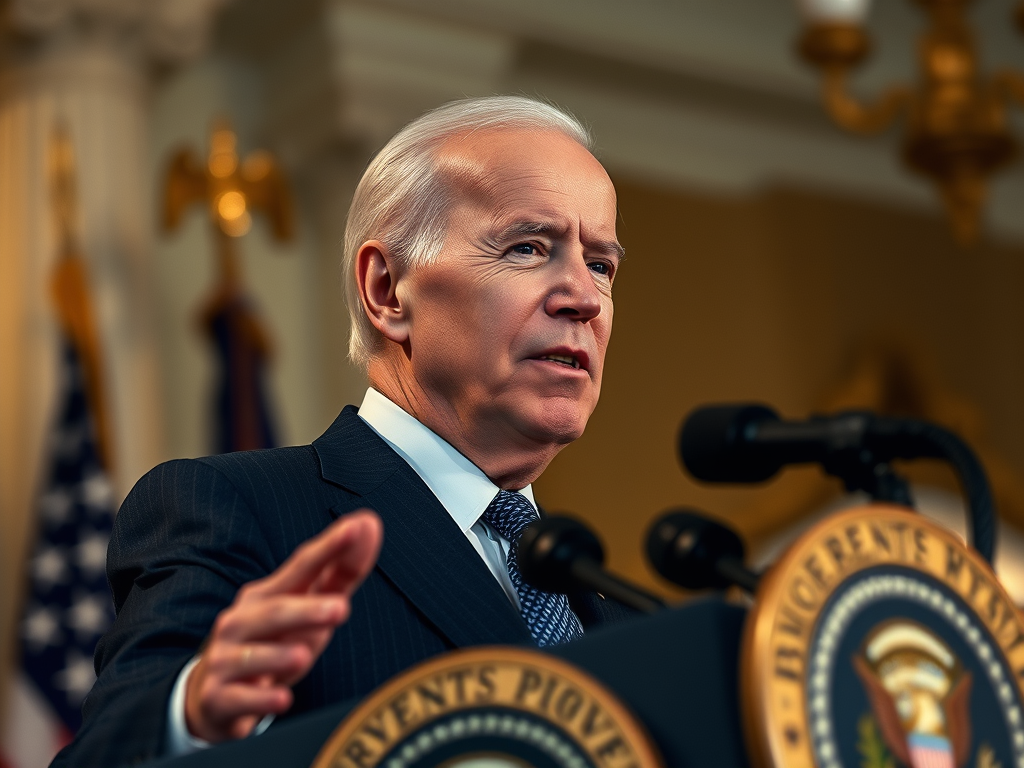

For four years as president and nearly half a century in public life, Joseph R. Biden Jr. maintained an unwavering belief in the resilience of America’s democracy, often projecting optimism. However, as his presidency drew to a close, his tone became unexpectedly somber. Just moments before his successor was inaugurated, Biden made the rare decision to pardon five of his family members, condemning the political attacks from Donald J. Trump and his allies, and stating, “I have no reason to believe these attacks will end.”
Biden Ends a Half-Century in Public Life on a Somber Note


Earlier that same day, Biden had granted pardons to others targeted by Trump, including Gen. Mark A. Milley, Dr. Anthony S. Fauci, and former Representative Liz Cheney. In a statement, Biden remarked, “These are exceptional circumstances, and I cannot, in good conscience, do nothing.”https://svtoday.org/
This final act was far from the conclusion Biden likely envisioned when he launched his third White House campaign in 2019. At the time, he was motivated by Trump’s divisive remarks on the racial violence in Charlottesville, Virginia. His decision to run culminated in a narrow victory in 2020, when he defeated Trump in the midst of the most severe pandemic the country had faced in a century. The clash between the two men came full circle on Monday, with Biden attempting to shield his family from the retribution he feared Trump might exact.

The conclusion of Biden’s presidency marked a solemn end to his long federal career, which began when he was elected to the U.S. Senate in 1972 at just 29 years old.
Biden frequently described America in terms of “possibilities,” a sentiment that echoed throughout his career. Yet, as he departed Washington on Monday, his promise to “end this uncivil war that pits red against blue” remained unfulfilled. His vision of rebuilding the economy “from the middle out” faces a likely dismantling. And, as he left office, the country was entrusted once more to the man he repeatedly called an existential threat to its democratic future.
The lesson of Biden’s single term may well be this: Possibilities do not guarantee outcomes.
His legacy will include his management of the pandemic, the swift distribution of vaccines, and the economic recovery he helped orchestrate in the face of crisis. He also invested heavily in fighting climate change, modernizing infrastructure, and creating incentives for domestic semiconductor manufacturing. Biden’s presidency saw the capping of drug prices, the passage of rare gun control measures, and student debt forgiveness.

However, his term was also marked by global upheaval, from the wars in Ukraine and Gaza to growing concerns about his ability to govern as he entered his ninth decade. This culminated in the Democratic Party’s decision to push him aside in favor of Vice President Kamala Harris for the 2024 race.
In his final address to the nation last week, Biden did not dwell on these challenges. He refrained from mentioning Trump directly, except to wish the incoming administration well, saying, “I want America to succeed.” Yet, in his speech, he evoked the image of the Statue of Liberty, describing it as a symbol of resilience — “built to sway back and forth to withstand the fury of stormy weather, to stand the test of time, because storms are always coming — she sways a few inches, but she never falls into the current below.”
That image could have easily served as a metaphor for Biden’s own career, particularly in its twilight. Though battered by criticism from both his allies and opponents, he left the White House and the nation’s capital with a sense of defeat, yet committed to ensuring a “peaceful and orderly transition of power” and leading by example.
Before Monday’s inauguration, Biden welcomed Trump to the White House for a brief meeting over tea and coffee, telling his successor, “Welcome home.” After the swearing-in ceremony, Biden boarded the helicopter that had served as Marine One, making his final journey to Joint Base Andrews. He planned to head to Santa Ynez, California, for a vacation, while Trump settled back into the Oval Office.
Biden was expected to return to his home in Wilmington, Delaware, where he had spent many weekends throughout his political career.
At the airbase, Biden’s White House staff gathered for a final farewell. In brief remarks, the former president expressed gratitude for their dedication to “honesty, decency, and integrity.” But he also urged them to continue fighting against Trump and the agenda of his MAGA movement.
“We have more to do,” he told his supporters. Then, invoking his Catholic roots, he made the sign of the cross and looked skyward: “We heard the inaugural address today. We have a lot more to do.”
“We’ve always done our best as Americans,” he continued. “We never, never, never give up, ever. We’re leaving office, but we’re not leaving the fight.”
This was the only reference Biden made to his successor in his final remarks. Moments later, he boarded the blue and white 747, known as Air Force One during his presidency. The plane, now designated Special Air Mission 46, would not bear the name again until Trump was once more aboard.
“I’ve been doing this for 50 years,” Biden said, reflecting on his legacy. “History is going to judge what you’ve done as one of the most significant contributions that’s been made by all of America.”




Leave a Reply