

‘A Day of Love’: How Trump Inverted the Violent History of Jan. 6

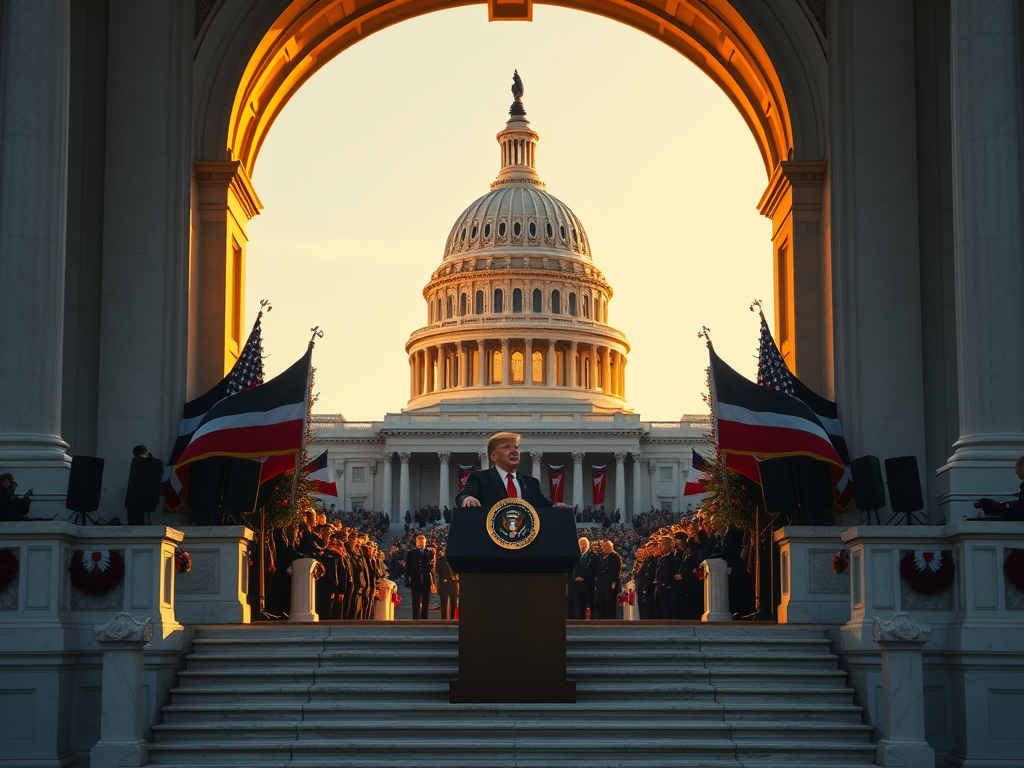
Two weeks from now, Donald J. Trump is set to step through the arched portal of the United States Capitol to retake the presidential oath of office. As the rituals of Inauguration Day signal the peaceful transfer of power, he will stand in the very location that bore witness to the chaos of January 6, 2021, much of it fueled by his name.
Behind him, the metal-and-glass doors mark the entrance breached by rioters incited by his baseless claim of a stolen election. To his left is the site of fierce clashes between the mob and overwhelmed police officers, and to his right lies the spot where a dying woman was caught in the bloody tumult.https://wordpress.com/

In front of him, the marble steps descend toward a lectern adorned with the presidential seal. These same steps were overrun four years earlier, where Trump flags were waved as weapons, an officer was beaten with an American flag, and another was dragged into the mob to be assaulted.

In the aftermath of the Capitol attack, many believed Mr. Trump’s political career had reached its end, as even Republican leaders recoiled at his incendiary rhetoric. Yet, his remarkable political resurgence is partly owed to his and his supporters’ ability to rewrite the narrative of January 6, turning a moment of disgrace into a political advantage.
The initial efforts to distance Mr. Trump from responsibility for the events of that day gradually took hold. His allies in Congress and the media reframed the attack, blaming left-wing agitators, Democrats, and even the government itself. The violent rioters, many of whom faced prosecution and imprisonment, were reimagined as patriots wronged by the system.

This alternate interpretation contradicted the events witnessed by millions but fit neatly into a narrative of persecution that solidifies Mr. Trump’s bond with his base. When he announced his bid for the presidency once more, he intensified his effort to redefine the Capitol riot, portraying the fallout, including congressional investigations and criminal charges, as part of a coordinated attack on him.
January 6 was undeniably a tragedy. Lawmakers sought shelter, Vice President Mike Pence narrowly escaped a mob calling for his execution, and lives were lost—one protester was fatally shot, and four police officers later died by suicide. Over 140 officers sustained injuries in a violent clash that almost disrupted the certification of President Joe Biden’s electoral victory.

However, Mr. Trump’s return to power offers him the chance to further recast January 6 as a day of unity and resolve. He has promised to pardon rioters during his first hour in office, while his congressional supporters advocate for prosecuting those who investigated him.
When asked about this revisionist view of the Capitol riot, Trump’s spokeswoman, Karoline Leavitt, deflected, accusing the “mainstream media” of refusing to tell the truth about January 6. She dismissed concerns as “fearmongering by the Left,” framing Mr. Trump as a victim of political opposition.
This reinterpretation of January 6, which overlays the harsh realities with a politically convenient narrative, parallels Mr. Trump’s broader strategy to reshape the public’s memory of the day.

Sowing Doubt and Spinning Narratives
Despite the overwhelming evidence—from thousands of hours of video to countless witness accounts—the events of January 6 have been muddied by conspiracy theories and misinformation. It was the largest digital crime scene in U.S. history, with damages exceeding $2.7 billion, and the Justice Department has secured numerous convictions, including seditious conspiracy charges.

Mr. Trump’s speech before the riot, where he alternately urged peaceful action and declared, “We fight like hell,” played a central role in shaping the day’s events. While he later called for peace, his refusal to unequivocally condemn the violence left a lasting impact.
Initially, even Republican leaders condemned Mr. Trump, with Senate Minority Leader Mitch McConnell declaring him “practically and morally responsible.” But as time passed, a counter-narrative emerged. Figures like Representatives Paul Gosar and Matt Gaetz falsely attributed the violence to left-wing agitators, fueling widespread online misinformation.

By mid-2021, Mr. Trump began portraying January 6 differently, calling it a peaceful event and labeling those involved as a “loving crowd.” This reinterpretation gained traction among his supporters, erasing much of the original condemnation.
From Villains to Martyrs
As conspiracies about antifa and government plots swirled, another narrative gained momentum: the glorification of those who stormed the Capitol. Rioters were recast as political prisoners and patriots, their actions framed as acts of courage rather than aggression.
This shift found a focal point in a Washington detention center housing individuals charged with violent offenses during the riot. Dubbed the “Patriot Wing,” inmates gathered nightly to sing the national anthem, while their supporters rallied outside in solidarity.
Through this reframing, January 6 has been transformed in some circles into a symbol of resistance rather than a day of reckoning. As Mr. Trump steps into his second term, the narrative he has cultivated may further obscure the truth of what transpired that day.




Leave a Reply