

Arizona’s Tiny Taipei: How a Taiwanese Chip Factory Seeded a Community

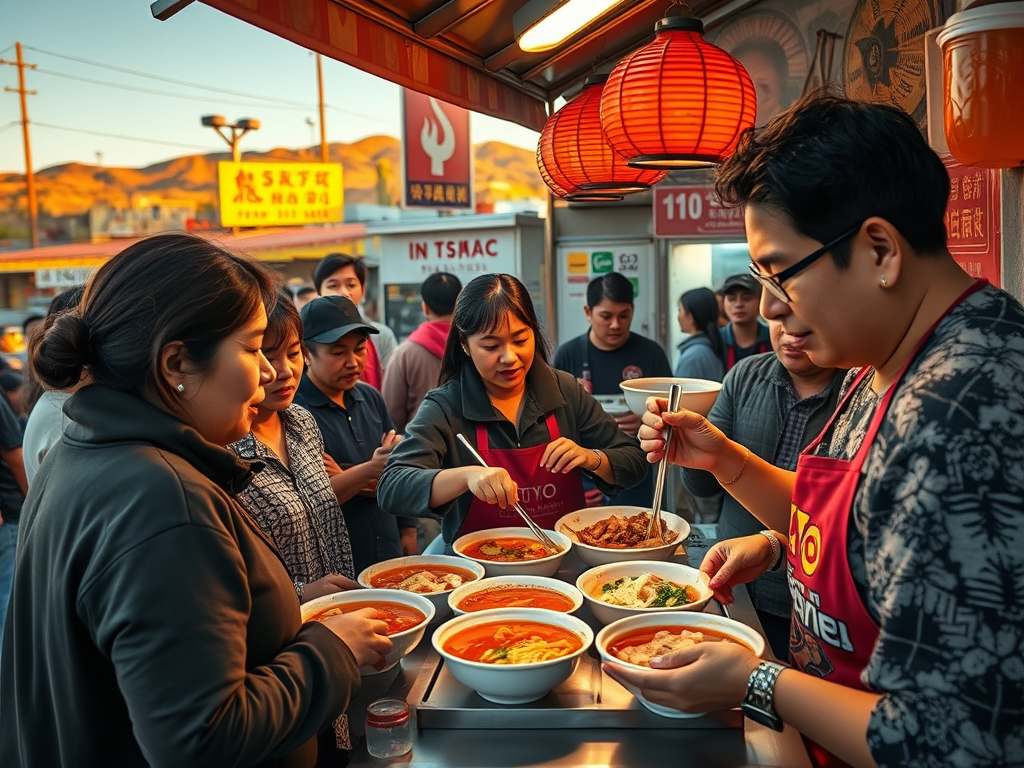
After finishing her shift at the sprawling microchip plant on the edge of the Arizona desert, Helen Wang heads home to her side hustle: preparing steaming pots of spicy beef soup and pork noodles for her Taiwanese colleagues, eager for a familiar taste of home.

Two years ago, when workers began arriving in this corner of northern Phoenix to join the Taiwan Semiconductor Manufacturing Company (TSMC) factory, there were almost no Asian grocery stores or Taiwanese restaurants in the area. Since then, this predominantly white suburban strip-mall community has transformed into a “Tiny Taipei.”https://wordpress.com/


New Taiwanese businesses have sprung up alongside local taquerias and nail salons, while Taiwanese cooks, including Ms. Wang, deliver meals to the factory parking lot. Supermarkets now stock Taiwanese sauces and noodles, and Mandarin can be heard in schools and daycare centers, where 282 Taiwanese students are enrolled this year.
The futuristic TSMC factory, which has drawn thousands of workers and their families, plays a key role in President Biden’s push to enhance advanced chip manufacturing in the U.S. The $65 billion project, supported by $6.6 billion in CHIPS and Science Act grants, is central to this effort. Yet, the factory’s future and the livelihoods of its workers may depend on President-elect Donald J. Trump, whose skepticism about the CHIPS Act and proposed restrictions on foreign workers could reshape the initiative.

For the Taiwanese workers, these political uncertainties are far removed from their immediate realities. They focus instead on long hours bringing the factory online, navigating a new culture of wide highways, suburban playdates, and Arizona’s sweltering heat.
The growing community has initiated a cultural shift in the desert landscape. Developers are converting a beige outdoor mall into an Asian shopping center named 808 Union Hills Plaza, nodding to the lucky number eight in Chinese culture. A boba tea shop has already opened, and plans for Taiwanese-style townhouses are in motion.

“This all happened so fast,” said Wen Chang, a Taiwanese restaurateur who relocated to Arizona from New Mexico to meet the demand for authentic food. He now operates Taiwan Bistro, delivering boxed lunches to the factory and offering Taiwanese dishes like three-cup chicken to American colleagues during karaoke-filled evenings at the restaurant.

New arrivals, while welcomed, face challenges such as adapting to U.S. traffic laws and a healthcare system vastly different from Taiwan’s. Still, many are finding their footing, aided by established Taiwanese community leaders offering help with English, driver’s licenses, and locating Asian goods and services.
However, tensions have arisen. Labor unions protested when TSMC sought visas for 500 Taiwanese specialists, and a lawsuit from 13 former employees accused the company of fostering an “anti-American culture.” TSMC, emphasizing its commitment to workforce diversity, declined to comment on the allegations but highlighted its channels for addressing concerns.
Cultural differences also surface at work. While Taiwanese employees are accustomed to TSMC’s rigorous hours and demanding environment, some American workers have found these expectations challenging.
Despite these hurdles, TSMC’s Phoenix factory is set to begin production by mid-2025, with additional facilities in development to manufacture advanced chips for AI and defense applications. Many Taiwanese workers, drawn by financial incentives and the promise of new experiences, have embraced the move. Housing subsidies and community support have helped ease the transition, with families finding ways to integrate, from school activities to Lunar New Year celebrations.


Small but significant markers of Taiwanese presence are emerging in the area. Mandarin classes at a local church now attract over 100 participants, and questions about everything from hockey skates to finding Mandarin-speaking dentists flood Line, Taiwan’s popular messaging app.
For some, the adjustment has been smoother than expected. Rebecca Wang, who relocated with her family in late 2022, said she had been warned about gang violence and unsafe streets but was pleasantly surprised by the tranquility of her new neighborhood. While unsure about staying beyond her husband’s contract, the family recently purchased a Spanish-style home with a pool, embracing their new life.
Others, like Katie Yu and Kate Wang, have turned to entrepreneurial ventures. Ms. Yu, whose home-cooked meals for her husband’s colleagues gained popularity, opened a cafe, Taiwan Mama, which has since expanded. Ms. Wang, now a full-time mother, reflects on the unexpected paths their lives have taken.
Though many Taiwanese families remain uncertain about their long-term plans, their presence is reshaping the community, blending their culture with the American Southwest. For now, they’re creating a new sense of home in an unfamiliar land.




Leave a Reply