

Alifa Chowdhury’s bid to lead the University of Michigan’s student government was built on a single promise

Alifa Chowdhury’s bid to lead the University of Michigan’s student government was built on a single promise: she would block funding for campus organizations unless the university agreed to divest from companies she claimed were benefiting from the Israel-Hamas conflict.https://wordpress.com/
After nine tumultuous months, that promise has culminated in her impeachment and removal from office. This decision came just before midnight on Monday after a student assembly vote that concluded her term.
Chowdhury’s removal followed a decisive impeachment vote in mid-November, which also saw the ousting of Elias Atkinson, the student government’s vice president and fellow activist. The pair were found guilty of neglecting their duties in a lengthy judicial hearing that spanned seven days and over 20 hours of deliberation.
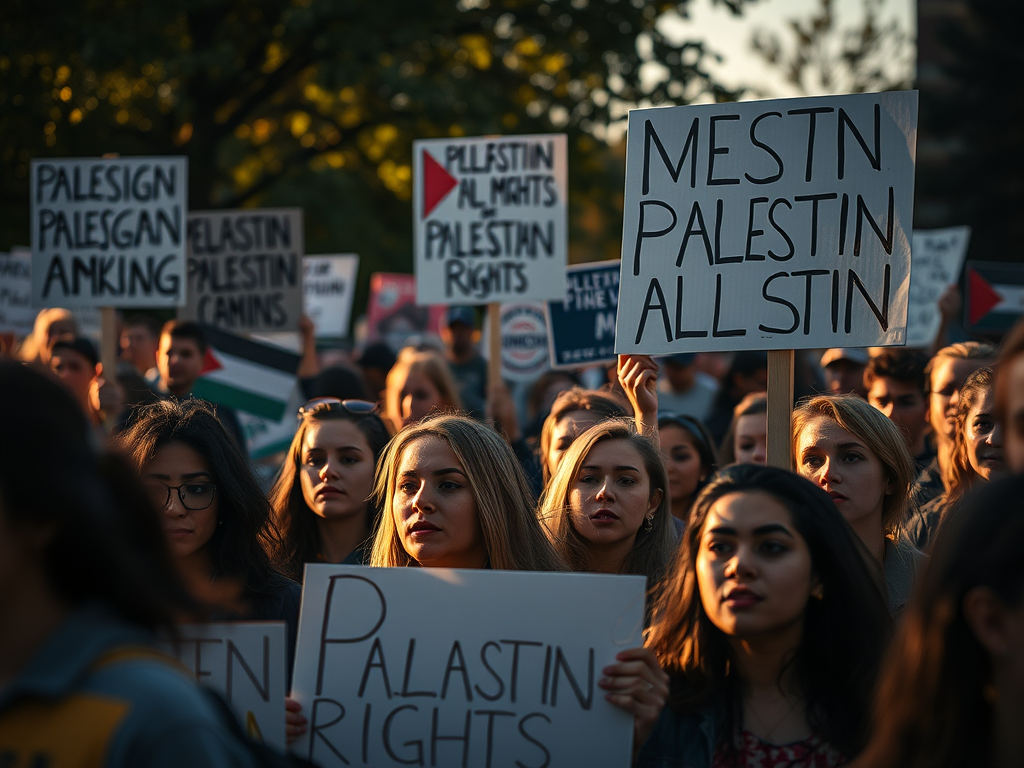
Similar to other student protests across the nation, Michigan’s student government takeover by pro-Palestinian activists last spring created a deep divide on campus. Many students criticized the activists’ obstructionist tactics, which they felt not only failed to advance the Palestinian cause but also obstructed essential student services.
For the activists, the goal was to force university officials and the student body to confront what they saw as indifference to the suffering of Palestinians in Gaza. However, the efforts made little progress and, in some cases, fueled opposition. The university, which had long maintained it would not divest from companies tied to the conflict, adopted a policy of neutrality in October, avoiding political stances unrelated to university operations.
By the fall, the student assembly had voted to reinstate funding for campus groups after the administration agreed to support them financially, allowing for activities like Ultimate Frisbee and ballroom dancing.
Margaret Peterman, a sophomore in the student assembly who initiated the impeachment, called the president and vice president’s conduct “inexcusable,” citing their failure to serve the student body effectively.
Some students, including those sympathetic to the Palestinian cause, viewed the activists’ tactics as counterproductive. “It only hurt the social image of the movement on campus,” said Tiya Berry, an Arab American member of the student assembly with ties to Lebanon. Although agreeing with the activists’ political stance, she criticized their methods, calling them “extremist” and harmful to the student body.
Chowdhury and Atkinson, both of whom declined to comment, ran under the Shut It Down Party platform, vowing to withhold the university’s annual $1.3 million funding until the administration agreed to divest from companies connected to the Israel-Hamas conflict. Despite low voter turnout, they won their positions by a substantial margin.
The impeachment itself sparked a debate over the boundaries of free speech, with the motion accusing the pair of “inciting violence” for urging students to attend an October 8 meeting that aimed to restore funding. Chowdhury had joined protesters at the meeting, an action that Peterman argued contributed to a hostile atmosphere, including one incident where a member of the assembly was spat on.
Kaitlin Karmen, a Shut It Down Party member who resigned after the vote, denounced the impeachment as unjust. “Asking people to show up and advocate for their cause isn’t inciting violence,” Karmen said, adding that discomfort doesn’t equate to violence.
Danah Owaida, another Shut It Down assembly member who resigned, described her time on the student government as emotionally taxing and marked by a lack of support from her colleagues. “As a Palestinian, it’s a constant dismissal,” she said.
However, Peterman, the student who initiated the impeachment, defended the action, saying it established a necessary precedent for defining the limits of free speech within student government. “There is a line between free speech and hate speech,” she said. “Encouraging threats or intimidation crosses that line.”
With Chowdhury and Atkinson’s removal, Mario Thaqi, the student assembly speaker, will now serve out the remainder of the presidential term. Thaqi emphasized the importance of unity going forward. “It doesn’t matter if you hate me or not—we are still here to represent all students,” he said. “My goal is to ensure the campus doesn’t become more divided after this vote.”



Leave a Reply