
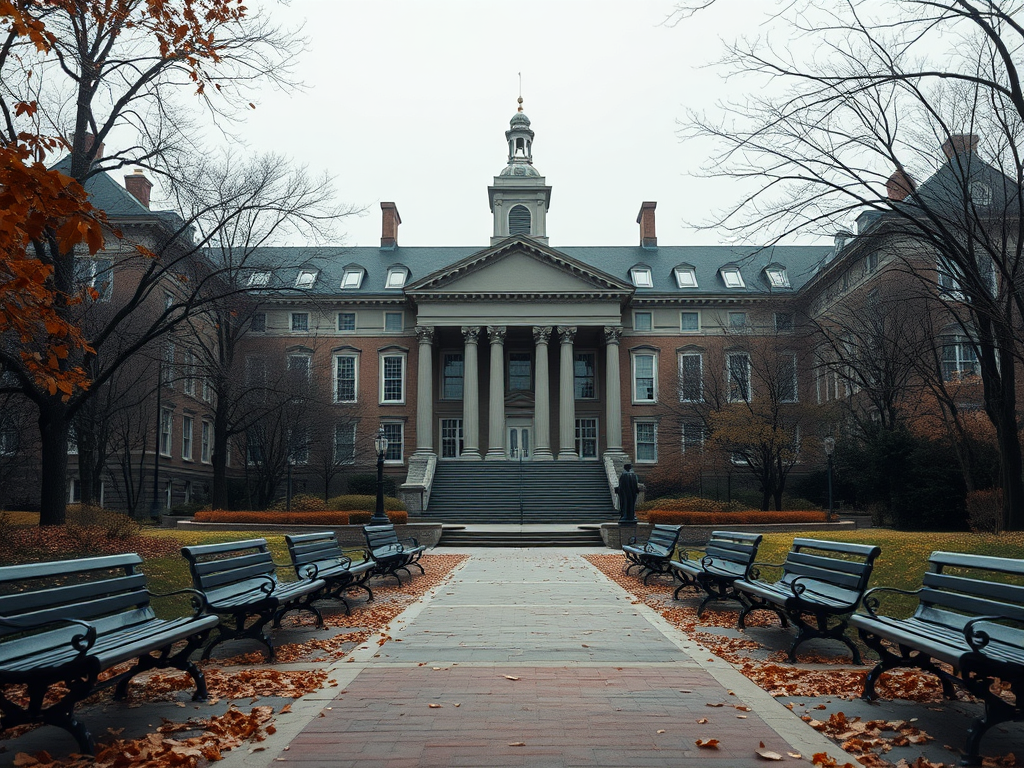

Black Student Enrollment at Harvard Law Drops by More Than Half

Following last year’s Supreme Court ruling that banned affirmative action in college admissions, the number of Black students entering Harvard Law School saw a significant decline this fall, as revealed by enrollment data published on Monday.https://wordpress.com/
Harvard Law enrolled just 19 first-year Black students this year, making up only 3.4% of the class, the lowest percentage since the 1960s, according to the American Bar Association. This is a sharp drop from the 43 Black students in last year’s first-year class, as reported by The New York Times.
While some changes in data collection might account for variations in enrollment, the drop at Harvard was far more pronounced compared to other top law schools. This decline is especially significant given the school’s historical role in educating prominent Black lawyers, such as former President Barack Obama, former First Lady Michelle Obama, Justice Ketanji Brown Jackson, and former Massachusetts Governor Deval Patrick.
David B. Wilkins, a Harvard Law professor and expert on Black representation in the legal profession, pointed out that the Supreme Court decision, particularly as Harvard College was involved in the case, likely influenced the steep decline. “The chilling effect of this decision is undeniable,” Wilkins said. “This is the lowest number of Black students entering the first year since 1965,” he noted, referring to data from the Center on the Legal Profession at Harvard, where he serves as faculty director.
In addition to the decrease in Black student enrollment, the law school also saw a significant drop in Hispanic students, from 63 students (11%) in 2023 to just 39 students (6.9%) this year. Meanwhile, the enrollment of white and Asian students rose.
A spokesperson for Harvard Law, Jeff Neal, emphasized that the school remains committed to a diverse student body, stating that such diversity is crucial for legal education. He added, however, that it is difficult to draw conclusions from a single year’s data and reaffirmed the school’s dedication to both adhering to the law and fostering an inclusive community within the legal profession.
When examining enrollment trends at other prestigious law schools, the decrease in Black and Hispanic students was less severe in several institutions, though a few, like Stanford, saw an increase. At Stanford, for example, the number of Black first-year students nearly doubled to 23 from 12 last year.
Similarly, Black and Hispanic enrollment at the University of North Carolina dropped following the Supreme Court case, with the number of Black first-year students falling from 13 to 9 and Hispanic students from 21 to 13.
Each year, the American Bar Association publishes demographic and academic data for its 198 accredited law schools. This year, the ABA revised its reporting categories to include non-U.S. residents in the racial and ethnic breakdowns, which may have affected year-to-year comparisons. For example, schools like New York University, Columbia University, and the University of Pennsylvania saw large increases in Asian student enrollment.
At Harvard, the percentage of Black first-year undergraduates also dropped from 18% last year to 14% this fall. Wilkins argued that these trends demonstrate the negative consequences of the Students for Fair Admissions litigation, which has created additional barriers for prospective Black lawyers.
However, Richard Sander, a professor at the University of California, Los Angeles, and a critic of affirmative action, argued that the overall number of Black students entering law schools nationwide had increased by 3%, reaching 3,060 this fall compared to 2,969 in 2023. While Sander acknowledged the challenges in interpreting these numbers, he contended that there was no significant decline in Black enrollment overall. He further suggested that the drop in Black students at prestigious schools like Harvard and UNC could ultimately be beneficial, as these students may find better opportunities at less competitive institutions, where they are more likely to succeed academically.
Sander, a proponent of the “mismatch theory,” which argues that students perform better at schools that align with their academic abilities, emphasized that students often prefer schools where they feel they can be more competitive. He believes this shift could lead to more Black lawyers in the future, contrary to concerns about a decrease in Black legal representation.
Harvard Law professors had anticipated a decline in diversity, following the university’s September announcement of an 8% drop in the enrollment of “students of color.” The first-year class notably saw a reduced number of Black students, especially among Black men, with only six entering this year.
Sean Wynn, president of the Harvard Black Law Students Association, described the enrollment decline as a “crushing loss” and attributed it to the Supreme Court ruling. “With this marked decline, the ruling has fundamentally altered the experience of attending this law school,” Wynn said in a statement.


Leave a Reply