

The C.E.O.s Are Tripping. Can Psychedelics Help the C-Suite?

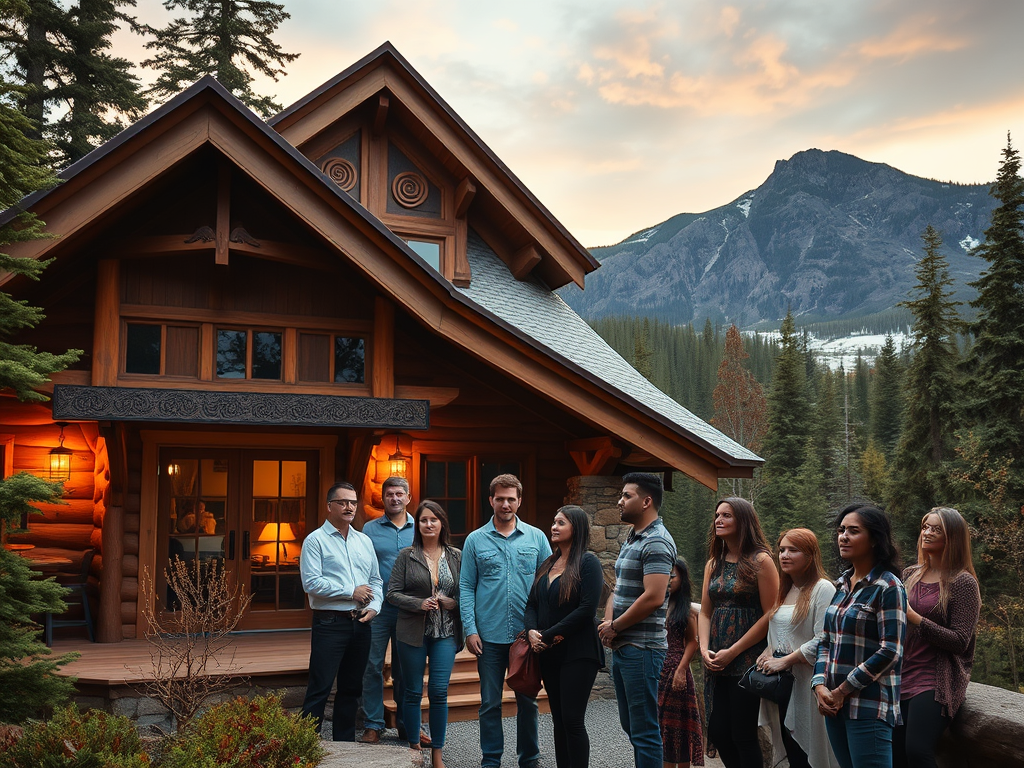
Tucked away in the foothills of the Canadian Rockies, a wooden house stands as a sanctuary, crafted from pine and spruce, filled with mushroom carvings, tapestries in shades of periwinkle and indigo paisley, and books like The Indoctrinated Brain—items that all point to one thing: a promised transformation. Enter as a high-powered executive, leave as an enlightened soul.https://wordpress.com/
When a group of executives arrived one October evening, clad in hoodies and leggings, they radiated the jittery excitement typically seen at a summer camp drop-off. They were there for a retreat called The Psychedelic C.E.O., an experience they had agreed to let me observe.

Leading them was Murray Rodgers, a former oil and gas executive who underwent a profound transformation a decade ago. After a painful divorce and the collapse of his company’s IPO, Rodgers found himself alone on his 60th birthday, watching Hugh Grant’s The Rewrite and contemplating his own need for a “rewrite.” This led him to yoga, then to Costa Rica, where he experimented with ayahuasca—a hallucinogenic brew. This marked the beginning of a series of psychedelic journeys that radically reshaped his life, both spiritually and professionally. Now 69, Rodgers sees his mission as helping others undergo similar transformations.
He wrote a book, The Psychedelic C.E.O., and after hearing from readers, he began hosting retreats. On that October day, five business leaders—Adam, Adam, Jill, Chris, and Ajay—gathered at his retreat. Most opted to use only their first names to protect their privacy, concerned that their unconventional approach to leadership development might alarm their investors, employees, or families. These entrepreneurs, running small businesses in Calgary, had met through an entrepreneurial network.
After settling in and enjoying bowls of hearty lentil soup, the group gathered in a cozy downstairs den, awaiting Rodgers’ introduction to the retreat’s agenda. The first task was a microdose of psilocybin, the active psychedelic compound found in hallucinogenic mushrooms—0.25 milligrams, a mere warm-up for the larger doses to come the next day. After distributing the psilocybin pills, Rodgers unrolled a “map of consciousness,” illustrating a range of mental states, from shame and guilt to enlightenment. He marked each entrepreneur’s current state on the map, creating a surreal atmosphere akin to a corporate off-site led by Ms. Frizzle.

Rodgers then asked, “Who feels nervous about tomorrow?”
Three hands shot up.
“Guess what’s on the other side of fear?” he said with a smile. “Love. Always.”
The Corporate Psychedelic Connection
The link between corporate leaders and psychedelics isn’t new. In his book How to Change Your Mind, Michael Pollan details the history of psychedelics in the business world, tracing it back to the 1950s and 60s when Al Hubbard, a self-styled “Captain Trips,” introduced LSD to America’s top executives, Hollywood stars, and even politicians. It wasn’t just the avant-garde seeking the mind-expanding effects of these substances. In 1957, J.P. Morgan vice president R. Gordon Wasson wrote an article for Life magazine detailing his experience with psilocybin, which later became a sensation.
In the early 60s, Silicon Valley (though not yet known by that name) became a hotspot for psychedelic experimentation. Myron Stolaroff, a tech executive, founded a psychedelic research center in Menlo Park, where he brought in engineers and executives to experience guided drug trips in the hopes of unlocking creative solutions. James Fadiman, who helped run the trials, recalls that these were not secretive, underground affairs but legitimate research initiatives.
The relationship between business and psychedelics, however, came to an abrupt halt in the late 1960s, as psychedelics became synonymous with counterculture movements and were subsequently outlawed. Despite this, the allure never fully faded. Figures like Steve Jobs, Sam Altman, and Elon Musk have openly discussed how psychedelics have shaped their lives and thinking. In 2023, a study by the RAND Corporation estimated that eight million U.S. adults had used psilocybin.
Today, a growing number of psychedelic retreats cater to business leaders. Guides offer curated experiences, such as The Journeymen Collective, where executives embark on psychedelic journeys aimed at spiritual and personal growth. The cost for one such retreat I observed was around $4,000.
However, the practice raises concerns. Medical professionals, including Dr. Charles Nemeroff from the University of Texas, warn that taking psychedelics without medical supervision can be risky, particularly for those with a family history of psychiatric disorders. Dr. Bryan Roth of the University of North Carolina also cautions that while the health risks are low, chronic microdosing could potentially lead to heart valve damage.
Despite these risks, the stigma surrounding psychedelics is slowly diminishing, aided by a shift in corporate culture. American companies now emphasize emotional openness and creativity, and post-Covid mental health awareness has further fueled interest in psychedelics. However, some critics worry that the growing popularity of psychedelics could lead to unintended consequences, such as a loss of ego that may be difficult for some leaders to navigate professionally.
The Psychedelic Retreat Experience
Rodgers emphasized the importance of surrendering to the experience. “It doesn’t matter how much you’ve read or what you think you know. None of it will be true,” he said. After a brief session of yoga and singing, the entrepreneurs were told to prepare for their individual journeys.

The next day, the group embarked on a silent nature walk, taking in the beauty of a nearby river. Back at the house, two women arrived to assist as “trip sitters,” ensuring the entrepreneurs’ safety during the psychedelic experience. Lisa Stickle, one of the sitters, joked about the transition from a corporate “C.E.O.” to a more conscious, empathetic role. “Back when the C.E.O. was the C.E.O.,” she laughed, referencing Rodgers’ rebranding of the title.
As the entrepreneurs prepared their “sacred spaces,” Rodgers weighed out the mushrooms and made tea, setting the stage for their transformative experience. “This is ‘Ferris Bueller’s Day Off,’” he quipped, inviting them to relax and let go of their usual responsibilities.
The entrepreneurs settled onto their mats, each with a bucket, a water bottle, and toilet paper nearby. As the psychedelic journey began, Rodgers reminded them not to worry if they didn’t feel anything immediately. “It’s your ego’s last-ditch effort,” he explained. “Trust me, the switch will go on.”
The Unsettling Science of Psychedelic Leadership
While studies on how psychedelics affect leadership and decision-making are still in their early stages, research is underway. Professors Bennet Zelner and Rachelle Sampson at the University of Maryland have been observing business leaders who attended psilocybin retreats in the Netherlands. Early reports suggest that psychedelics may help break down the ego, allowing leaders to overcome fears and adopt new perspectives. Neuroscientist Robin Carhart-Harris also theorizes that psychedelics could boost creativity by increasing brain entropy, leading to new ways of thinking.
Some business leaders, like Mark Williamson, former COO of MasterClass, credit their psychedelic experiences with fostering professional breakthroughs, such as prioritizing mentorship and reassessing their roles within the company.
However, not everyone is convinced of the benefits. Critics warn that some executives may use psychedelics as a status symbol, rather than for personal growth. Chip Conley, former executive at Airbnb, cautioned that any attempt to gain cultural cachet from psychedelic use is likely to backfire, resulting in “a bad trip.”
Reflections on the Experience
As the retreat came to a close, the entrepreneurs gathered around a campfire to reflect on their experiences. While the psychedelic journeys didn’t yield immediate clarity, each participant found value in the aftermath. For example, Adam Thompson, who runs several e-commerce businesses, had a new sense of ease about the things he couldn’t control. “When you own a business, you start the day with a 15-line checklist,” he said. “But it’s not all a big deal.”
The retreat had served its purpose: it had allowed them to reset their priorities, confront their egos, and find peace with the complexities of leadership.
As Mr. Rodgers reminded them, “The key word is surrender.” Whether they found enlightenment or not, the journey had begun.m I living?”




Leave a Reply