
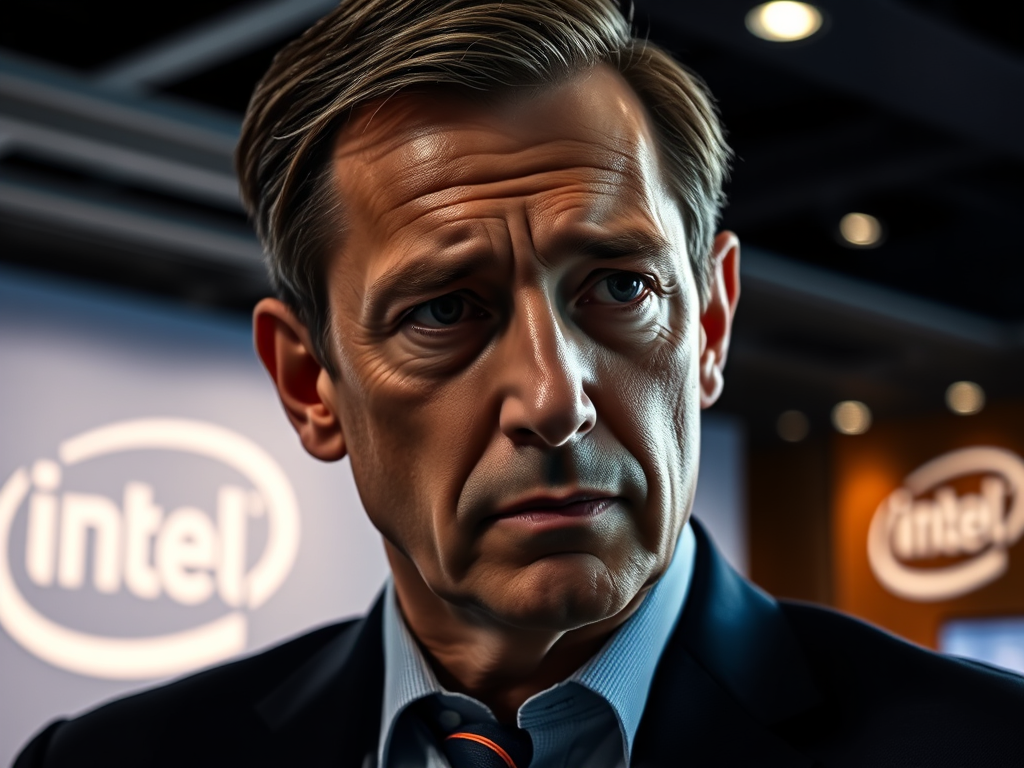

Over the weekend, Intel’s CEO Patrick Gelsinger was presented with a stark choice by the company’s board of directors: step down or face termination.
The board concluded that Gelsinger needed to leave after his efforts to revitalize the company were not yielding sufficient results fast enough, according to a source familiar with the situation, who requested anonymity. Intel had faced mounting challenges, including a more than 50% drop in its stock value this year.
On Monday, Intel confirmed Gelsinger’s resignation, effective December 1. The 63-year-old executive, who returned to Intel in 2021 after a decade-long absence, also stepped down from the board. In the interim, David Zinsner and Michelle Johnston Holthaus will take on leadership roles, while Intel continues its search for a permanent CEO.
This sudden leadership change marks another chapter in Intel’s decline. Once a pioneering force that helped shape Silicon Valley, Intel had long been a dominant name in tech. However, recent years have seen the company struggle with innovation and losing ground to competitors like Nvidia, the leader in AI chip production.
Frank Yeary, who will serve as interim executive chair of the board, expressed the company’s resolve to regain investor confidence. “We have much more work to do, and we are committed to restoring investor confidence,” he stated.
Gelsinger himself acknowledged the difficulty of the decision, describing the situation as bittersweet. “This year has been challenging for all of us as we’ve made tough but necessary decisions to position Intel for the evolving market,” he said.
Reports earlier revealed details surrounding Gelsinger’s departure, which coincided with growing speculation among Wall Street analysts that Intel could be a potential target for a takeover or a breakup. The leadership shift also came at a time when Intel’s latest manufacturing processes, central to Gelsinger’s turnaround strategy, appeared unlikely to restore the company to a competitive position in the short term.
Intel, a major player in producing chips for most of the world’s computers, lost its lead in chip manufacturing technology to Taiwan Semiconductor Manufacturing Company (TSMC) at the end of the last decade. Additionally, it missed opportunities in the mobile phone sector and has been slow to capitalize on the rapidly growing AI market.
Gelsinger launched an ambitious plan to introduce five new production processes within four years while reshaping Intel to serve as a foundry for other chipmakers, in addition to its own products. He also spent significant time lobbying for the U.S. government’s CHIPS Act, which aimed to increase domestic semiconductor production.
As part of his lobbying efforts, Gelsinger committed to building new factories in the U.S., with a promise that Intel would catch up to TSMC’s technology by 2025.
However, the company’s fortunes worsened, particularly as demand for its microprocessors slowed and competition intensified. Between 2021 and 2023, Intel’s revenue dropped more than 30%. In October, Intel reported a historic quarterly loss of $16.6 billion.
This decline was mirrored by the meteoric rise of Nvidia, which became one of the most valuable companies globally, surpassing Intel in market value.
In response to the financial pressures, Gelsinger announced 15,000 job cuts and additional cost-saving measures, including postponing the construction of a new factory in Germany. Despite these efforts, the board’s statement indicated dissatisfaction with Intel’s focus on competing with Nvidia and AMD, calling for a renewed emphasis on the company’s product development.
Intel is promoting Michelle Johnston Holthaus, who has risen through its sales and marketing ranks, to lead its product division, while David Zinsner, Intel’s CFO, will help manage the transition.
After the news broke, Intel’s stock saw a modest increase in premarket trading, though it closed the day down slightly by less than 1%.
Gelsinger’s tenure at Intel began in 1979, and he later served as the company’s chief technology officer during a period when Intel became the dominant supplier of chips for personal computers and servers. After leaving Intel, he led VMware before returning to the company in 2021 with the goal of revitalizing its engineering culture.
However, his vision faced criticism from some within Intel’s engineering ranks, who felt that he was out of touch with industry trends and too focused on building new factories instead of advancing Intel’s core products.
Gelsinger’s plan to advance Intel’s manufacturing technology also encountered setbacks. Customers were reportedly informed that Intel’s advanced manufacturing processes, such as the 18a and 16a, were significantly behind TSMC’s. While TSMC is producing flawless 2-nanometer chips, Intel’s new processes were struggling to meet the same standards.
Intel maintains that its new processes are progressing as planned and meeting expectations.
A crucial part of Gelsinger’s turnaround strategy relied on the U.S. government’s financial support for Intel’s manufacturing expansion. While the Biden administration initially committed $8.5 billion to support Intel’s Ohio plants, the final allocation was reduced to $7.8 billion, with only one factory in Ohio expected to be completed.
Intel’s business structure could be revisited in the wake of Gelsinger’s departure. The company had already discussed separating its chip-making business into an independent subsidiary, a move that Gelsinger had deferred, citing market timing.
In a statement on Monday, Intel confirmed that the leadership of its foundry business would remain unchanged.
“We are committed to returning to process leadership, which is essential to product leadership. We will continue to focus on this mission while driving greater efficiency and profitability,” said Yeary.
Industry analysts were surprised by the timing of the announcement but suggested that the key question going forward is what Intel’s next steps will be. “There are no easy answers, so the next CEO will face significant challenges,” said Stacy Rasgon, an analyst at Sanford C. Bernstein.




Leave a Reply