
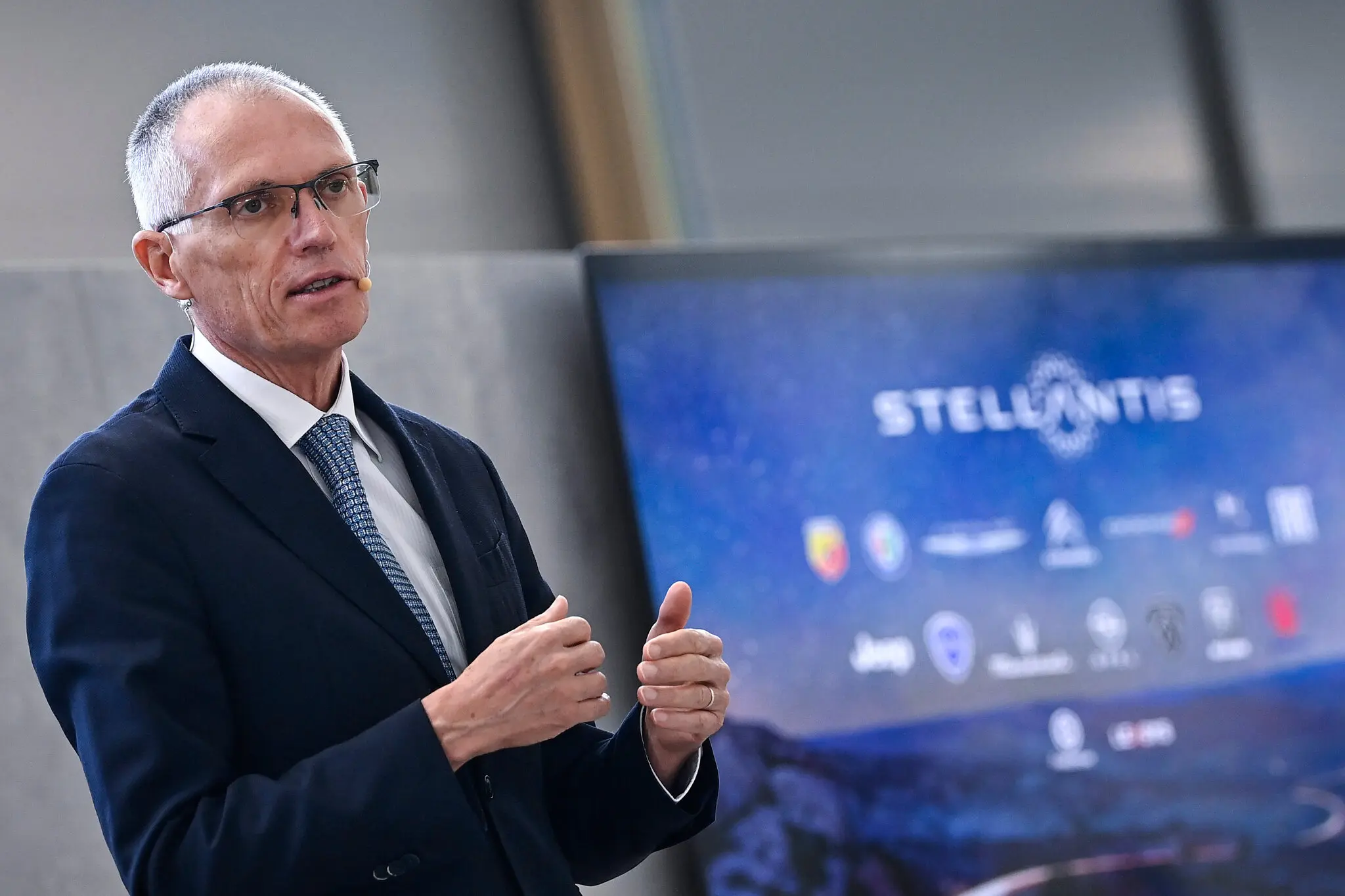

The chief executive of Stellantis, Carlos Tavares, has stepped down, the company announced on Sunday, following declining profits and significant sales challenges in its critical North American market.
At 66, Mr. Tavares played a pivotal role in the formation of Stellantis, which emerged in 2021 from the merger of Fiat Chrysler Automobiles and France’s Peugeot SA. Stellantis ranks among the world’s largest automakers, manufacturing vehicles under notable brands such as Chrysler, Jeep, Ram, Dodge, Fiat, Peugeot, Opel, and Maserati.
“Since its inception, Stellantis’ success has been built on seamless alignment between the reference shareholders, the board, and the CEO,” Henri de Castries, the senior independent director, stated. “However, in recent weeks, diverging perspectives have led to today’s outcome.”
Efforts to contact Mr. Tavares for comments were unsuccessful. His resignation took effect immediately, according to the company’s statement. Earlier this year, Mr. Tavares had disclosed plans to retire upon the expiration of his contract in 2026. Meanwhile, Stellantis confirmed that a special board committee is actively searching for his successor. During the interim, the company will be managed by an executive committee led by John Elkann, chairman of the Stellantis board.
Mr. Elkann, a descendant of Fiat’s founder Gianni Agnelli, was closely involved with Sergio Marchionne, the architect behind Fiat’s 2009 acquisition of a bankrupt Chrysler. Under Mr. Marchionne, Fiat Chrysler turned profitable and achieved significant growth until his sudden passing in 2018.
By 2020, however, both Fiat Chrysler and Peugeot faced difficulties keeping pace with competitors investing heavily in electric vehicle development. The subsequent merger created Stellantis, which debuted in 2021.
Under Mr. Tavares’ leadership, Stellantis initially thrived post-merger, reporting a record profit of €18.6 billion (approximately $19.7 billion) in 2023. He also laid out ambitious plans for electric vehicle development, although Stellantis advanced more slowly than Detroit-based rivals General Motors and Ford. Bonuses tied to the 2023 performance made Mr. Tavares one of the industry’s top-paid executives.
However, profits have slumped this year as U.S. sales plummeted by 17% in the first nine months. Stellantis struggled to compete with rivals’ price cuts and sales promotions, leading to increased dealer inventories. In response, the company reduced production, idled a plant in Illinois, and implemented layoffs.
In September, a group of dealers issued an open letter criticizing Mr. Tavares for prioritizing record profits in 2023 at the expense of the company’s long-term health in the U.S. market. “This letter serves as a wake-up call to you, the Stellantis board, employees, investors, and suppliers,” the letter warned. Shortly thereafter, Stellantis revised its profit outlook, noting operational challenges in the U.S. would significantly impact earnings, with projected operating profits reduced to 7% of sales from an earlier forecast of over 10%.
The company’s stock price has also taken a hit, dropping more than 50% from its peak of over $29 in March to $13.20 as of Friday’s close.
The transition to electric vehicles remains a complex hurdle for many automakers. While companies like GM, Toyota, and Tesla maintain robust profitability, others, including Ford and Volkswagen, face challenges. Volkswagen has even considered shutting down multiple plants, including some in Germany—once an unthinkable scenario for the automaker.
Mr. Tavares, originally from Portugal, began his career with Renault, eventually becoming a trusted deputy to Carlos Ghosn. After leaving Renault in 2013, he took on the role of Peugeot CEO in 2014. Last month, he unveiled new designs for large pickup trucks and SUVs, including electric models, and reiterated Stellantis’ goal to cut carbon emissions by 2038. “Our commitment remains steadfast: delivering clean, safe, and affordable mobility through uncompromising innovation,” he said at the time.




Leave a Reply