
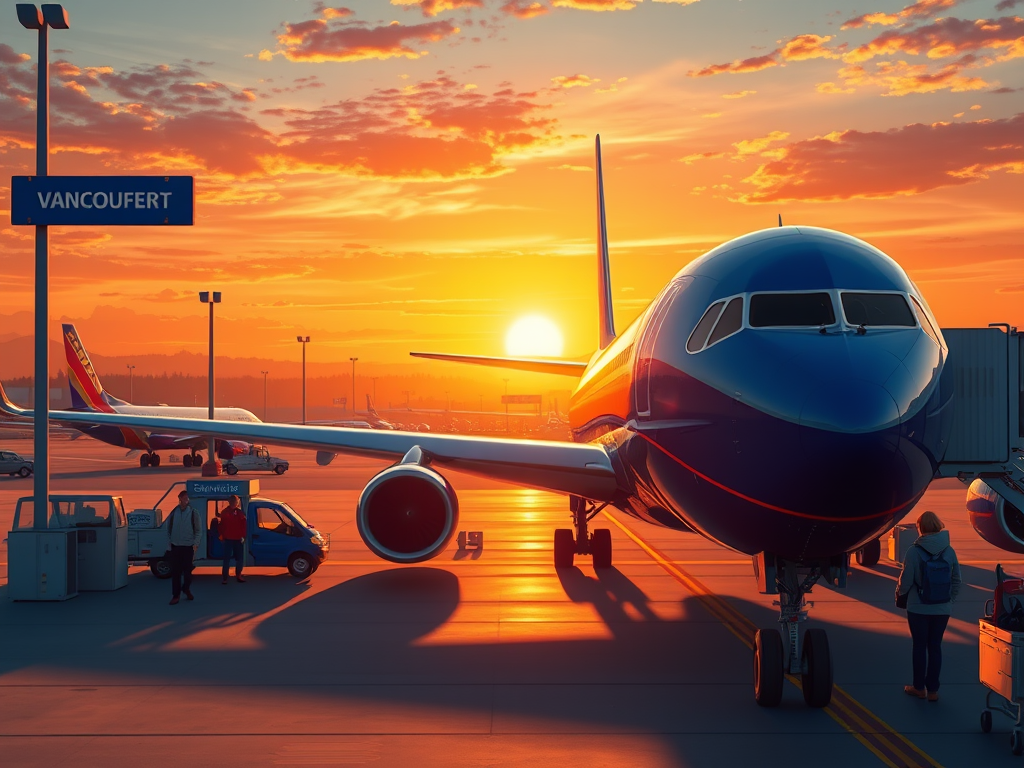

Three years ago, Southwest Airlines began operating out of Bellingham, Washington, a growing city close to the Canadian border. The goal was to replicate its success at other smaller airports by offering affordable flights to customers with limited travel options.
Bellingham, strategically located between Seattle and Vancouver, British Columbia, welcomed Southwest’s entry with enthusiasm. The airline introduced nonstop services to several West Coast destinations at competitive prices, delighting both officials and residents.

“The community embraced them, and we loved having them,” said Rob Fix, executive director of the Port of Bellingham, which manages the airport.
However, the venture didn’t unfold as hoped. This year, Southwest withdrew from Bellingham and a few other cities it had expanded into during an ambitious growth phase after the pandemic. The airline cited rising costs and underperformance in these markets as key reasons for its departure.
This move marked a significant shift for Southwest, which had long thrived by offering low-cost flights and reliable service, often out of smaller airports near major metropolitan areas. This straightforward strategy had sustained its profitability for decades, even as other airlines struggled. Now, Southwest faces challenges in regaining its momentum.

“Southwest thrived for years on a single business model, but as the industry evolved, the airline didn’t adapt,” noted David Neeleman, an airline entrepreneur who sold his first company to Southwest in 1993 before founding JetBlue and Breeze Airways.
Critics argue that Southwest’s prolonged success bred complacency, as it resisted strategies other airlines used to boost profits, such as offering premium services and seating options. While Southwest made some adjustments, like selling priority boarding for business travelers, it largely stuck to its original methods.
The airline’s reliance on a single aircraft model, the Boeing 737, once an asset for reducing costs and enhancing flexibility, has become a liability. Production setbacks at Boeing, including quality issues and a strike, have delayed deliveries of new planes, leaving Southwest with just 20 new aircraft expected in 2024—far fewer than anticipated.
Southwest’s recent financial performance underscores its struggles. In the first nine months of this year, the airline reported a profit of $204 million, significantly lagging behind Delta Air Lines and United Airlines, which posted profits of $2.6 billion and $2.2 billion, respectively.
The challenges have attracted the attention of Elliott Management, a hedge fund that acquired a 10% stake in Southwest this summer. Elliott criticized the airline for failing to control costs, which eroded its once-impressive profit margins, and demanded substantial changes, including the replacement of CEO Bob Jordan.

In response, Southwest has accelerated several initiatives. In September, Mr. Jordan unveiled a three-year plan featuring assigned seating to expedite boarding, extra-legroom seats at higher fares, and red-eye flights to maximize aircraft utilization. The airline also added board members recommended by Elliott, prompting the hedge fund to withdraw its demand for a leadership change.
Even before Elliott’s involvement, Southwest had begun modernizing its offerings. In 2022, the airline announced plans to install power outlets at every seat, enhance Wi-Fi speed, and expand overhead bin capacity. This year, it started listing its flights on third-party platforms like Google Flights and Kayak.
Despite its challenges, Southwest remains a dominant force in U.S. aviation. It is the largest carrier of passengers in the country and operates more flights than any airline worldwide, except American Airlines. Travelers consistently rank its economy class as the best in North America, according to J.D. Power.
Southwest’s origins trace back to 1971, when it began operations at Dallas Love Field, connecting Dallas, Houston, and San Antonio as an alternative to driving. Over the years, it disrupted the industry with its low-cost model, stimulating demand and driving down fares wherever it expanded—a phenomenon known as the “Southwest effect.”

However, as Southwest grew, its model faced new pressures. Expanding to markets like Hawaii and congested airports like New York’s LaGuardia introduced higher costs and complexities. Its once-famous “10-minute turn” time for planes at gates has increased to about 49 minutes—still faster than competitors, but a far cry from its early efficiency.
In Bellingham, a city of 97,000, residents and officials remain nostalgic for Southwest’s service. Anneke Palmerton, who frequently travels for her job as a wedding officiant, appreciated the convenience and affordability Southwest offered for trips to visit family in California and Arizona. Despite strong support from local passengers and even a petition with thousands of signatures, the airline left Bellingham, citing market underperformance amid high costs.
Southwest’s story is one of remarkable success tempered by the challenges of adapting to an evolving industry. Whether its latest changes will help it reclaim its former dominance remains to be seen.




Leave a Reply