
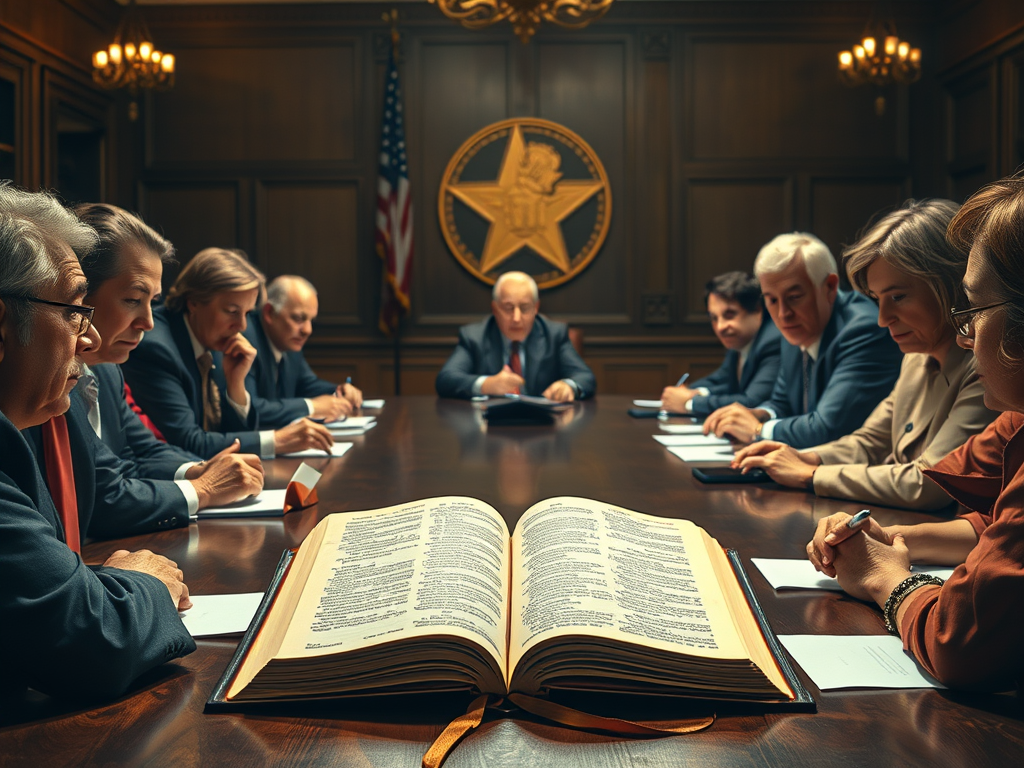

On Tuesday, Texas education officials provisionally approved a new elementary school curriculum that integrates material from the Bible into reading and language arts lessons. This controversial initiative could challenge the boundaries of religion’s role in public education.
The curriculum, which is optional, has already sparked significant debate in Texas—a state at the forefront of efforts to expand religion’s influence in public schools. Advocates believe it could serve as a blueprint for other states.
The board’s vote was preliminary, with a final decision expected later in the week. All 15 board members were present, and the outcome is likely to remain unchanged.
With President-elect Donald J. Trump pledging to advance the conservative Christian agenda during his second term, the curriculum could provide a strategic model for federal policies.
Supporters of religious freedom view this development as part of a broader conservative effort to link the nation’s history and politics to Christian values. Texas has already led initiatives such as allowing public schools to employ religious chaplains as counselors, and lawmakers may soon require classrooms to display the Ten Commandments.
Schools have become battlegrounds for debates on Christian values in public life. For instance, Oklahoma’s state superintendent recently provided Bibles for classrooms and encouraged students to pray for Mr. Trump, while Louisiana is embroiled in legal disputes over mandates to display the Ten Commandments in schools.
Proponents of the Texas curriculum argue that the Bible is integral to understanding American history and culture. They claim that omitting such references could hinder students’ literacy skills, as biblical themes permeate American literature and art. Governor Greg Abbott praised the initiative, saying it would help students grasp the connections between religion and pivotal historical events such as the Civil Rights Movement and the signing of the U.S. Constitution.
The Texas State Board of Education, predominantly Republican, establishes educational standards and approves curricula. Individual districts choose their preferred programs, and this Bible-focused curriculum, available for kindergarten through fifth grade, is set to be implemented in August 2025. Districts adopting it will receive financial incentives.
The curriculum’s religious content, while a small portion overall, heavily emphasizes Christianity. For example, kindergarteners learn about the Golden Rule through Jesus’ Sermon on the Mount, while fifth graders study Leonardo da Vinci’s The Last Supper alongside Gospel excerpts.
Public reactions have been divided. Many parents, including practicing Christians, argued at a board meeting that teaching religion should remain a family decision. Critics worry the lessons may blur the line between education and evangelism. Some scholars and community members from other faiths have also expressed concerns about bias and balance. A Jewish grandmother, Barbara Baruch, urged the board to respect families’ rights to teach religion privately.

Legal experts have debated whether the curriculum might violate the Establishment Clause of the First Amendment, which prohibits government endorsement of religion. Advocates like Jonathan Covey of Texas Values argue that the curriculum is constitutionally sound, citing recent Supreme Court decisions affirming religious expression in public spaces.
Despite this defense, critics have highlighted flaws in the lessons. Amanda Tyler, of the Baptist Joint Committee for Religious Liberty, described the curriculum as factually inaccurate and educationally unsound. Religious scholar David R. Brockman noted its failure to provide balanced perspectives, such as omitting instances where Christianity was used to justify slavery. He characterized the program as promoting a one-sided, overly favorable view of Christianity.
The Texas Education Agency developed the curriculum after a state mandate for free, high-quality teaching materials. While supporters hail it as a step forward, others view it as a polarizing move that risks entangling public education with religious advocacy.




Leave a Reply