
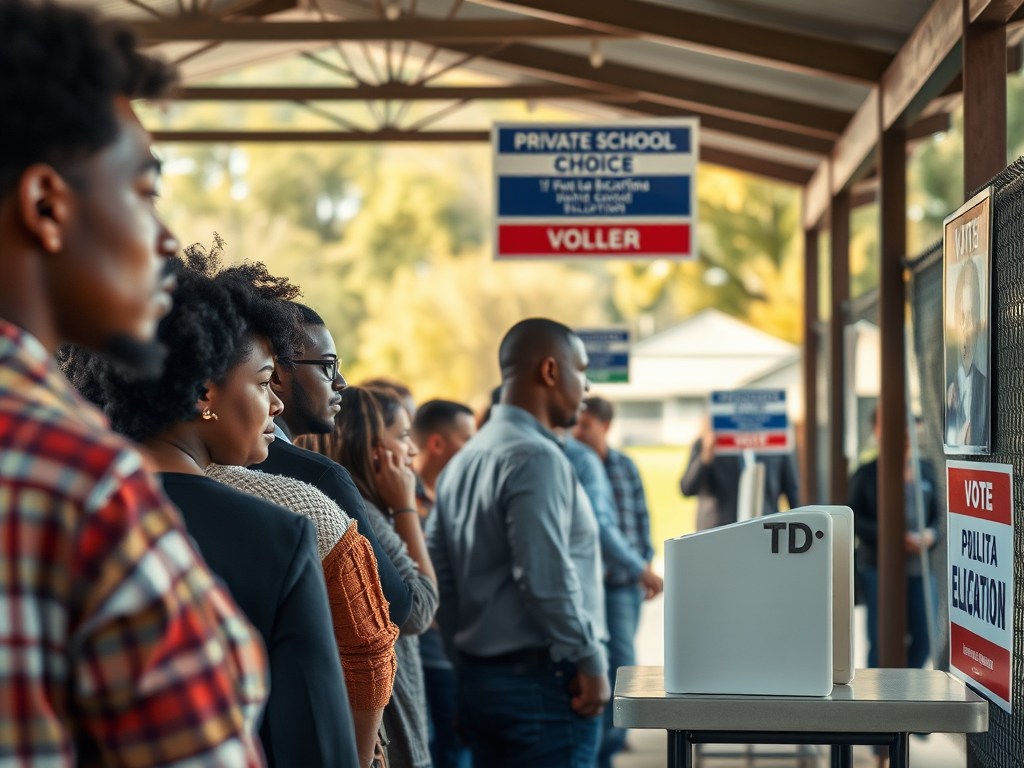

On a promising Election Day for Republicans, one of their hallmark education initiatives—private school choice—faced rejection from voters in three states: Colorado, Nebraska, and Kentucky.
In Kentucky, nearly two-thirds of voters opposed a proposal to use state tax dollars for funding private and charter schools.
In Nebraska, 57 percent of voters approved a ballot measure repealing a small program designed to help low-income families afford private-school tuition.
Meanwhile, in Colorado, votes are still being tallied, but it appears likely that a narrowly contested measure establishing a “right to school choice” — including private and home-school options — will also be rejected.
These outcomes represent a slowdown for the private-school choice movement, which had gained considerable momentum since the Covid-19 pandemic.
Currently, around 1 million American children benefit from private school vouchers — a figure that has more than doubled since 2019. Republicans had hoped the issue would resonate with parents of various racial and socioeconomic backgrounds, especially those dissatisfied with public schools during the pandemic.
However, private-school choice policies often spark debate, as they can drain funding from public schools and sometimes provide benefits to families who can already afford private tuition. Rural Republicans have historically been skeptical of vouchers due to the limited availability of private schools in sparsely populated areas. Kentucky, Nebraska, and Colorado all have significant rural populations.
Michael McShane, the director of national research at EdChoice, a pro-voucher organization, downplayed the setbacks in these states, highlighting Republican victories elsewhere. In Texas, for instance, Republican school-choice advocates made significant gains, with the possibility of a universal voucher program on the horizon.
“The way forward is a gradual, legislative approach,” McShane explained.
Teachers’ unions and their allies campaigned vigorously against vouchers, while business groups and some conservative education philanthropists backed them. The unions also scored other victories nationwide.
In Florida, a measure to introduce partisan labels to school board elections for the first time in over two decades was defeated. Although supported by Governor Ron DeSantis and the Republican Legislature, opponents argued it would exacerbate polarization in local education.
In Massachusetts, voters approved a proposal to eliminate the requirement for high school students to pass standardized tests to graduate, starting with the class of 2025. The initiative won with about 59 percent of the vote, despite opposition from Governor Maura Healey and the state’s business community, who argued that the requirement maintained the high standards that make Massachusetts’ public schools among the best in the nation. Advocates for ending the mandate, including the state’s teachers’ union, argued that the exams unfairly hindered disadvantaged students, such as those with disabilities.
Randi Weingarten, president of the American Federation of Teachers, celebrated the results, noting that voters showed support for public education even as they elected Republican leaders.
“Voters want to see public schools strengthened, not defunded,” Weingarten said. “Democrats must champion policies that empower working people, with public education and unions at the core of that vision.”




Leave a Reply