
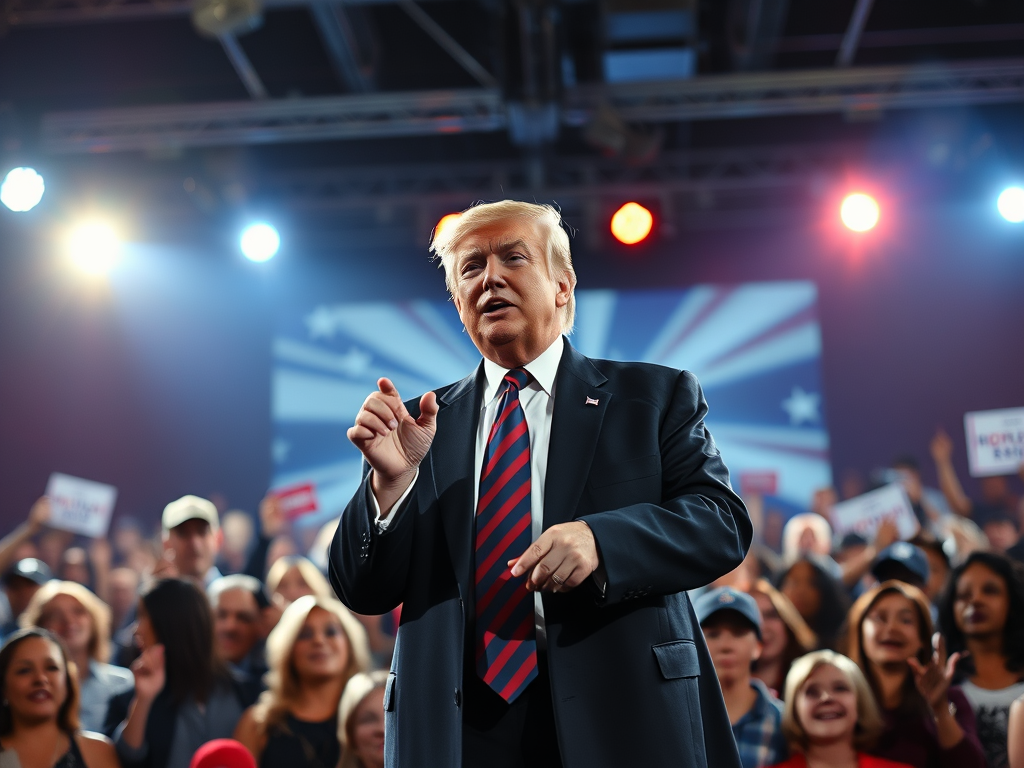

Donald J. Trump, on his unlikely path to becoming the President-elect of the United States, has consistently adapted to the evolving media landscape.
Starting out, he made himself a mainstay in Manhattan’s tabloids, then shifted to reality TV as the host of NBC’s “The Apprentice.” Early on, he recognized Twitter’s potential to amplify his voice, and in 2016, he leveraged countless cable news interviews to help secure his victory.
This Tuesday, Mr. Trump defeated Vice President Kamala Harris, in part by once again embracing the latest forms of media. Rather than relying on traditional outlets like CBS’s “60 Minutes,” he opted for popular online personalities and podcasts, particularly those appealing to young men.
Trump’s favored media figures — Adin Ross, Theo Von, and the Nelk Boys — may be unfamiliar to many Americans who tune into traditional news and watch hosts like Anderson Cooper. Yet, during Wednesday’s televised victory event, these personalities were specifically mentioned. Trump even acknowledged a friend onstage: Bryson DeChambeau, two-time U.S. Open champion and YouTube star, whose video with Trump, where they exchanged putting tips, gained nearly 13 million views.
“Trump’s always looking for the next platform best suited to his instinct for connecting with voters,” said Andrew Heyward, former president of CBS News. “He has an extraordinary ability to connect with the public.”
Frank, spontaneous, and informal, these platforms fit Trump’s conversational style well.


Using these outlets, Trump was able to avoid confrontational interviews with professional journalists who might press him on policy or fact-check his claims. The influencers he engaged rarely questioned him and often praised him.
In his Wednesday speech, he referred to traditional news as the “enemy camp.” In 2016, he had engaged more with mainstream news, frequently calling into shows like “Morning Joe” and CNN’s “New Day.”
The media environment has since become even more divided, which worked to Trump’s advantage. He skipped the second debate with Ms. Harris and canceled a “60 Minutes” interview after CBS indicated it would fact-check his responses — accountability often absent on entertainment-focused podcasts.
Trump’s approach aligns with changing news consumption habits in America. A recent Pew Research Center study found over half of U.S. adults get some news from social media. Facebook and YouTube remain popular, while Instagram and TikTok have grown as news sources in recent years. Last month, Gallup reported a record-low level of trust in traditional media.


Trump’s podcast appearances initially seemed unconventional for a presidential campaign. His first interview in June with Logan Paul touched on topics from boxing to immigration. Trump has credited his son, Barron, with encouraging him to speak with Paul. In August, he met with streamer Adin Ross, who even gifted Trump a Tesla Cybertruck.
Later, Ms. Harris joined the podcast circuit, appearing on the popular “Call Her Daddy” podcast, which led to a “Saturday Night Live” skit and attention for her comments on abortion rights.
However, Ms. Harris was not as aggressive as Trump in engaging with the podcast world. Her team considered an appearance on Joe Rogan’s show, but it didn’t materialize. Meanwhile, Trump spoke with Rogan for three hours, and Rogan ultimately endorsed him.
In October, Trump appeared on Barstool Sports’ “Bussin’ With the Boys.” Explaining his media strategy, he said, “It’s a young world, right?”


“It’s constantly changing,” he added.
Even as Trump embraces new platforms, he describes their popularity in traditional terms. After a 53-minute appearance on Logan Paul’s podcast, Trump commented, “They’ll get big ratings for this one.”
Though podcasts aren’t measured by Nielsen ratings, Trump’s appearance with Paul garnered nearly seven million views on YouTube — one of Paul’s most-watched episodes this year.



Leave a Reply