
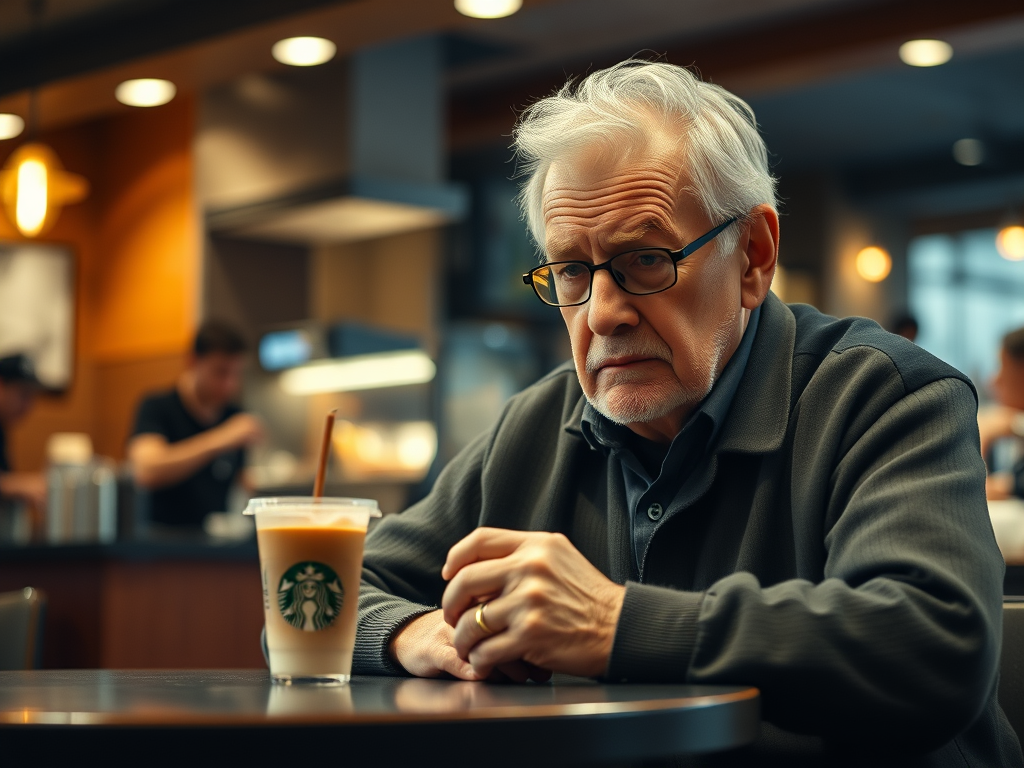

For 32 years, 73-year-old Greg Tutunjian has been a loyal customer at Starbucks, particularly enjoying their dark-roast Red Eye. However, he’s beginning to question his fidelity to the chain.
While he waits for his coffee, he observes baristas preparing Iced Brown Sugar Oatmilk Shaken Espressos and other frothy, caramel-topped beverages for drive-through and mobile orders. Minutes pass before he finally receives his coffee, a simple dark-roast blend with an espresso shot.
Mr. Tutunjian’s frustration grows when the Starbucks app informs him that his preferred coffee beans, Komodo Dragon, are in stock, only to find out they aren’t when he arrives.
“I visit four or five Starbucks in my area and encounter the same issue. I check the app right before I enter, and it claims the beans are available, but the staff tell me they don’t rely on the app,” shared Mr. Tutunjian, a software consultant from Newton, Massachusetts. “I leave empty-handed.”
Mr. Tutunjian’s concerns have become the responsibility of Brian Niccol, who became Starbucks’ CEO on September 9. During his initial week, he highlighted issues within the company in a letter on its website, stating that the customer experience feels transactional, menus are overwhelming, product quality varies, and wait times are excessive.

The statistics support his claims. Last week, Starbucks reported a 7% decline in global same-store sales for the fourth quarter, citing a significant drop in traffic in North America—10% lower than the previous year. The company also indicated that it would take time for Mr. Niccol to address these challenges, suspending its financial outlook for the 2025 fiscal year.
On Wednesday, investors were eager to hear how Mr. Niccol plans to tackle these problems. Starbucks officially announced its fourth-quarter earnings, and there were high hopes for the new CEO, who was lured from Chipotle with a compensation package exceeding $100 million.
“Our challenges are solvable — most of what we need to improve is within our control,” Mr. Niccol assured investors during the call. While some issues are already being addressed, he acknowledged that “certain things will require time.”
Many customers, already feeling the pinch from inflation, are turning away from $8 lattes, while others are boycotting the chain for various reasons. Some have opted for competing coffee shops that are emerging nationwide.

Starbucks’ success has also become a double-edged sword. The company popularized customized coffee drinks, allowing patrons to personalize their orders extensively. However, these intricate beverages can take a considerable amount of time to prepare. With over a third of transactions in recent quarters coming from mobile orders, this leads to longer wait times for customers ordering in person.
Ari Bray, a barista at a Seattle Starbucks, explained, “The traditional Starbucks experience involves being greeted by name and having a pleasant chat with the barista while enjoying a good drink. When there’s a 15-minute wait and no interaction because they’re overwhelmed, that’s not enjoyable for anyone.”
In response to customer feedback, Mr. Niccol outlined several initiatives aimed at regaining customer loyalty. Beginning with the holiday menu launch in early November, Starbucks will stop charging extra for non-dairy milk, a popular customization. The company also announced it will not raise prices for the 2025 fiscal year.
Mr. Niccol set a goal for customers to receive their orders in under four minutes. Brewed coffee will now be served at the register, and customers will be able to customize their drinks at condiment stations that will be reintroduced, alleviating some pressure from baristas.
Many customers reminisce about the 1990s, when Starbucks cafes invited patrons to relax with a book or chat with friends over coffee. Since the pandemic, however, the focus has shifted significantly toward drive-through and pickup orders, leading to reduced seating in some locations.
“My first date was at a Starbucks, and I loved getting coffee and reading there,” recalled Nicole Simone, a 39-year-old musician from Los Angeles. “Now, it feels like a fast-food restaurant—sterile and impersonal, like a Taco Bell or McDonald’s.”
Mr. Niccol stated that the company is reassessing its store designs to reintroduce the cafe experience and create more comfortable seating.
Analysts believe Mr. Niccol will first address the issues affecting North American stores, which comprise about 43% of Starbucks’ nearly 40,000 global locations and generate approximately 75% of its revenue.
Meanwhile, China presents challenges as well. With over 7,300 stores in the country, Starbucks experienced a 14% drop in same-store sales in the fourth quarter due to a sluggish economy and increased competition. Some analysts are speculating whether the company might slow its expansion plans in China or consider spinning off its operations there.
In a video posted last week, Mr. Niccol emphasized the need to “improve staffing in our stores, eliminate bottlenecks, and simplify processes for our baristas.” He also called for enhancements to the mobile ordering and payment systems to prevent overwhelming the cafes.
Mr. Niccol is also expediting the simplification of the menu, including discontinuing the olive oil drinks previously promoted by the company’s former leader, Howard Schultz.
However, customers hoping for lower prices on seasonal drinks like pumpkin spice lattes are unlikely to see relief. The company offered certain beverages at half price this summer, resulting in long lines. Analysts expect Starbucks to cease such promotions and discounts.
Instead, they anticipate that Mr. Niccol will aim to position Starbucks as a premium brand once again. One of his early executive appointments was Tressie Lieberman as the global chief brand officer, who previously worked with him at Chipotle.
“They are a premium brand, and I think they will continue to lean into that,” said Peter Saleh, an analyst at BTIG. While he wouldn’t be surprised if the company occasionally offered small perks to customers via its mobile app, similar to Chipotle’s rewards program.
To address long wait times for drinks and improve the experience for busy baristas, Mr. Saleh hopes the company will expedite the rollout of the Siren System, designed to streamline tasks and reduce drink preparation time. However, implementing this system requires closing stores for layout redesign and employee training. Currently, only about 10% of Starbucks locations have adopted it.
“Brian may not yet have formed an opinion on accelerating the Siren rollout, but if it effectively cuts down the time to make certain drinks, that could lead to significant efficiency gains,” Mr. Saleh noted.
During the call, Mr. Niccol indicated that the company is identifying stores with significant delays in fulfilling orders. These locations may receive the complete Siren System sooner, while others may only require partial implementation.




Leave a Reply